Novel AI-Driven Precision Strategies in Diabetic Wound Healing: Immunomodulation and Advances in Smart Composite Nanocarriers
Yibin Zheng, Junshan Lan, Qian Huang, Qi Li, Yuting Liu, Bing Li, Xuan Wu, Qianxi Wang, Yongqi Liao, Xing Zhou, Zhipeng Teng, Jie Lou

TL;DR
This paper explores how AI and smart nanocarriers can improve diabetic wound healing by targeting immune imbalances and enabling personalized treatments.
Contribution
The paper introduces an AI-enabled precision therapy framework for diabetic wounds using smart composite nanocarriers that modulate the immune environment.
Findings
Smart composite nanocarriers can regulate immune responses by responding to signals like ROS, pH, and enzyme activity.
AI integration allows for dynamic treatment optimization and personalized therapy based on patient-specific data.
The framework aims to shift nanopharmacy from material-based to system-regulation-based approaches for complex diseases.
Abstract
Diabetic chronic wounds (CWs) represent a recalcitrant, difficult-to-heal pathological condition characterized by an imbalance of the immune microenvironment. Smart composite nanocarriers for immune regulation enable multi-targeted, spatiotemporally controllable synergistic interventions by responding to pathological signals such as reactive oxygen species (ROS), pH, and abnormal enzyme activity, thereby offering a novel pharmaceutical strategy to overcome the limitations of traditional single-target therapies. Artificial intelligence (AI) integrates clinical and biological data to predict healing risks, optimize treatment plans and nanocarrier design, and dynamically adjust strategies based on patient conditions, ensuring precision and personalized therapies. This paper systematically reviews the immunopathological basis of CWs, summarizes the design rationale and functional evolution…
Genes, proteins, chemicals, diseases, species, mutations and cell lines named across the full text — each resolved to its canonical identifier and authoritative record.
Click any figure to enlarge with its caption.
 Figure 1
 Figure 2
 Figure 3
 Figure 4
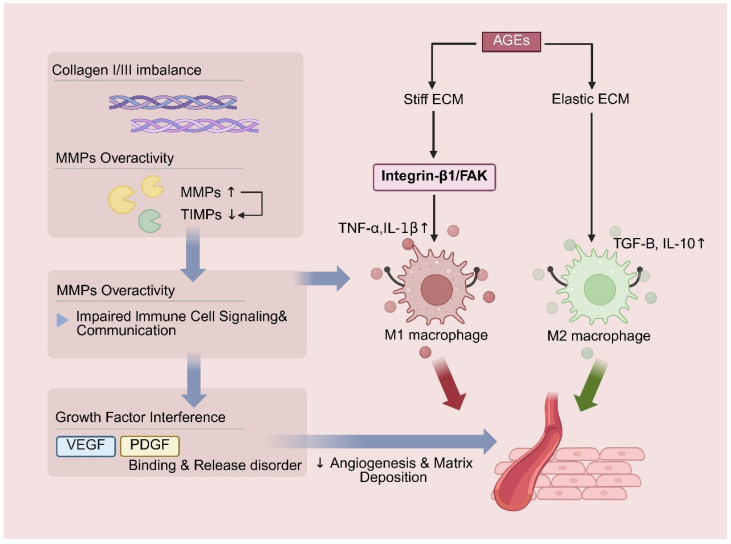 Figure 5
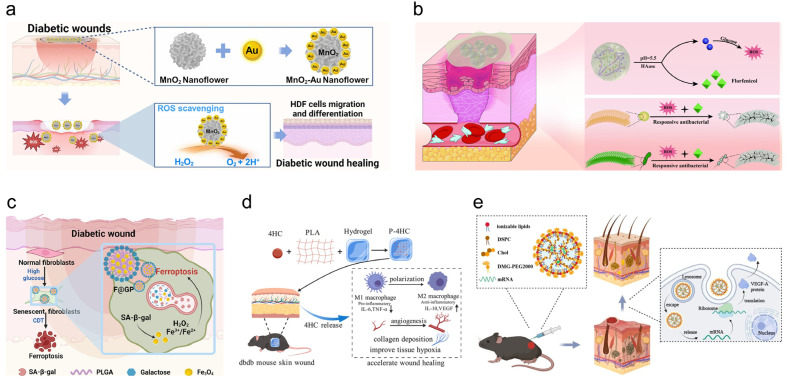 Figure 6
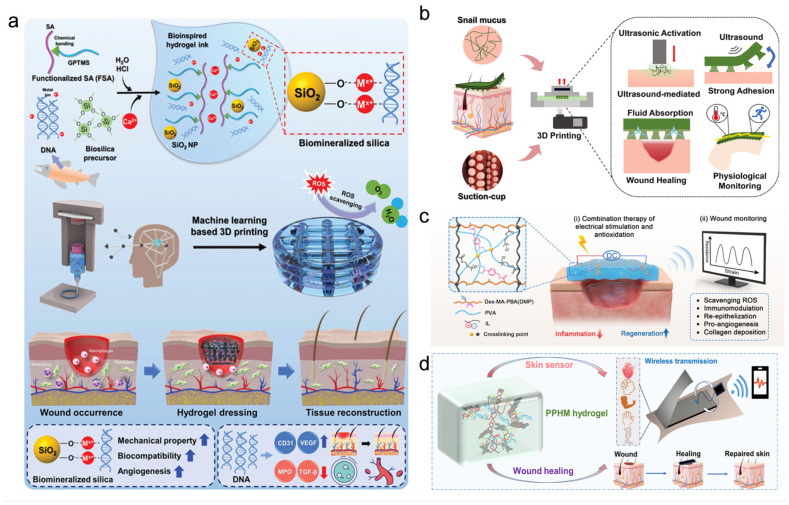 Figure 7
Peer Reviews
No public reviews on file for this paper yet. If you reviewed it on a platform where reviews are public (OpenReview, ICLR, NeurIPS, ICML), you can paste yours below so the community can read it here.
Videos
No videos yet. Explain this paper in a talk, walkthrough, or lecture? Add one.
Taxonomy
TopicsWound Healing and Treatments · Graphene and Nanomaterials Applications · Nanoplatforms for cancer theranostics