Artificial Intelligence for Drug Safety Across the Lifecycle and Decision Type: A Scoping Review
Tae Woo Kim, Sihyeon Park, Miryoung Kim

TL;DR
This review maps how AI is used for drug safety decisions across the drug lifecycle and finds that AI is most commonly applied to patient-level safety prediction and post-marketing safety surveillance.
Contribution
The novel contribution is a lifecycle–decision matrix that clarifies where AI applications are concentrated and identifies gaps in external validation and real-world testing.
Findings
AI applications are concentrated in patient-level safety prediction and post-marketing safety surveillance using EHRs and spontaneous reporting systems.
Common AI methods include gradient boosting, deep neural networks, and natural language processing models.
Most studies use internal validation, with limited external validation and real-world deployment.
Abstract
Background/Objectives: Artificial intelligence (AI) is increasingly applied to drug safety evaluation, yet evidence is dispersed across lifecycle stages and tasks. This scoping review aimed to (1) map how AI supports safety- and treatment-related decision types across the drug lifecycle, and (2) examine evaluation strategies used to assess model reliability for clinical or regulatory use. Methods: Using Arksey and O’Malley’s framework, we searched a major database for studies published in the past decade that applied AI or machine learning to drug safety or medication-related decisions. After screening, we extracted data on lifecycle stage, decision type, AI methods, data sources, and evaluation strategies. A lifecycle–decision matrix was constructed to characterize application patterns. Results: AI applications were concentrated in real-world clinical care × patient-level safety…
Genes, proteins, chemicals, diseases, species, mutations and cell lines named across the full text — each resolved to its canonical identifier and authoritative record.
Click any figure to enlarge with its caption.
 Figure 1
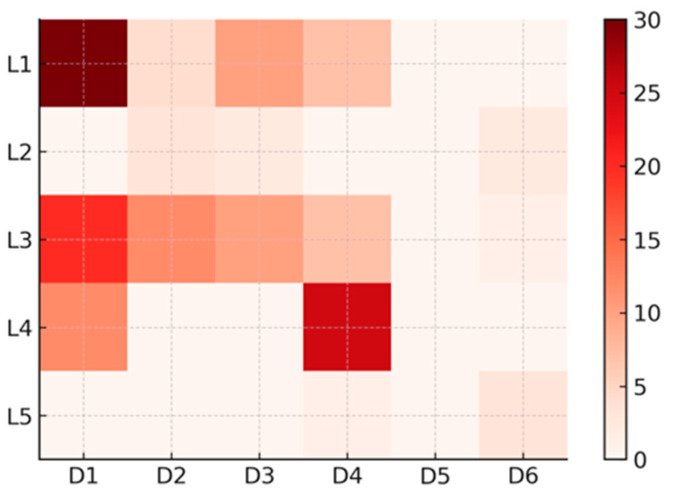 Figure 2
Peer Reviews
No public reviews on file for this paper yet. If you reviewed it on a platform where reviews are public (OpenReview, ICLR, NeurIPS, ICML), you can paste yours below so the community can read it here.
Videos
No videos yet. Explain this paper in a talk, walkthrough, or lecture? Add one.
Taxonomy
TopicsPharmacovigilance and Adverse Drug Reactions · Artificial Intelligence in Healthcare and Education · Advanced Causal Inference Techniques