Genomic Characterization of Pseudomonas syringae pv. syringae Populations Affecting Sweet Cherry Orchards in Chile Reveals Local Adaptation and Virulence Signatures
Francisco Correa, Paz Millas, Rubén Almada, Franco Figueroa, Juan Pablo Martinez, Boris Sagredo

TL;DR
This study explores the genetic diversity of a bacterial pathogen affecting sweet cherry trees in Chile, revealing local adaptation and virulence traits.
Contribution
The study identifies unique genomic features and lineage-specific adaptations in Chilean Pss populations.
Findings
Chilean Pss isolates predominantly belong to the PG2d subgroup with 18 genomic clusters.
The PG2d subgroup has IAA synthesis genes and shows extensive genomic remodeling.
Copper resistance and T6SS systems were found in some strains, indicating adaptive evolution.
Abstract
Pseudomonas syringae pv. syringae (Pss) is an economically significant bacterial pathogen that causes canker in sweet cherry trees. In Chile, sweet cherry (Prunus avium L.) is a key crop whose exponential production growth has increased phytosanitary pressure. However, the genetic diversity and adaptive mechanisms of local Pss populations have remained poorly understood. This study characterized 41 Pss isolates from major Chilean production regions. Their genomes were sequenced and compared with 152 public genomes from the PG2 phylogenetic group. The analysis revealed a predominance of the PG2d subgroup among the Chilean isolates, with a population structure defined by at least 18 genomic clusters, some of which are exclusive to Chile. A characteristic feature of this entire PG2d subgroup is the presence of indole-3-acetic acid (IAA) synthesis genes (iaaM and iaaH). Furthermore, this…
Genes, proteins, chemicals, diseases, species, mutations and cell lines named across the full text — each resolved to its canonical identifier and authoritative record.
Click any figure to enlarge with its caption.
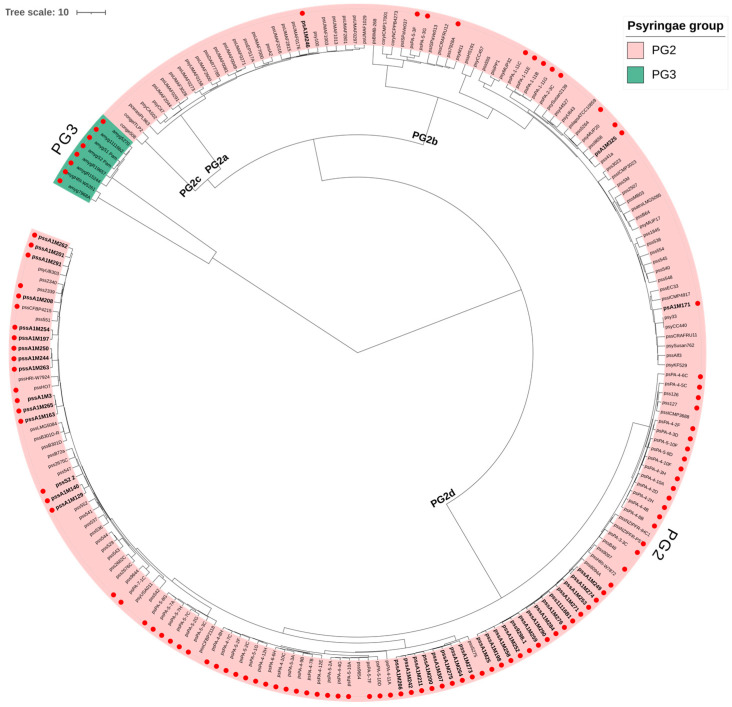 Figure 1
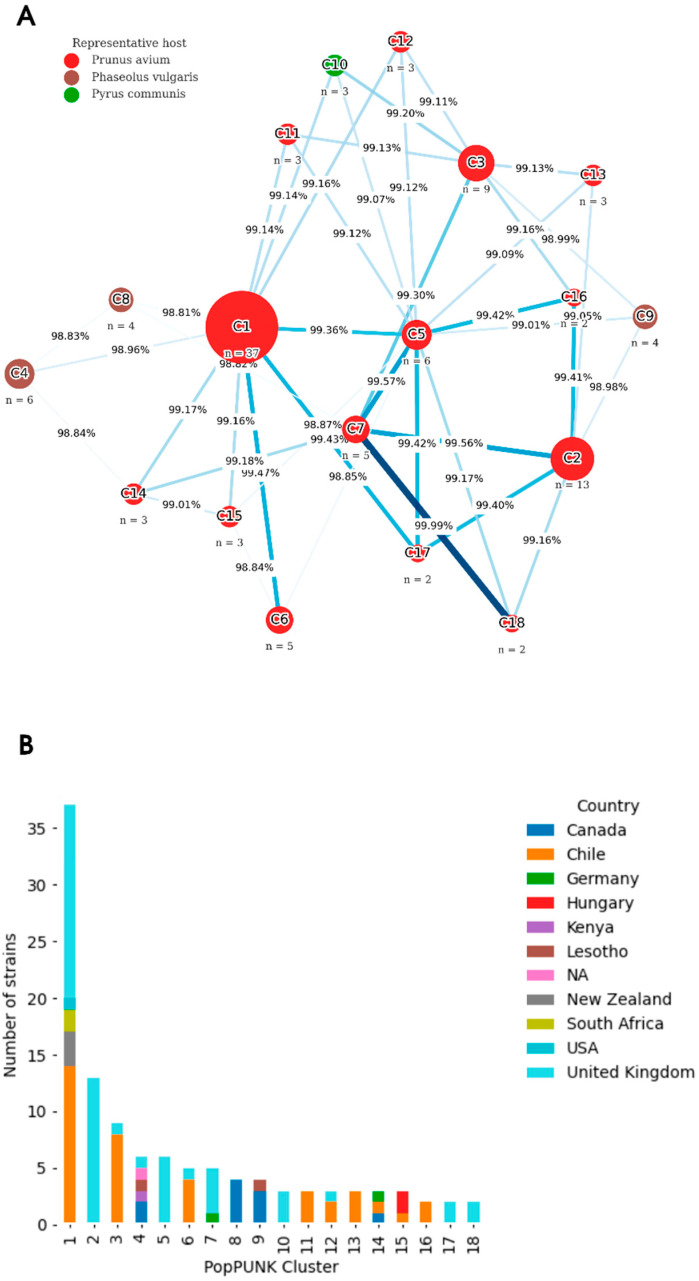 Figure 2
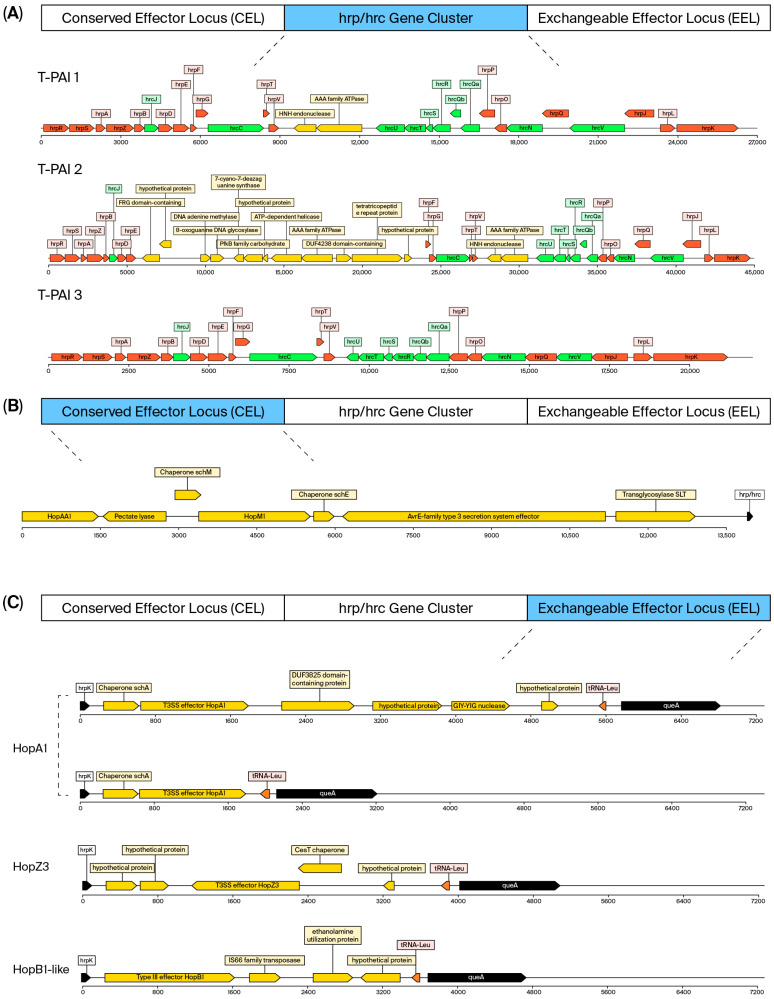 Figure 3
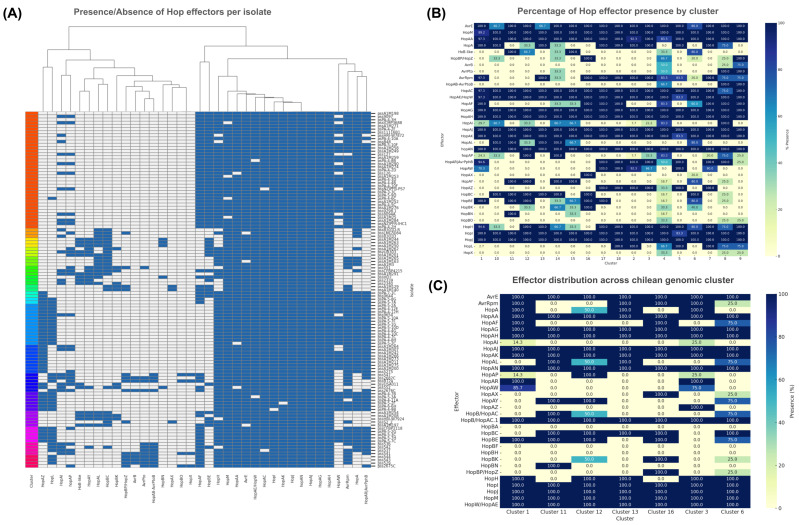 Figure 4
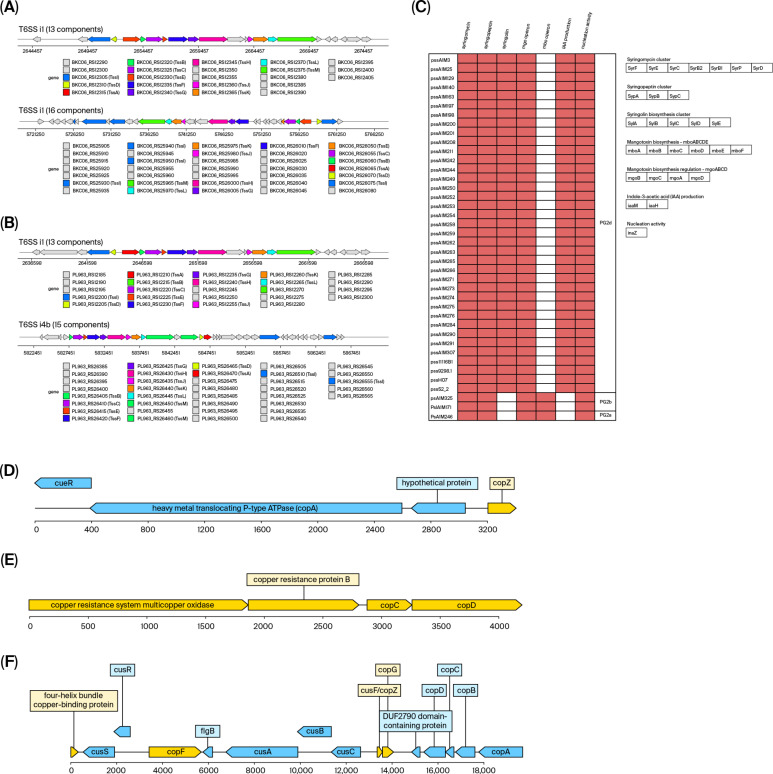 Figure 5
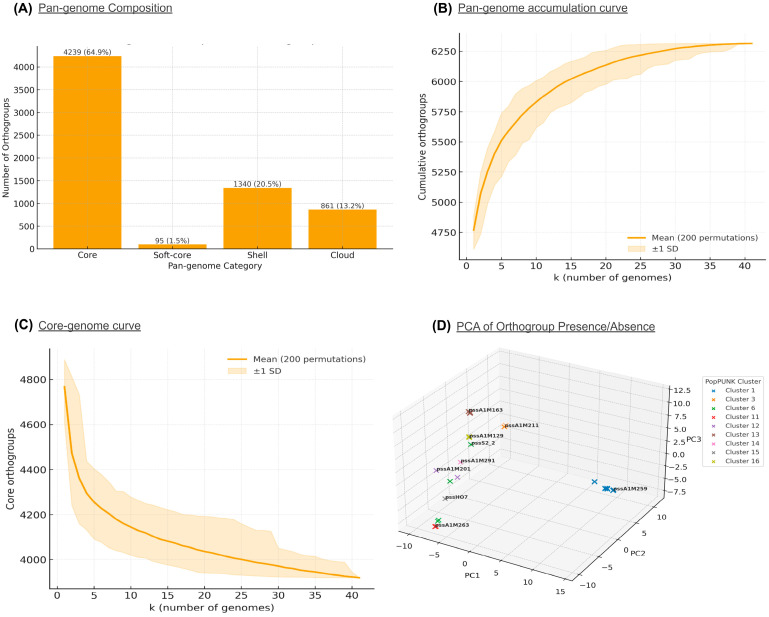 Figure 6
Peer Reviews
No public reviews on file for this paper yet. If you reviewed it on a platform where reviews are public (OpenReview, ICLR, NeurIPS, ICML), you can paste yours below so the community can read it here.
Videos
No videos yet. Explain this paper in a talk, walkthrough, or lecture? Add one.
Taxonomy
TopicsPlant Pathogenic Bacteria Studies · Phytoplasmas and Hemiptera pathogens · Plant-Microbe Interactions and Immunity