Sex-Specific Patterns of Force Plate-Derived Predictors for Vertical Jump Performance and Algorithmic Musculoskeletal Injury Risk in College Athletes
Adam Eckart, Pragya Sharma Ghimire

TL;DR
The study examines how force plate metrics relate to jump performance and injury risk in college athletes, finding sex-specific patterns and limitations in algorithmic injury risk scores.
Contribution
The study identifies sex-specific biomechanical patterns linked to injury risk and questions the reliability of algorithmic injury risk scores.
Findings
Higher AMSKI risk is linked to increased concentric output and reduced braking capacity.
Female athletes with elevated risk showed significantly reduced braking values.
Proprietary injury risk scores showed inconsistent alignment with biomechanical predictors.
Abstract
Background: Force plate-derived metrics are increasingly used to assess performance and monitor musculoskeletal injury risk, yet the mechanisms linking jump-mechanics patterns to injury risk remain unclear, particularly when using proprietary, algorithmically derived risk scores. Clarifying these relationships is important for improving screening practices, program design, and load management in athletic populations. Methods: A total of 233 collegiate athletes completed countermovement vertical jump (CMVJ) testing on a commercial force plate, which produced 26 force-time variables and proprietary composite metrics. LASSO regression with bootstrapping identified important predictors of CMVJ height and algorithmically derived musculoskeletal injury (AMSKI risk), and Partial Least Squares (PLS) models characterized multivariate patterns across force-time variables. Sex-stratified analyses…
Genes, proteins, chemicals, diseases, species, mutations and cell lines named across the full text — each resolved to its canonical identifier and authoritative record.
Click any figure to enlarge with its caption.
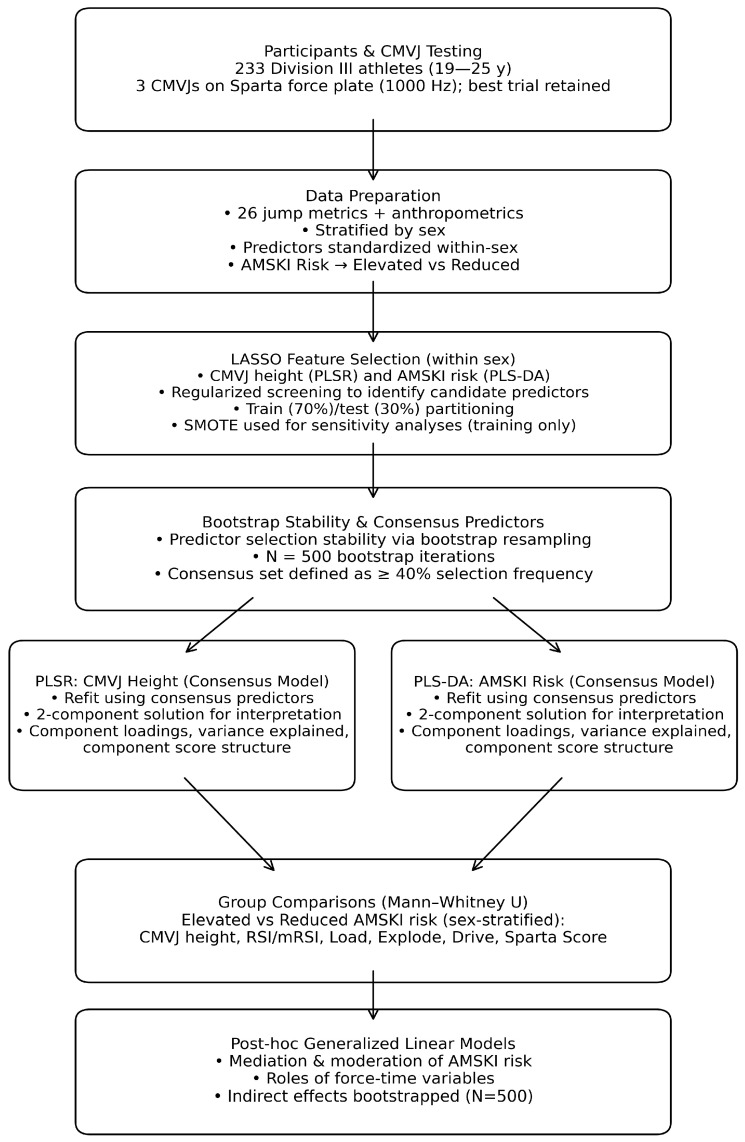 Figure 1
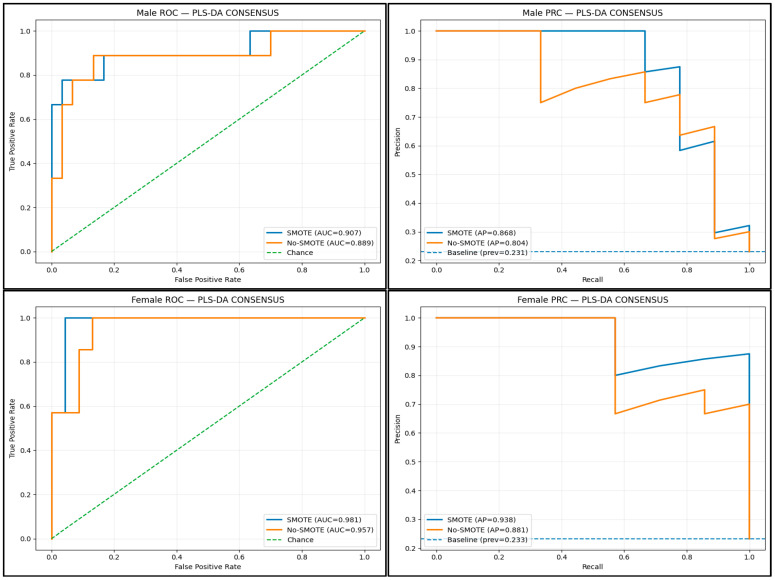 Figure 2
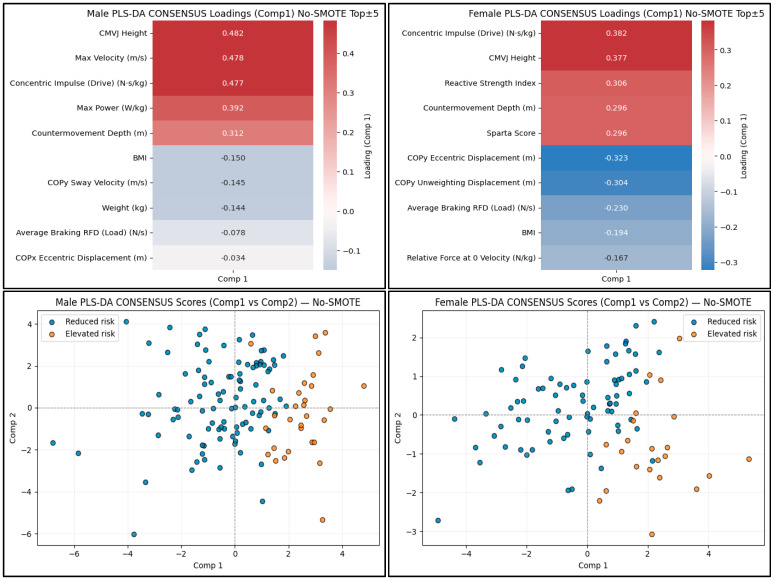 Figure 3
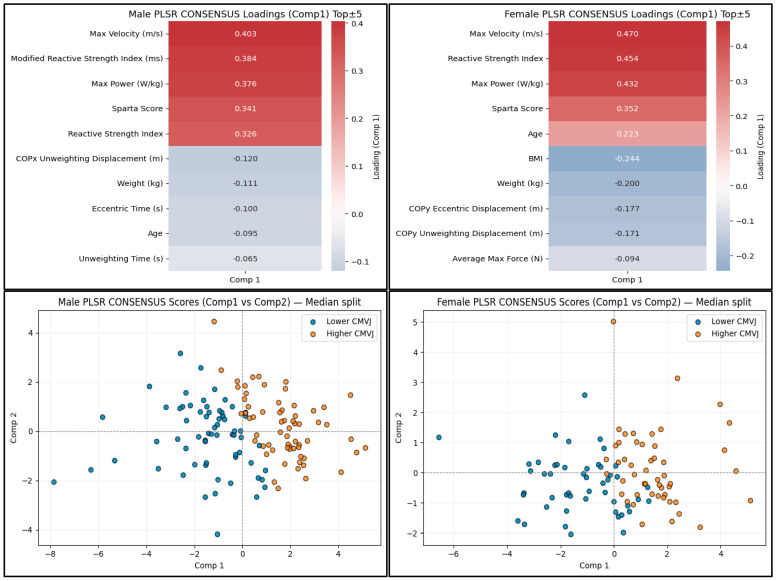 Figure 4
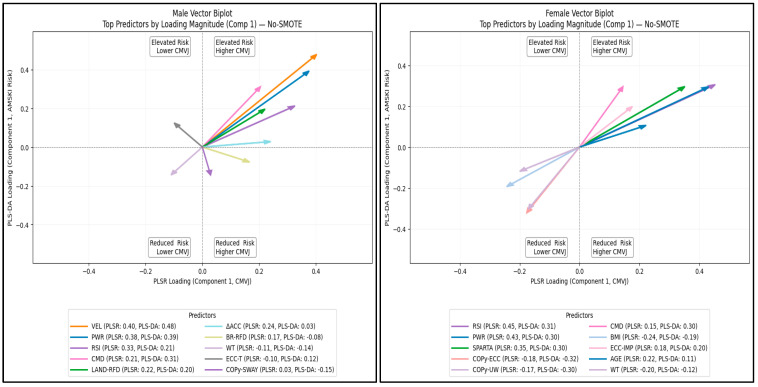 Figure 5
Peer Reviews
No public reviews on file for this paper yet. If you reviewed it on a platform where reviews are public (OpenReview, ICLR, NeurIPS, ICML), you can paste yours below so the community can read it here.
Videos
No videos yet. Explain this paper in a talk, walkthrough, or lecture? Add one.
Taxonomy
TopicsSports injuries and prevention · Sports Performance and Training · Knee injuries and reconstruction techniques