Molecular and Physiological Adaptations to Seasonal Training in Elite U18 Ice Hockey Players
Attila Czont, Zsolt Bodor, Tamás Koncsag, Ildikó Miklóssy

TL;DR
This study explores how elite U18 ice hockey players adapt to seasonal training by measuring changes in aerobic capacity and molecular markers like irisin and cell-free DNA.
Contribution
The study provides preliminary longitudinal evidence of chronic irisin elevation in youth ice hockey players and suggests combining molecular and physiological markers for training monitoring.
Findings
VO2max and irisin levels increased significantly from pre- to early-season in elite U18 ice hockey players.
Cell-free DNA decreased moderately, while cortisol levels remained stable during the training period.
Inter-individual variability in VO2max and irisin increased, while variability in cfDNA decreased significantly.
Abstract
Monitoring adolescent team-sport athletes may benefit from combining performance and molecular markers, but empirical evidence supporting this approach in youth team sports remains limited. Objective: Our study investigated molecular and physiological adaptations to seasonal training in elite U18 ice hockey players, focusing on aerobic capacity, salivary cortisol, serum irisin, and cell-free DNA (cfDNA) dynamics. Methods: National-level U18 players were enrolled in our study (n = 23 for cross-sectional analysis, n = 12 longitudinal) during the pre- and early-competition season. Aerobic performance was assessed via graded treadmill VO2max testing, and the biochemical markers quantified using ELISA-based assays. Results: From pre- to early-season (paired n = 12), VO2max increased by 10.6% (g = +1.00, p = 0.003) and irisin by 14.7% (g = +0.83, p = 0.010). cfDNA decreased by 60.8% (g =…
Genes, proteins, chemicals, diseases, species, mutations and cell lines named across the full text — each resolved to its canonical identifier and authoritative record.
Click any figure to enlarge with its caption.
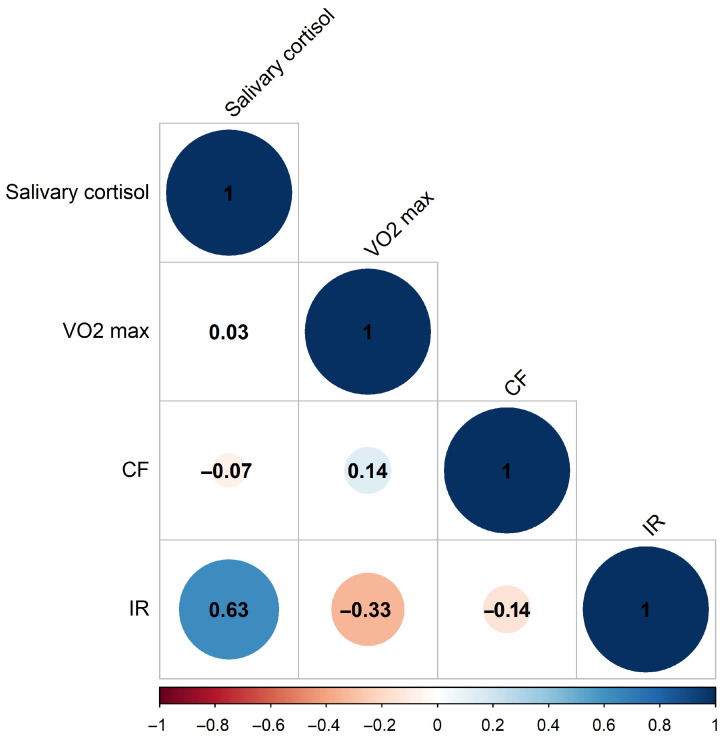 Figure 1
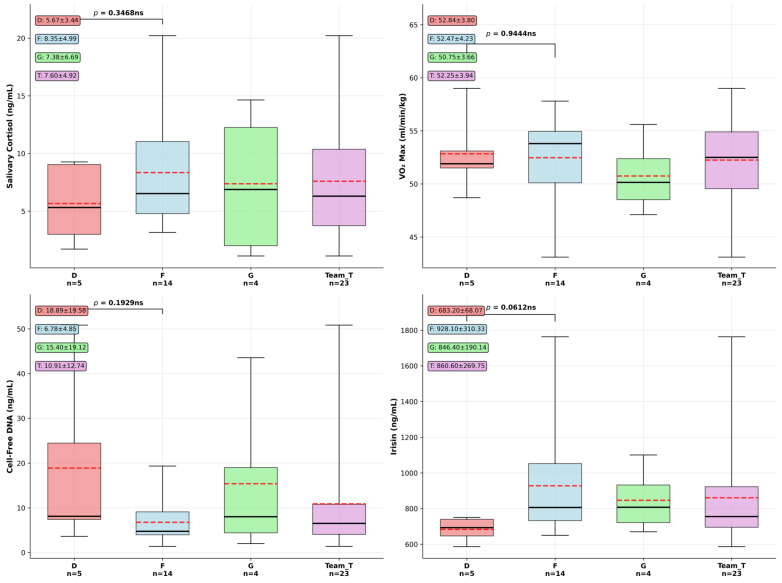 Figure 2
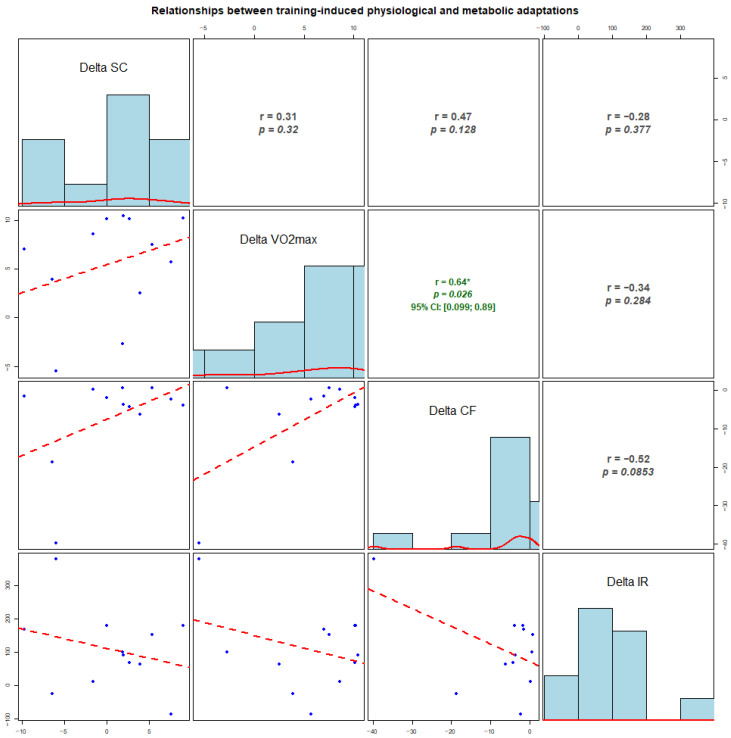 Figure 3
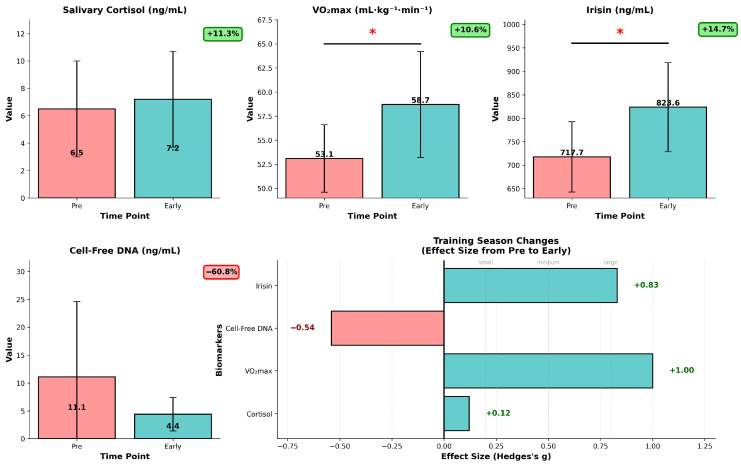 Figure 4
Peer Reviews
No public reviews on file for this paper yet. If you reviewed it on a platform where reviews are public (OpenReview, ICLR, NeurIPS, ICML), you can paste yours below so the community can read it here.
Videos
No videos yet. Explain this paper in a talk, walkthrough, or lecture? Add one.
Taxonomy
TopicsAdipose Tissue and Metabolism · Genetics and Physical Performance · Traumatic Brain Injury Research