Graphene-Based Sensors and Biosensors Fabricated via Pulsed Laser Deposition for Chemical and Biological Threat Detection: A Comprehensive Roadmap
Diogenes Kreusch Filho, Larissa Oliveira de Sá, Marcela Rabelo de Lima, Adriel Faddul Stelzenberger Saber, Fernando M. Araujo-Moreira

TL;DR
This paper outlines a roadmap for developing graphene-based sensors to detect chemical and biological threats, emphasizing scalable fabrication and real-world performance.
Contribution
A modular, non-linear roadmap for translating graphene sensing from lab to field, using pulsed laser deposition for improved sensor reproducibility.
Findings
Pulsed laser deposition (PLD) enables tunable graphene thickness and interface control for better sensor performance.
A feedback-driven framework connects planning, modeling, fabrication, diagnostics, and field validation for deployable CBRN sensors.
Multiscale diagnostics and operational metrics help refine sensor design for real-world deployment.
Abstract
What are the main findings? We propose a modular, non-linear roadmap for graphene Chemical, Biological, Radiological and Nuclear (CBRN) sensing that links planning, modeling, fabrication, multiscale diagnostics, and field validation.Pulsed laser deposition (PLD) is identified as a controllable, substrate-flexible route to engineer graphene thickness/defects and interfaces, improving sensor reproducibility. We propose a modular, non-linear roadmap for graphene Chemical, Biological, Radiological and Nuclear (CBRN) sensing that links planning, modeling, fabrication, multiscale diagnostics, and field validation. Pulsed laser deposition (PLD) is identified as a controllable, substrate-flexible route to engineer graphene thickness/defects and interfaces, improving sensor reproducibility. What is the implication of the main finding? The roadmap provides a deployability-oriented framework to…
Genes, proteins, chemicals, diseases, species, mutations and cell lines named across the full text — each resolved to its canonical identifier and authoritative record.
Click any figure to enlarge with its caption.
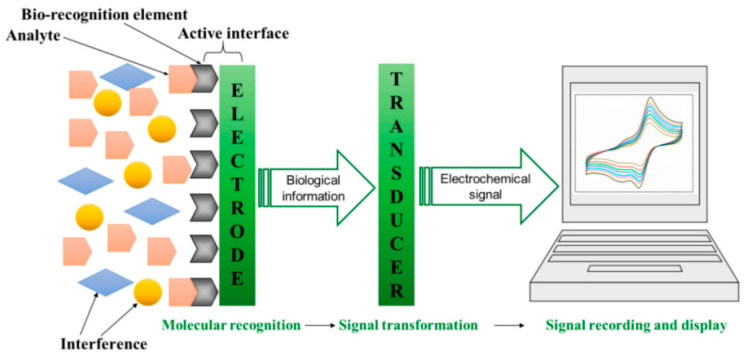 Figure 1
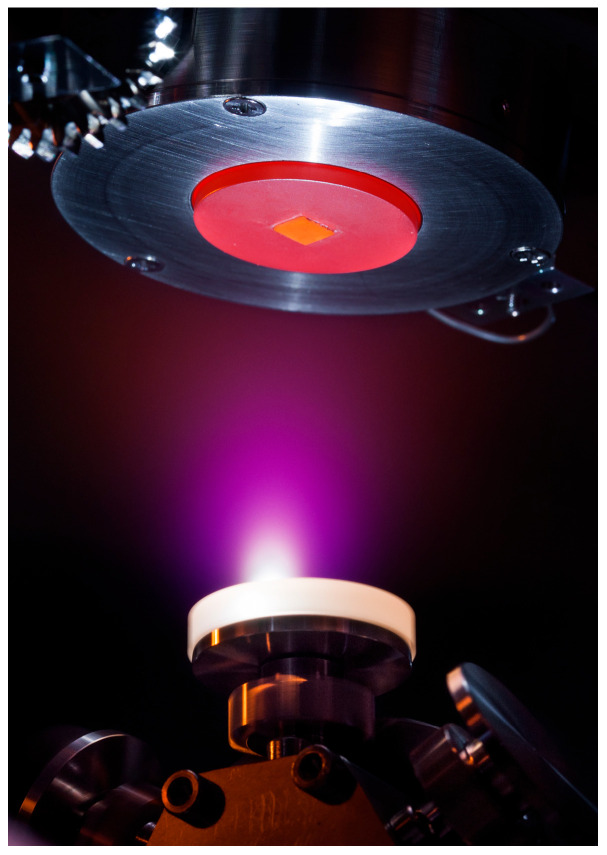 Figure 2
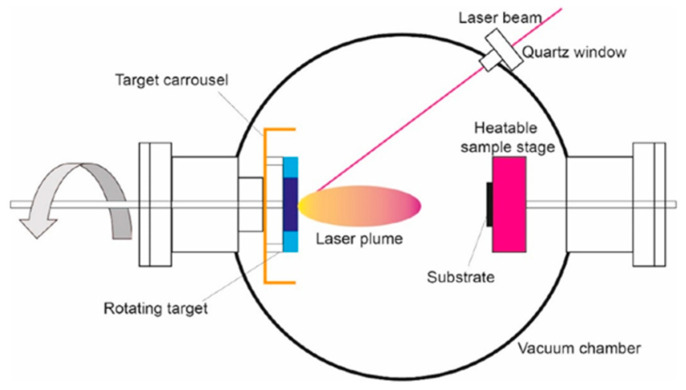 Figure 3
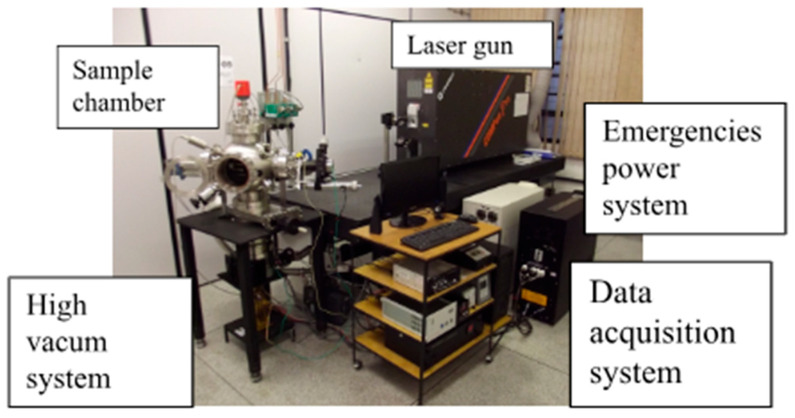 Figure 4
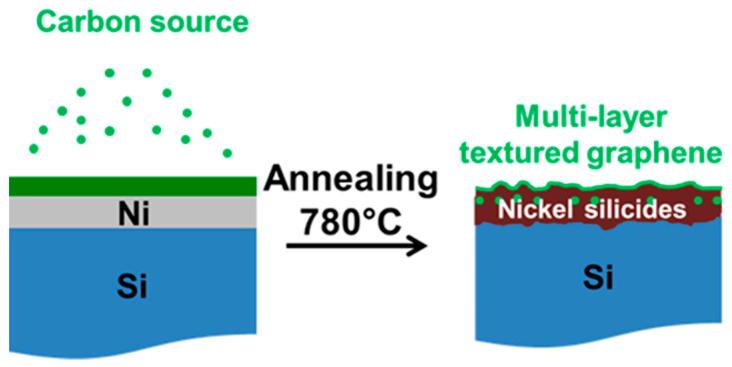 Figure 5
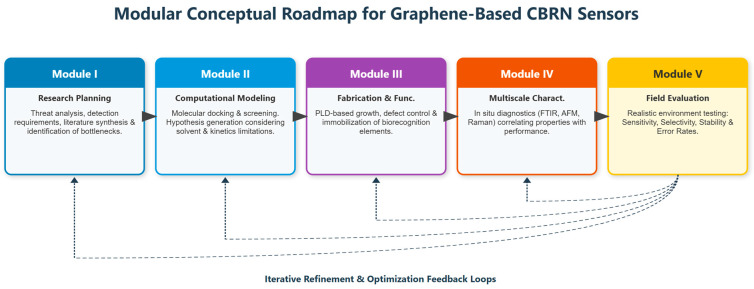 Figure 6
Peer Reviews
No public reviews on file for this paper yet. If you reviewed it on a platform where reviews are public (OpenReview, ICLR, NeurIPS, ICML), you can paste yours below so the community can read it here.
Videos
No videos yet. Explain this paper in a talk, walkthrough, or lecture? Add one.
Taxonomy
TopicsGraphene research and applications · Graphene and Nanomaterials Applications · 2D Materials and Applications