Application of Nostoc sphaericum and Opuntia ficus-indica Mucilage in the Coagulation–Flocculation Process of Sanitary Landfill Leachate: An Optimization Study
Yudith Choque-Quispe, Aydeé M. Solano-Reynoso, Carlos Eduardo Dueñas-Valcarcel, Edwar Arostegui-Leon, Liliana Rodriguez-Cardenas, David Choque-Quispe

TL;DR
This study explores using natural biocoagulants from Nostoc sphaericum and Opuntia ficus-indica to treat landfill leachate, achieving significant turbidity and contaminant reduction.
Contribution
The novel use of Nostoc sphaericum and Opuntia ficus-indica mucilage as biocoagulants in landfill leachate treatment is optimized for efficiency.
Findings
Optimized conditions achieved 70% turbidity reduction and 65% TOC reduction.
Anionic surfaces of biocoagulants with carboxyl and hydroxyl groups were confirmed via FTIR.
CNS and CMN combination is a viable alternative for leachate pretreatment.
Abstract
Leachates generated in sanitary landfills are a mixture of contaminants harmful to adjacent ecosystems. Coagulation and flocculation are common treatment methods; however, their efficiency depends on the type of coagulant–flocculant and the operating conditions. This study addressed leachate treatment using two natural biocoagulants, Nostoc sphaericum (CNS) and Opuntia ficus-indica mucilage (CMN), in combination with aluminum sulfate (CSA). Optimization was performed using response surface methodology, employing a Box–Behnken design with five factors, namely CNS, CMN, and CSA doses, as well as agitation time and agitation speed, evaluated at three levels, on turbidity reduction. Fourier transform infrared spectroscopy (FTIR) showed that the biocoagulants possess anionic surfaces with carboxyl and hydroxyl groups. The particle size of CNS exhibited a bimodal distribution with a zeta…
Genes, proteins, chemicals, diseases, species, mutations and cell lines named across the full text — each resolved to its canonical identifier and authoritative record.
Click any figure to enlarge with its caption.
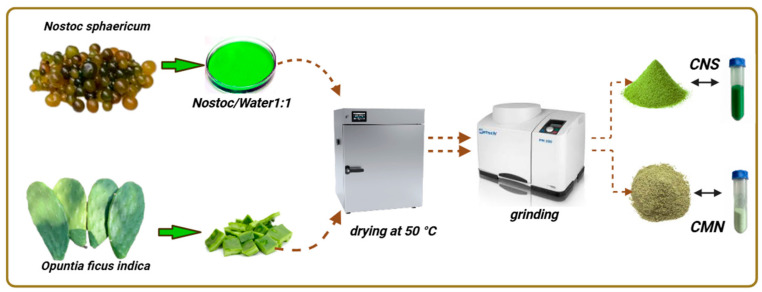 Figure 1
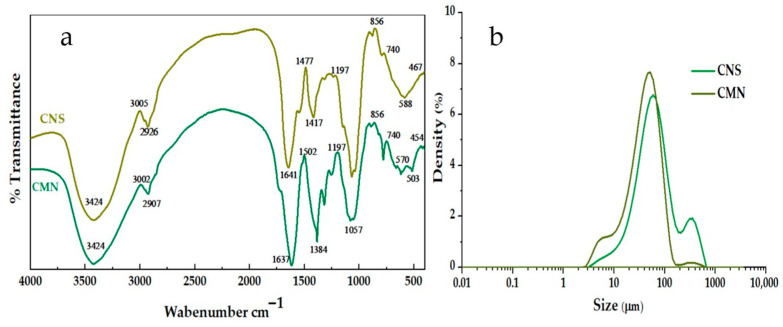 Figure 2
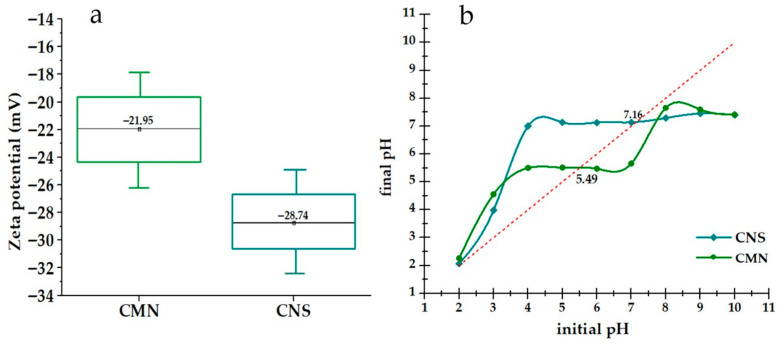 Figure 3
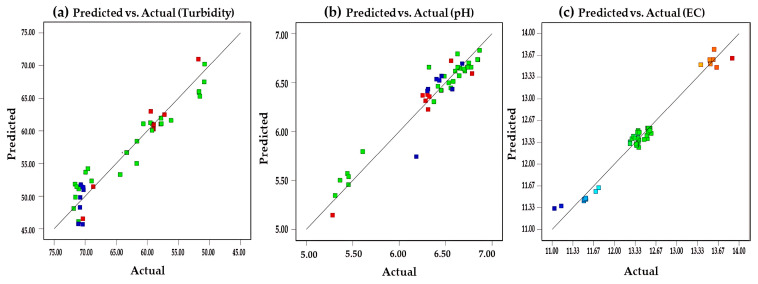 Figure 4
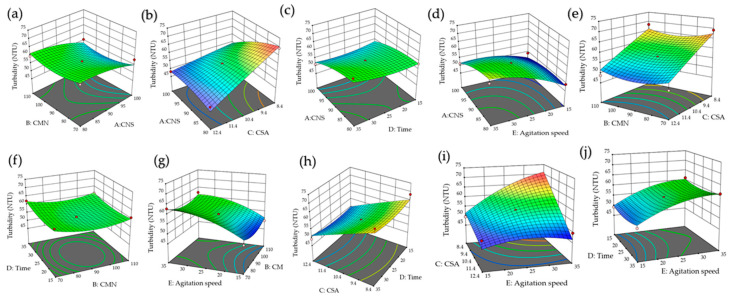 Figure 5
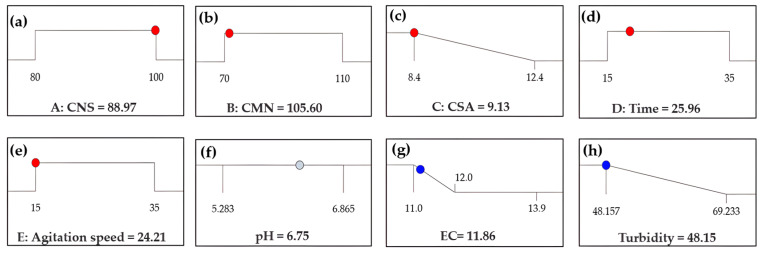 Figure 6
Peer Reviews
No public reviews on file for this paper yet. If you reviewed it on a platform where reviews are public (OpenReview, ICLR, NeurIPS, ICML), you can paste yours below so the community can read it here.
Videos
No videos yet. Explain this paper in a talk, walkthrough, or lecture? Add one.
Taxonomy
TopicsCoagulation and Flocculation Studies · Advanced oxidation water treatment · Adsorption and biosorption for pollutant removal