Cost-Effective Fish Volume Estimation in Aquaculture Using Infrared Imaging and Multi-Modal Deep Learning
Like Zhang, Yanling Han, Ge Song, Jing Wang, Ping Ma

TL;DR
This paper introduces a low-cost infrared imaging system for estimating fish volume in aquaculture, enabling efficient and sustainable biomass monitoring.
Contribution
The novel pipeline uses infrared-only imaging with multi-modal deep learning to achieve high accuracy at a fraction of the cost of existing methods.
Findings
The system achieves a Mean Absolute Error of 0.85 cm³ and an R² of 0.961 for fish volume estimation.
It outperforms state-of-the-art methods by 19–41% while reducing hardware costs by 80%.
The pipeline includes five modules for IR-to-depth estimation, IR-to-RGB generation, detection, segmentation, and volume estimation.
Abstract
Accurate fish volume estimation is essential for sustainable aquaculture management, yet traditional methods are invasive and costly, while existing non-invasive approaches rely on expensive multi-sensor setups. This study proposes a cost-effective infrared (IR)-only pipeline that reconstructs depth and Red Green Blue (RGB) from low-cost infrared videos (<USD 100 per camera), enabling scalable biomass monitoring in dense tanks. The pipeline integrates five modules: IR-to-depth estimation with contour-guided attention and smoothing loss; IR-to-RGB generation via texture-conditioned injection and water-adaptive loss; detection and tracking using cross-modal fusion and behavior-constrained Kalman filtering; instance segmentation with depth-guided branches and deformation-adaptive loss; and volume estimation through trajectory–depth Transformer fusion with refraction correction. Trained on…
Genes, proteins, chemicals, diseases, species, mutations and cell lines named across the full text — each resolved to its canonical identifier and authoritative record.
Click any figure to enlarge with its caption.
 Figure 1
 Figure 2
 Figure 3
 Figure 4
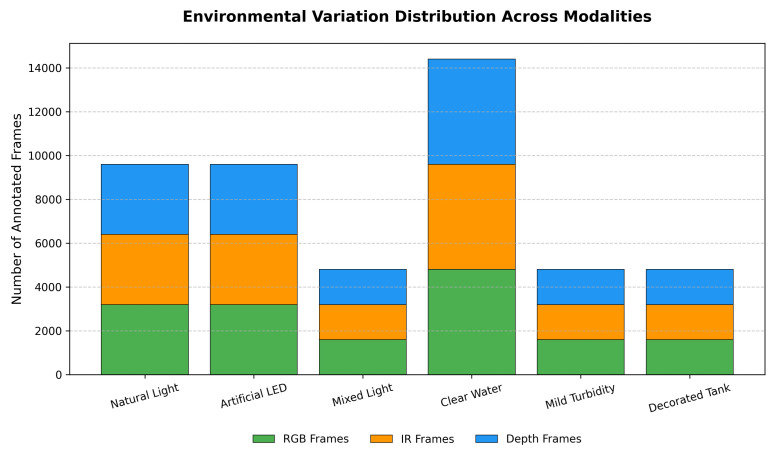 Figure 5
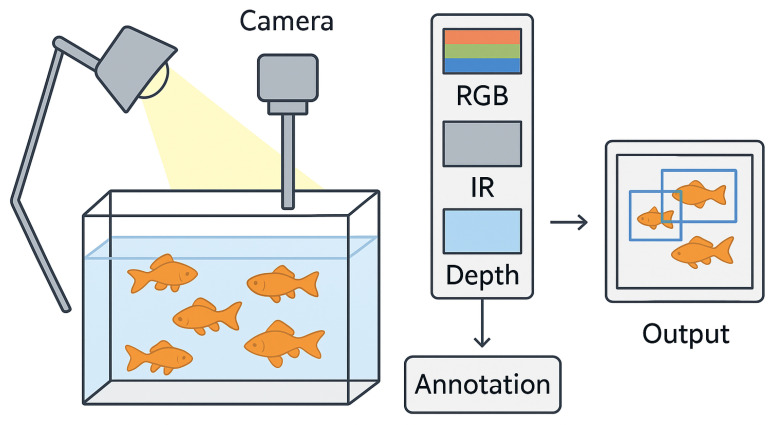 Figure 6
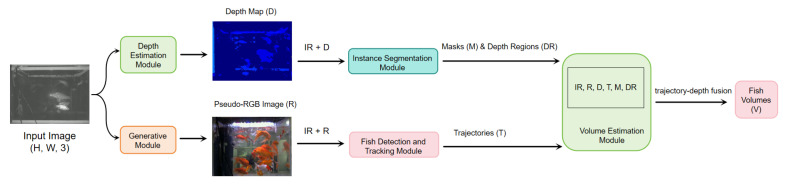 Figure 7
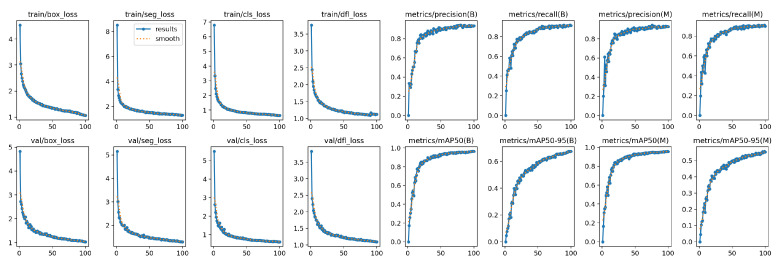 Figure 8
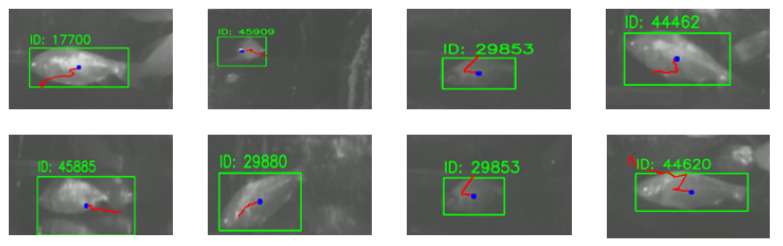 Figure 9
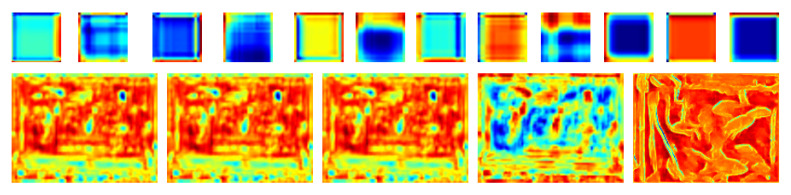 Figure 10
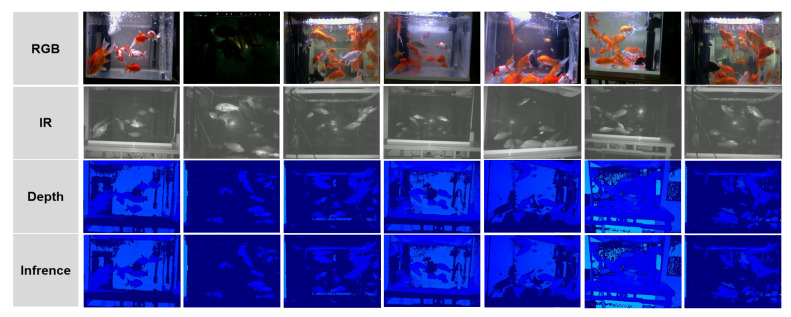 Figure 11
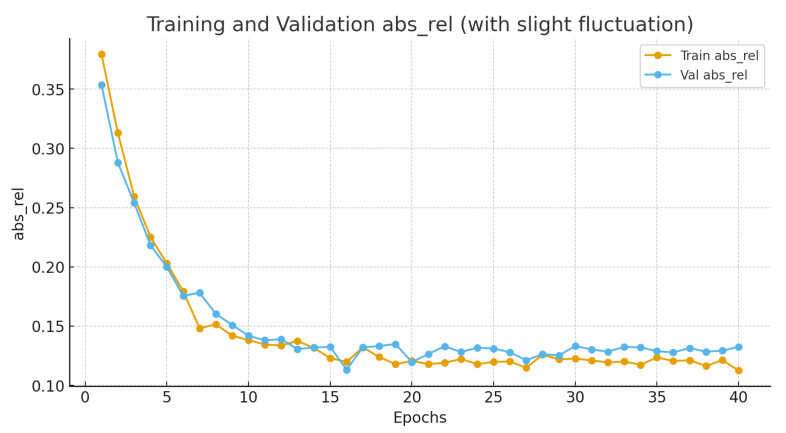 Figure 12
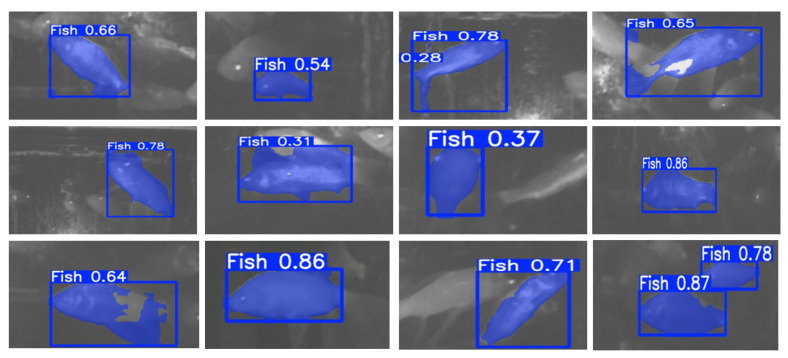 Figure 13
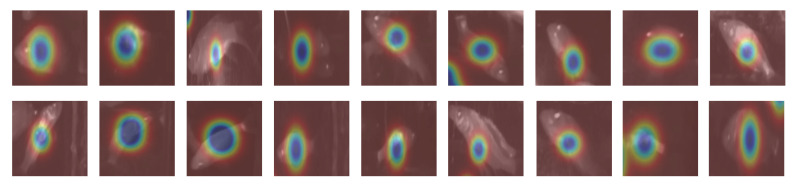 Figure 14
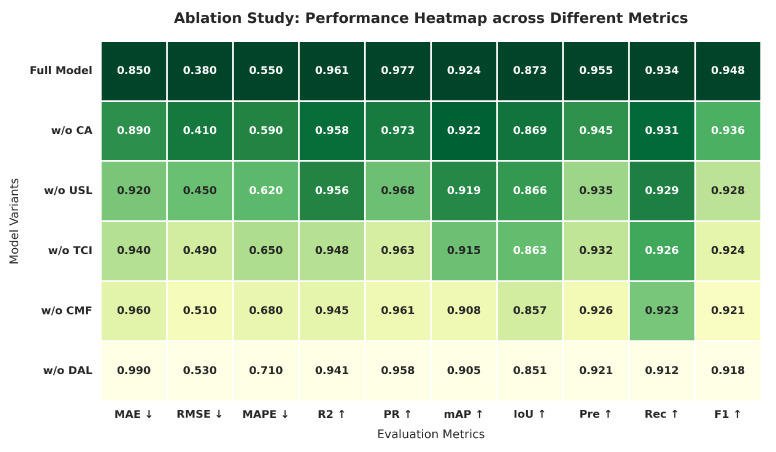 Figure 15
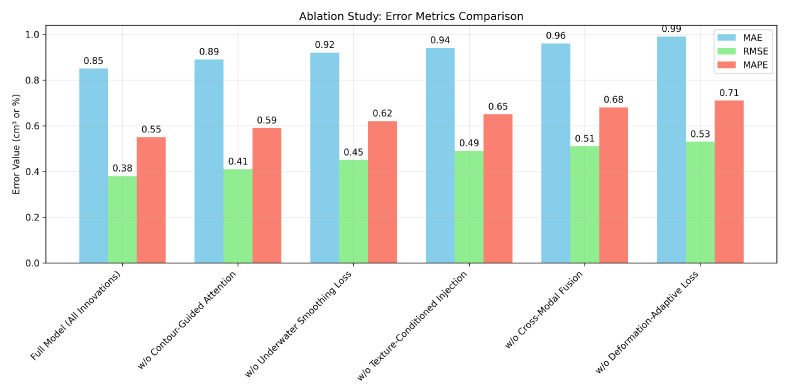 Figure 16
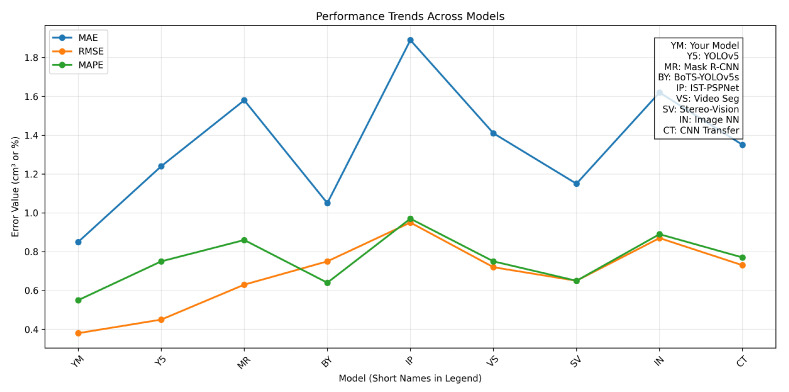 Figure 17
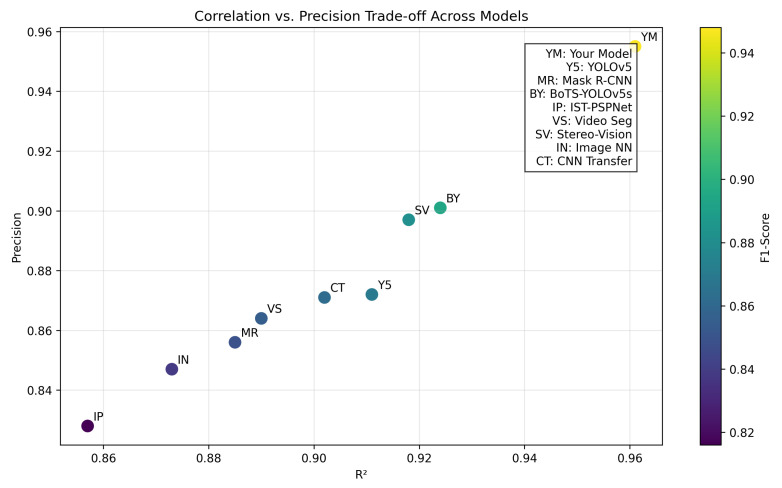 Figure 18
Peer Reviews
No public reviews on file for this paper yet. If you reviewed it on a platform where reviews are public (OpenReview, ICLR, NeurIPS, ICML), you can paste yours below so the community can read it here.
Videos
No videos yet. Explain this paper in a talk, walkthrough, or lecture? Add one.
Taxonomy
TopicsWater Quality Monitoring Technologies · Innovations in Aquaponics and Hydroponics Systems · Aquaculture disease management and microbiota