Integrating Agronomic Traits and Physiological Responses for Drought Resistance Screening in Wheat Germplasms
Wenwen Cui, Yan Jin, Baoyuan Zhou, Liang Chen, Jiajing Song, Quanhao Song

TL;DR
This study identifies key traits and physiological responses in wheat germplasms that help them resist drought stress, offering insights for breeding drought-tolerant wheat varieties.
Contribution
The study introduces a novel method for drought resistance screening using a membership function value derived from agronomic traits and physiological responses.
Findings
Wheat genotypes with high MFVD showed enhanced photosynthetic performance and antioxidant activity under drought stress.
Lines 6, 15, 17, 21, and 22 exhibited significantly higher drought resistance based on MFVD and physiological indicators.
Key agronomic traits like tiller number and flag leaf area are robust indicators for evaluating drought resistance in wheat.
Abstract
Drought stress is a critical limiting factor for wheat yield. Wild relatives of wheat have proven to be valuable genetic resources for desirable traits. This study aimed to conduct a comparative analysis of agronomic traits, photosynthetic physiological parameters, and antioxidant components among 26 heterogermplasm wheat cultivars under well-watered (WW) and water-stressed (WS) conditions over two consecutive years. The results revealed that all nine agronomic traits were adversely affected under WS conditions. Four agronomic traits were selected based on the drought-resistance coefficient (DC < 0.8) and heritability (H2 < 0.7) to calculate the membership function value of drought resistance (MFVD), including flag leaf area (FLA), tiller number (TN), grain yield per plant (GYPP), and biomass per plant (BMPP). All wheat genotypes clustered into three groups based on their mean value of…
Genes, proteins, chemicals, diseases, species, mutations and cell lines named across the full text — each resolved to its canonical identifier and authoritative record.
Click any figure to enlarge with its caption.
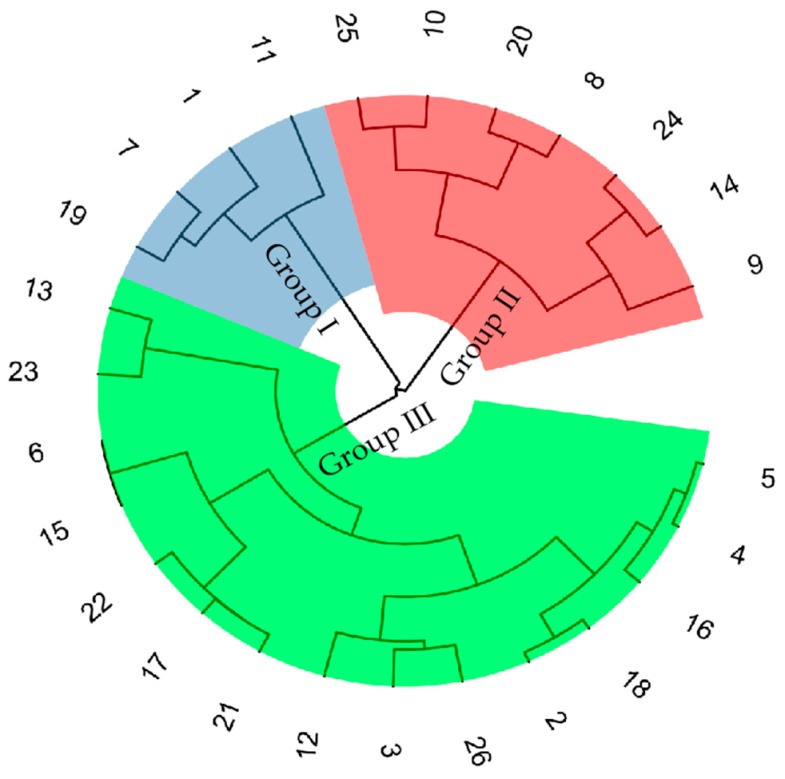 Figure 1
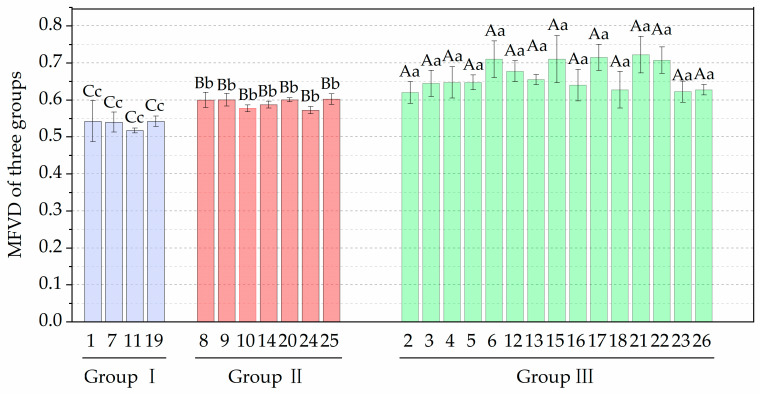 Figure 2
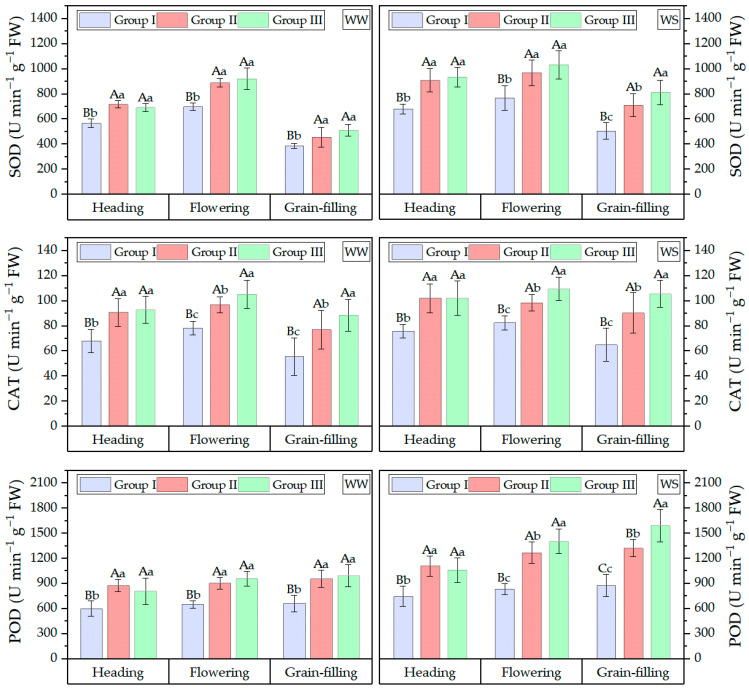 Figure 3
Peer Reviews
No public reviews on file for this paper yet. If you reviewed it on a platform where reviews are public (OpenReview, ICLR, NeurIPS, ICML), you can paste yours below so the community can read it here.
Videos
No videos yet. Explain this paper in a talk, walkthrough, or lecture? Add one.
Taxonomy
TopicsPlant Stress Responses and Tolerance · Genetics and Plant Breeding · Wheat and Barley Genetics and Pathology