Surface-Treated MDI-Compatibilized PPC-P/PPC-ECH Film with PVA/Tannic Acid Complex for High-Gas-Barrier Application
Shuangshuang Yue, Jiangtao Deng, Guoshan He, Wanjuan Wang, Min Xiao, Sheng Huang, Shuanjin Wang, Dongmei Han, Yuezhong Meng

TL;DR
A new low-cost film with improved mechanical and gas barrier properties was developed using a compatibilizer and a PVA/tannic acid coating for advanced packaging.
Contribution
A novel PPC-ECH polymer and a PVA/tannic acid coating were combined to create a high-performance, low-cost packaging film with excellent gas barrier properties.
Findings
Adding 2 phr MDI increased elongation at break from 71% to 502% while maintaining tensile strength and light transmittance.
The PVA/tannic acid coating reduced oxygen permeability to an ultra-low 0.1 cm3·mm/(m2·day).
The film shows strong potential for advanced packaging due to its mechanical and gas barrier properties.
Abstract
A novel low-cost poly(propylene carbonate-co-epichlorohydrin) (PPC-ECH) with mechanical properties similar to those of poly (butylene adipate-co-terephthalate) (PBAT) was developed and incorporated into a poly(propylene carbonate-co-phthalate) (PPC-P) matrix. Meanwhile, 4, 4′-diphenylmethane diisocyanate (MDI) was employed as a reactive compatibilizer and mixed with PPC-P and PPC-ECH to create a variety of PPC-P/PPC-ECH/MDI blends. The effects of PPC-ECH and MDI content on the mechanical, optical, thermal, morphological, and gas barrier properties of the blends were systematically investigated. Results demonstrated that MDI reacts with both PPC-P and PPC-ECH, forming a chemically bonded interface that significantly improves their compatibility. Notably, when 2 phr of MDI was incorporated, the elongation at break of the PPC-P/PPC-ECH/2MDI blend increased dramatically from 71% to 502%,…
Genes, proteins, chemicals, diseases, species, mutations and cell lines named across the full text — each resolved to its canonical identifier and authoritative record.
Click any figure to enlarge with its caption.
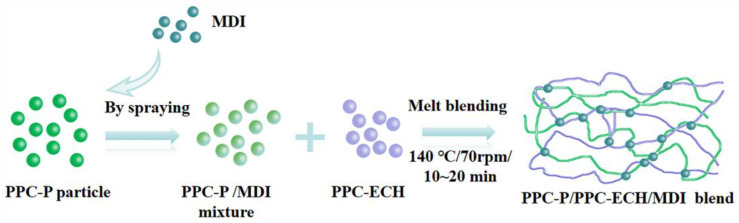 Figure 1
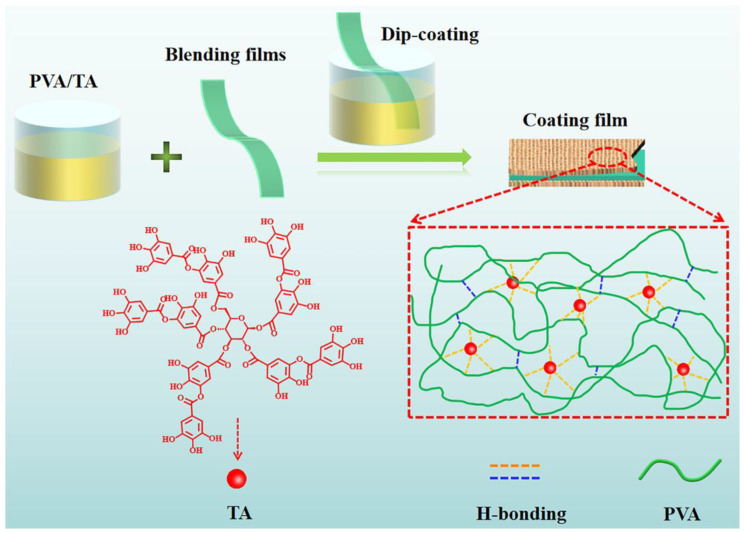 Figure 2
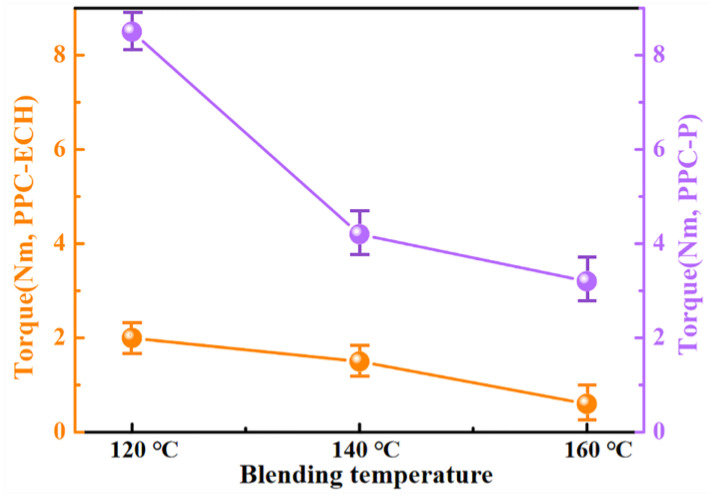 Figure 3
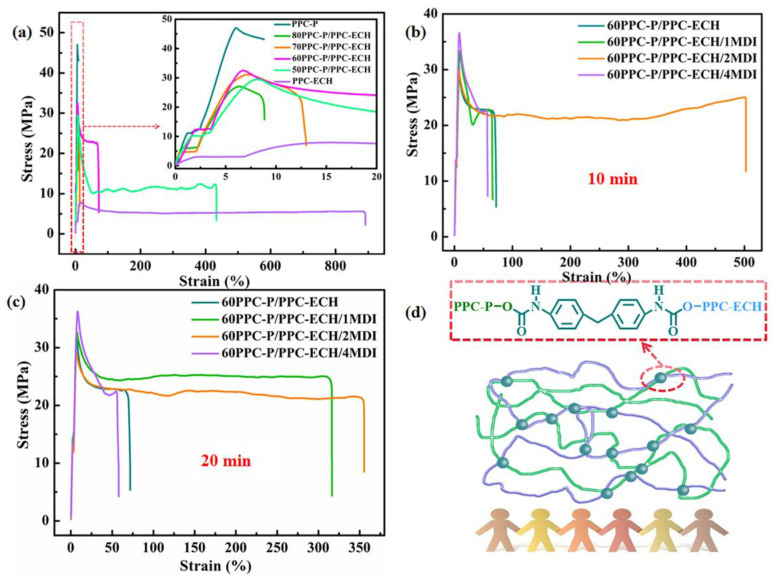 Figure 4
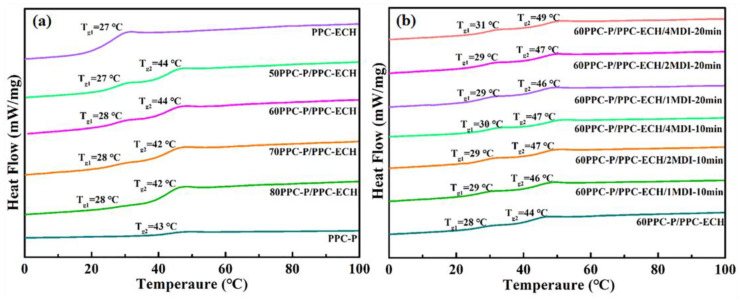 Figure 5
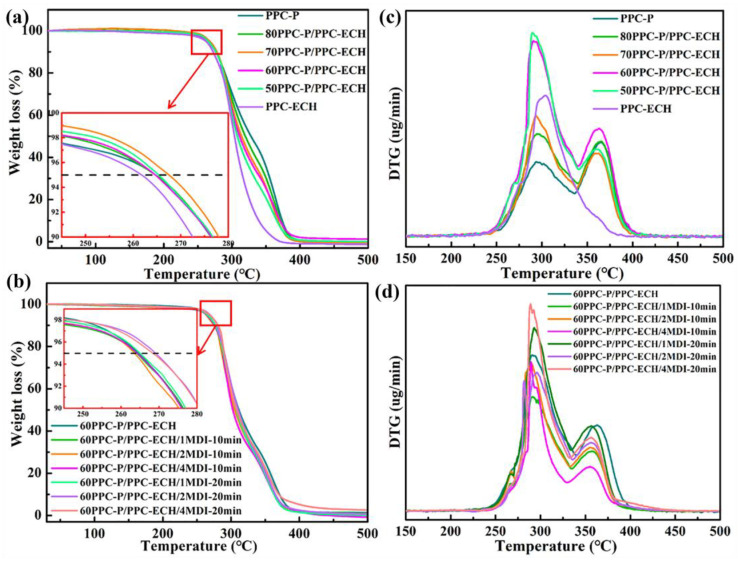 Figure 6
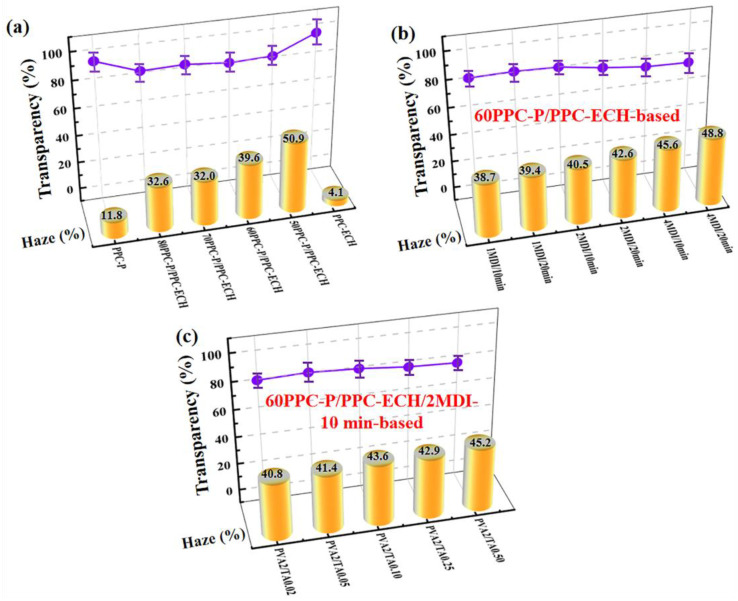 Figure 7
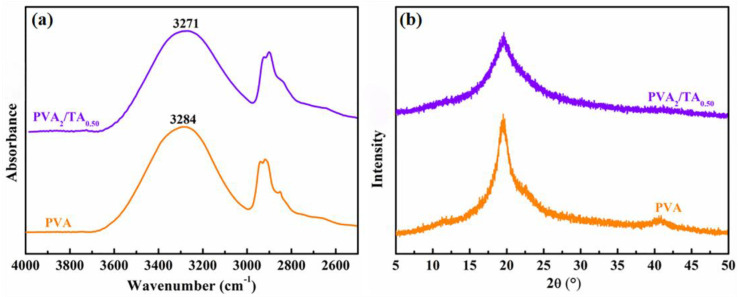 Figure 8
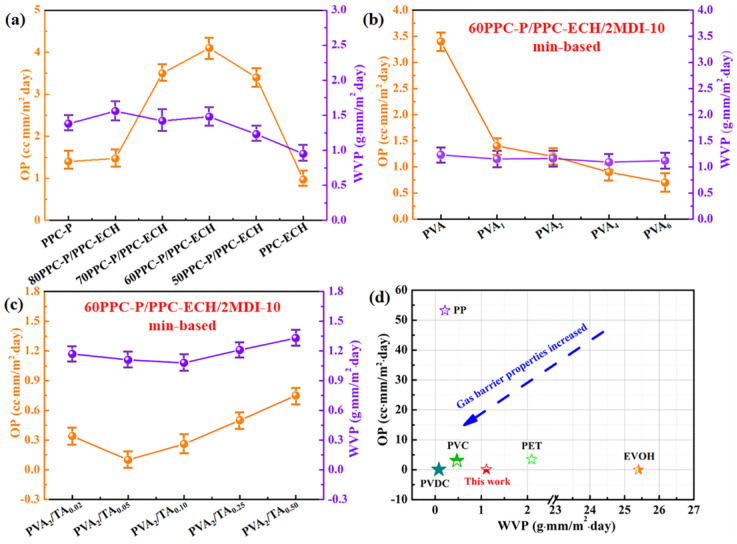 Figure 9
Peer Reviews
No public reviews on file for this paper yet. If you reviewed it on a platform where reviews are public (OpenReview, ICLR, NeurIPS, ICML), you can paste yours below so the community can read it here.
Videos
No videos yet. Explain this paper in a talk, walkthrough, or lecture? Add one.
Taxonomy
TopicsNanocomposite Films for Food Packaging · Polymer composites and self-healing · biodegradable polymer synthesis and properties