Greater Lumbopelvic Motion Is Associated with Faster Hip Flexion in Soccer Players
Toshimitsu Ohmine, Akira Iwata, Atsuki Kanayama, Hideyuki Wanaka, Kazuma Senzaki, Mitsuhiro Seo, Keita Sasada, Yoshihiko Kawamoto, Saki Yamamoto, Kenji Doma

TL;DR
Soccer players with faster hip flexion movements also show greater lumbopelvic motion, suggesting that some trunk movement may be beneficial for speed.
Contribution
This study reveals a novel association between lumbopelvic motion and faster lower-limb movement in soccer players.
Findings
Greater lumbopelvic rotation and flexion–extension were observed during high-speed hip flexion in both dominant and non-dominant legs.
High-speed trials showed consistent movement patterns, unlike low-speed trials.
The findings challenge the assumption that minimizing lumbopelvic motion is optimal for speed.
Abstract
Faster lower-limb motion is closely related to soccer performance, but the contribution of lumbopelvic motion to achieving it remains unclear. This cross-sectional study aimed to examine whether faster lower-limb motion in soccer players was accompanied by greater lumbopelvic motion. Fifty-one male high school soccer players performed a thigh-raising (hip flexion) task from a standing position at low (approximately 100°/s) and high (approximately 400°/s) speeds. Lumbopelvic motion was measured at the lumbar spinous process (L3). Rotation (LBrot, transverse plane) and flexion–extension (LBf/e, sagittal plane) were derived from the angular velocity. Motions were compared between speeds using the Wilcoxon tests. In the dominant leg, both LBrot (10.2° vs. 8.1°, r = 0.62) and LBf/e (6.4° vs. 5.0°, r = 0.57) were greater at high speed. In the non-dominant leg, both LBrot (11.2° vs. 8.6°, r =…
Genes, proteins, chemicals, diseases, species, mutations and cell lines named across the full text — each resolved to its canonical identifier and authoritative record.
Click any figure to enlarge with its caption.
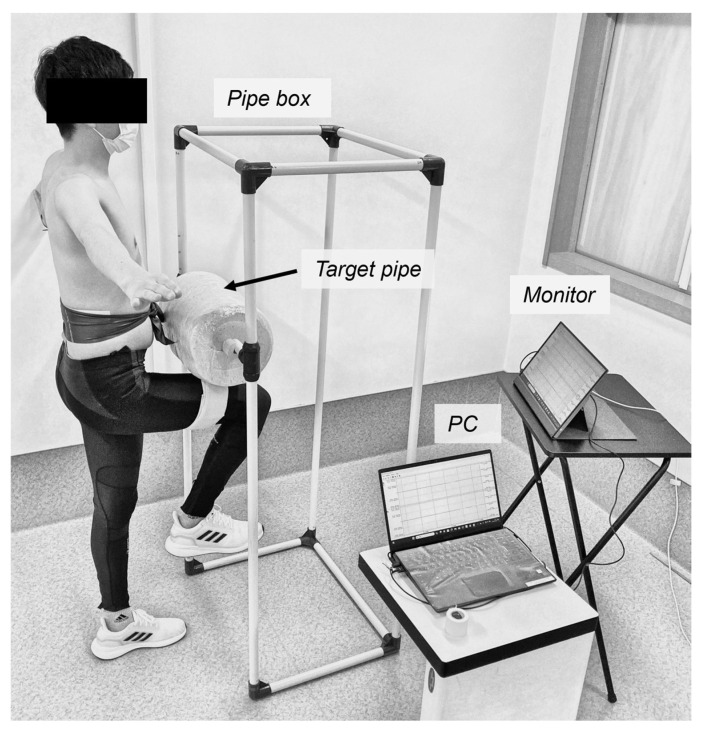 Figure 1
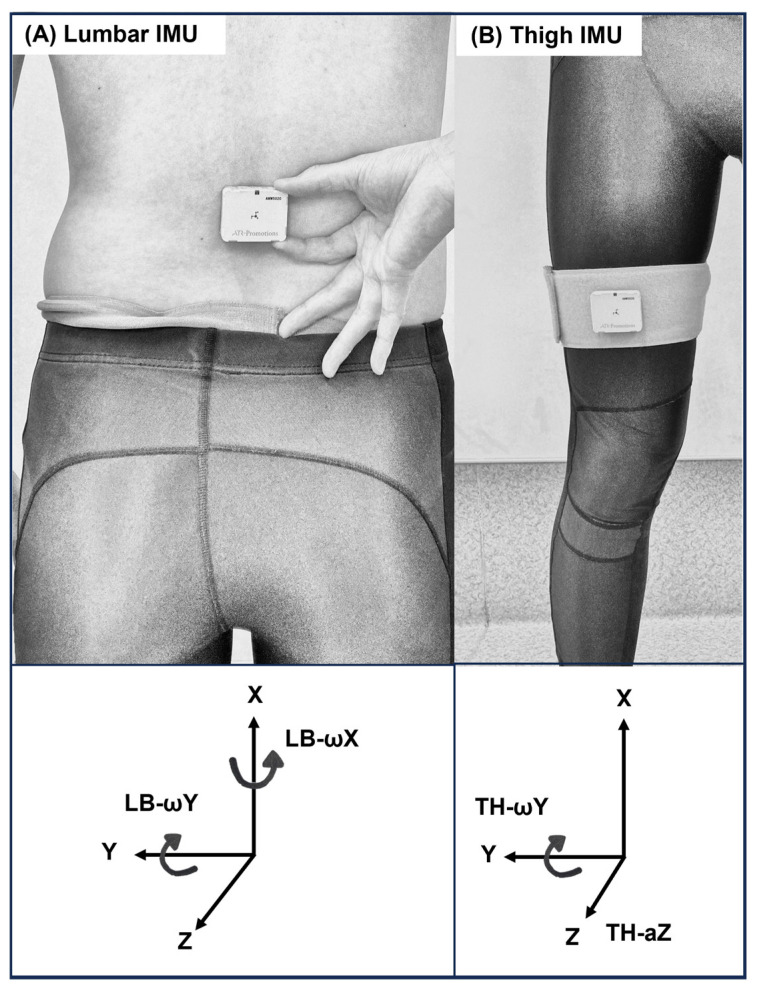 Figure 2
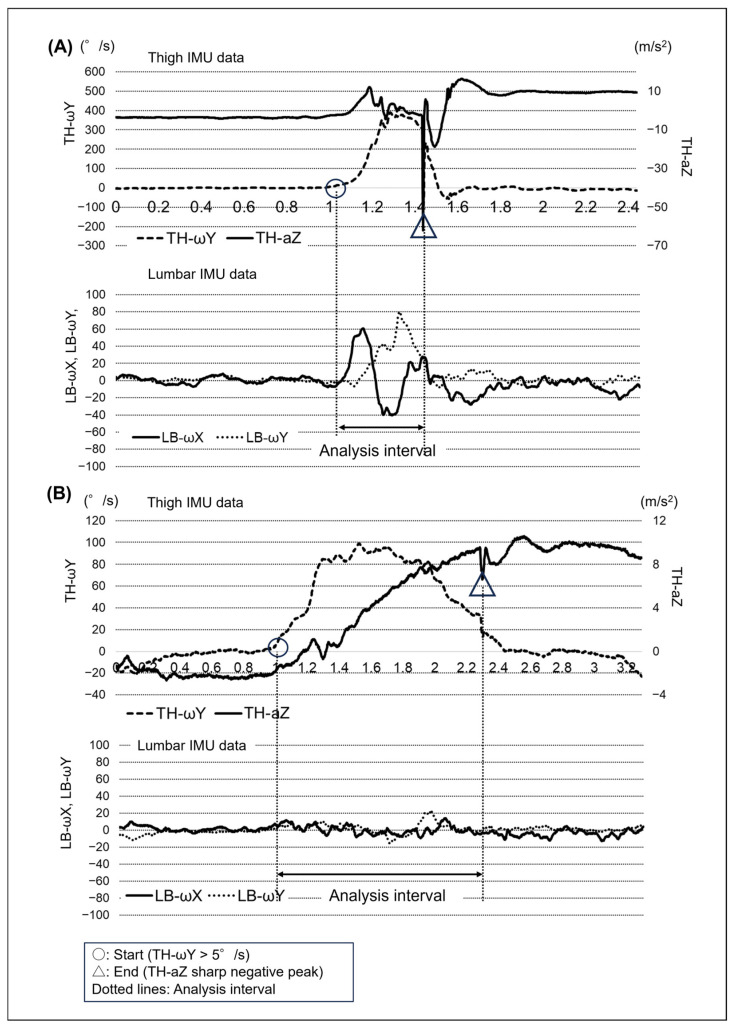 Figure 3
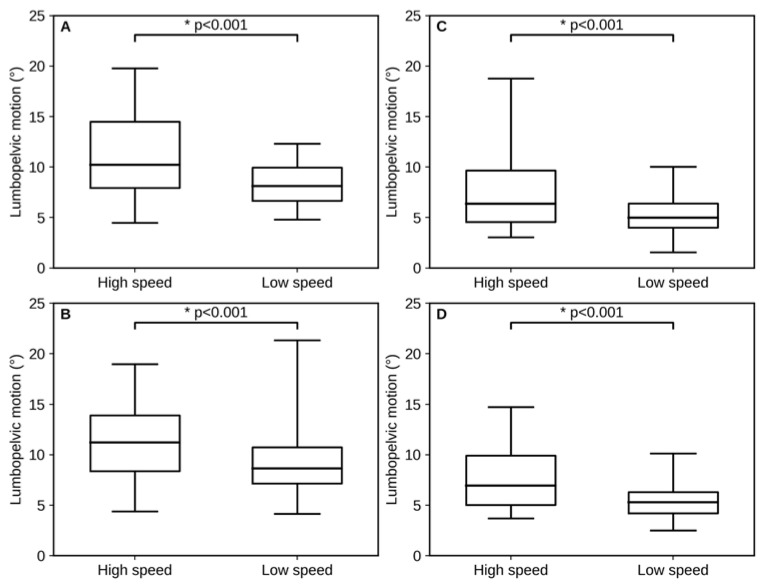 Figure 4
Peer Reviews
No public reviews on file for this paper yet. If you reviewed it on a platform where reviews are public (OpenReview, ICLR, NeurIPS, ICML), you can paste yours below so the community can read it here.
Videos
No videos yet. Explain this paper in a talk, walkthrough, or lecture? Add one.
Taxonomy
TopicsMusculoskeletal pain and rehabilitation · Sports injuries and prevention · Sports Performance and Training