Early Drowsiness Detection via Second-Order Derivative Analysis of Heart Rate Variability: A Non-Contact ECG Approach with Machine Learning
Fabrice Vaussenat, Abhiroop Bhattacharya, Julie Payette, Alireza Saidi, Victor Bellemin, Geordi-Gabriel Renaud-Dumoulin, Sylvain G. Cloutier, Ghyslain Gagnon

TL;DR
This paper introduces a non-contact ECG method using heart rate variability derivatives to detect drowsiness earlier than traditional systems.
Contribution
The novel use of second-order derivatives of HRV for early drowsiness detection is proposed and evaluated.
Findings
HRV derivatives detected pre-crash states 5–8 minutes before behavioral signs of impairment.
Combining HRV derivatives with conventional metrics achieved an AUC of 0.863 for pre-crash prediction.
Driving performance indicators had the highest predictive accuracy (AUC = 0.999).
Abstract
Drowsy driving contributes to roughly 20% of traffic fatalities, yet most detection systems rely on behavioral cues that appear only after impairment has set in. Here we ask whether first and second derivatives of heart rate variability (HRV) can detect pre-crash states earlier than conventional approaches. Twenty-five participants completed 49 driving simulator sessions while we recorded cardiac activity through capacitive ECG electrodes embedded in the seat backrest—a non-contact method that avoids the privacy concerns of camera-based monitoring. To prevent circular evaluation, ground truth labels were based solely on crash proximity rather than HRV-derived scores. The combined HRV feature set (conventional metrics plus derivatives) achieved AUC = 0.863 for pre-crash prediction; derivatives alone reached only AUC = 0.573, indicating their value as complementary rather than standalone…
Genes, proteins, chemicals, diseases, species, mutations and cell lines named across the full text — each resolved to its canonical identifier and authoritative record.
Click any figure to enlarge with its caption.
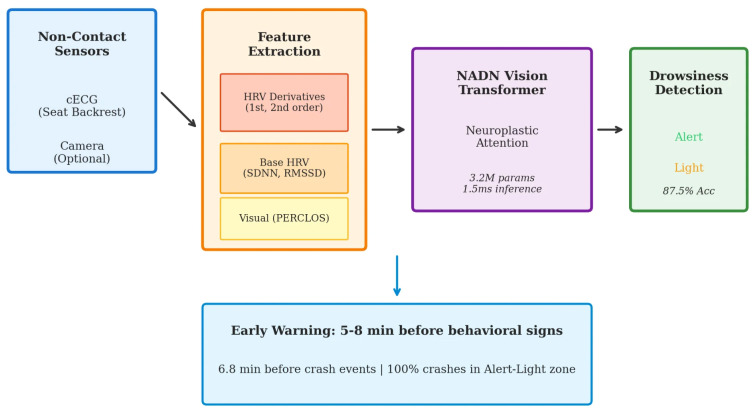 Figure 1
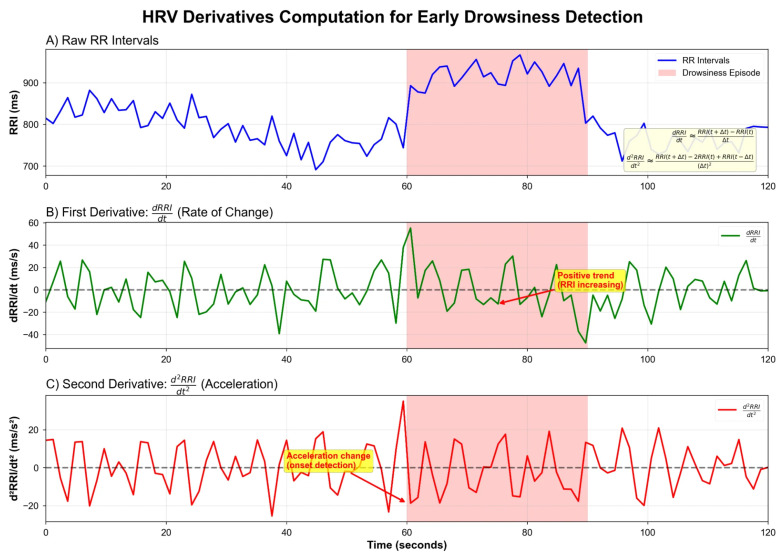 Figure 2
 Figure 3
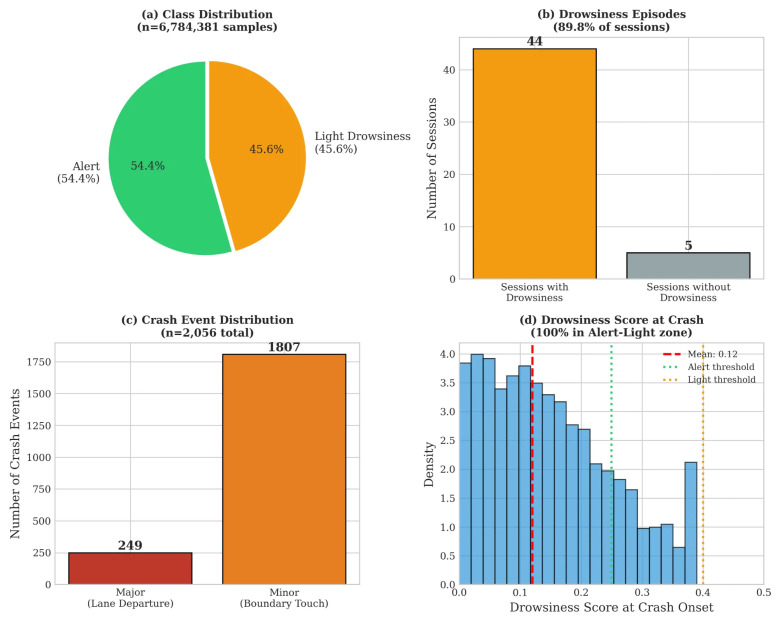 Figure 4
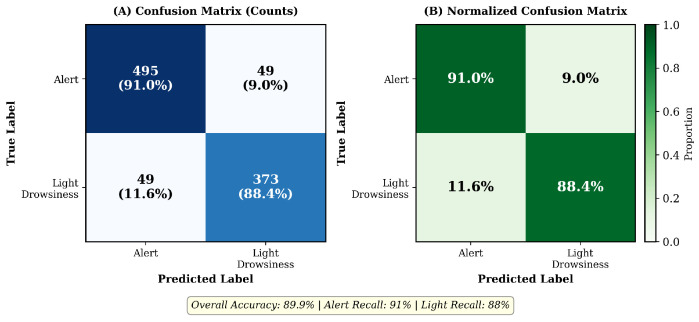 Figure 5
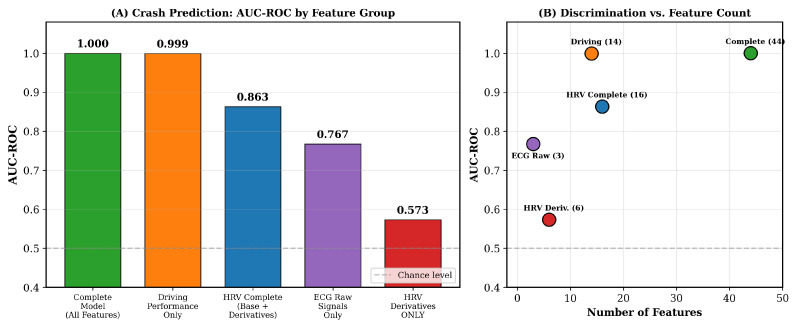 Figure 6
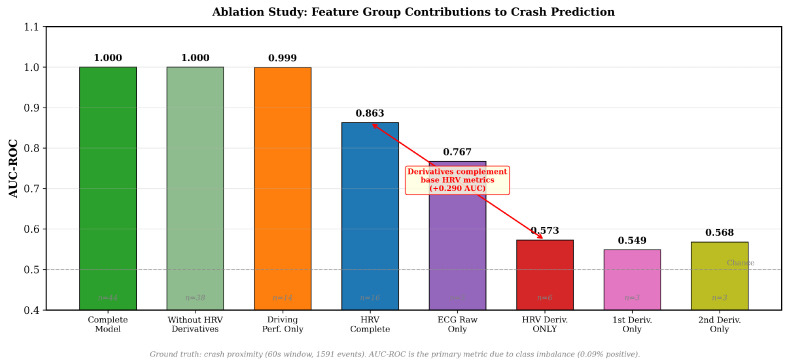 Figure 7
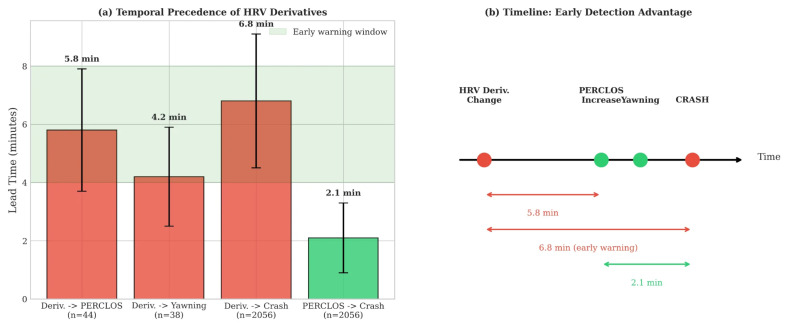 Figure 8
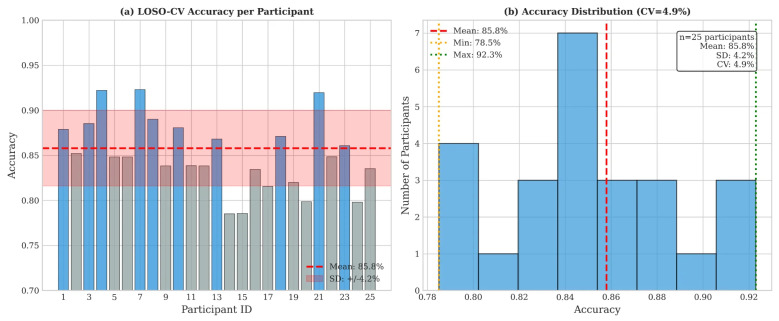 Figure 9
Peer Reviews
No public reviews on file for this paper yet. If you reviewed it on a platform where reviews are public (OpenReview, ICLR, NeurIPS, ICML), you can paste yours below so the community can read it here.
Videos
No videos yet. Explain this paper in a talk, walkthrough, or lecture? Add one.
Taxonomy
TopicsSleep and Work-Related Fatigue · Heart Rate Variability and Autonomic Control · Non-Invasive Vital Sign Monitoring