Antinociceptive Effect and HPLC Profile of Lyophilized Chicory and Oregano Decoction
Ivana Zlatanović Đaić, Ivana Dimitrijević, Sonja Ilić, Katarina Mitić Ivković, Nenad Stojiljković, Gordana Stojanović

TL;DR
This study shows that a freeze-dried mixture of oregano and chicory has strong pain-relieving effects and contains high levels of beneficial phenolic compounds.
Contribution
The study identifies the antinociceptive potential and detailed HPLC profile of a lyophilized oregano and chicory decoction.
Findings
LCOD contains 20 phenolic compounds, with ferulic acid, rosmarinic acid, and hyperoside as the most abundant.
LCOD at 15 and 30 mg/kg reduced acetic acid-induced writhing by 98.40% and 99.23%, respectively.
The results suggest LCOD has strong analgesic potential that warrants further clinical validation.
Abstract
The chemical composition and antinociceptive potential of a lyophilized decoction of the oregano flowers (Origanum vulgare L.) and the aerial parts of chicory (Cichorium intybus L.) in the flowering phase (LCOD—lyophilized decoction of the oregano and chicory) was investigated by HPLC-DAD and the acetic-acid-induced writhing method. HPLC-DAD analysis of the LCOD revealed the presence of 20 phenolic compounds, where the dominant phenolic components were ferulic acid (205.19 mg/g LCOD), rosmarinic acid (81.55 mg/g) and hyperoside (79.42 mg/g). The results of the antinociceptive activity showed a strong analgesic effect of the LCOD (15 and 30 mg/kg), which significantly (p < 0.001) reduced the number of writhings (98.40 and 99.23%, respectively) induced by acetic acid. These encouraging results indicate the analgesic potential of LCOD and suggest validation through clinical trials.
Genes, proteins, chemicals, diseases, species, mutations and cell lines named across the full text — each resolved to its canonical identifier and authoritative record.
Click any figure to enlarge with its caption.
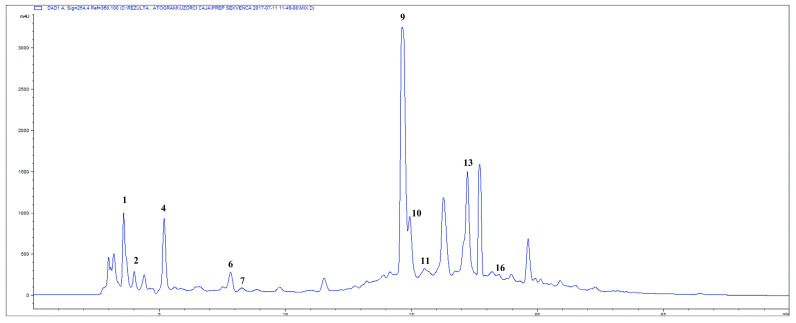 Figure 1
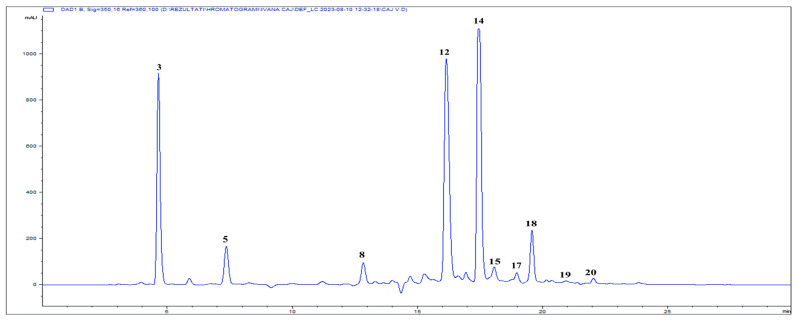 Figure 2
Peer Reviews
No public reviews on file for this paper yet. If you reviewed it on a platform where reviews are public (OpenReview, ICLR, NeurIPS, ICML), you can paste yours below so the community can read it here.
Videos
No videos yet. Explain this paper in a talk, walkthrough, or lecture? Add one.
Taxonomy
TopicsHerbal Medicine Research Studies · Sesquiterpenes and Asteraceae Studies · Fungal Biology and Applications