Spatial–Temporal Heterogeneity and Driving Mechanisms of the Relationship Between Vegetation Carbon Sequestration and Biogenic Volatile Organic Compounds (BVOC) Emissions in China
Yibing Li, Xiaoxiu Lun, Panfei Fang, Shaodong Huang, Yuying Liang, Yujie Li, Pengfei Zheng, Jia Wang, Longhuan Wang

TL;DR
This study explores how plants in China both absorb carbon and emit pollutants, and how climate factors influence this balance.
Contribution
The paper introduces a new Biogenic Carbon Efficiency Index (BCEI) to quantify the dual role of vegetation in carbon sequestration and BVOC emissions.
Findings
The BCEI decreases from southeast to northwest China and declined over 78% of the country from 2001–2020.
Hydrothermal variables like temperature, precipitation, and soil moisture are key drivers of BCEI variability.
BCEI is negatively correlated with soil moisture and precipitation but positively correlated with evapotranspiration.
Abstract
Vegetation plays a dual role in the Earth’s climate system: it removes atmospheric CO2 through photosynthesis while emitting biogenic volatile organic compounds (BVOCs), which can weaken the net carbon sink and contribute to air pollution. To assess the long-term interplay between carbon uptake and BVOC emissions, and to clarify how vegetation characteristics and climate regulate this relationship, we developed a Biogenic Carbon Efficiency Index (BCEI). The BCEI integrates BVOC emissions with gross primary productivity (GPP) to quantify their spatial ratio, thereby capturing the concurrent “source” and “sink” attributes of vegetation. We characterize the spatiotemporal heterogeneity of the BCEI across China and identify its dominant environmental drivers. The BCEI decreases from southeast to northwest, and during 2001–2020 exhibited a declining trend over 78% of the country, with…
Genes, proteins, chemicals, diseases, species, mutations and cell lines named across the full text — each resolved to its canonical identifier and authoritative record.
Click any figure to enlarge with its caption.
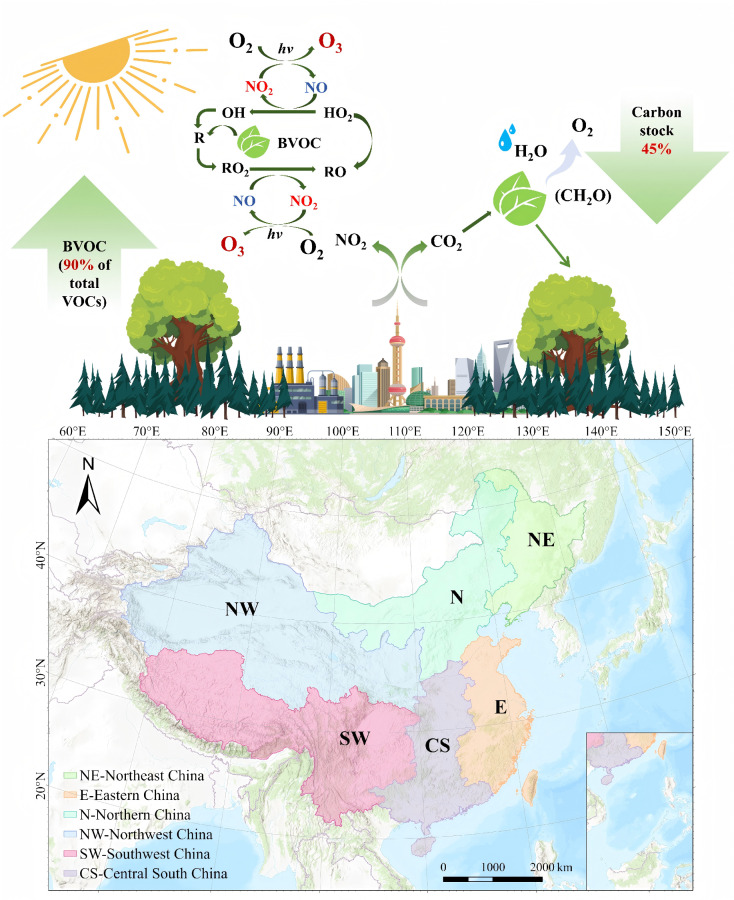 Figure 1
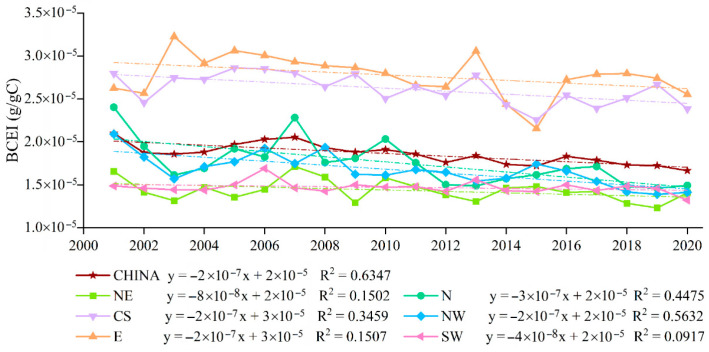 Figure 2
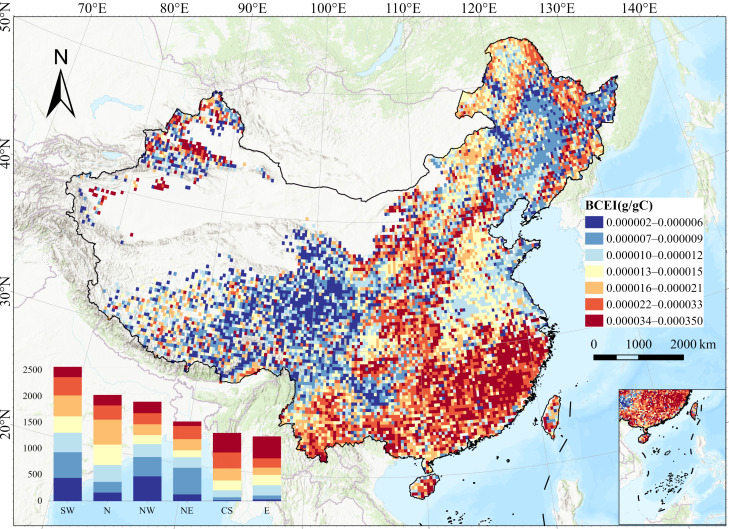 Figure 3
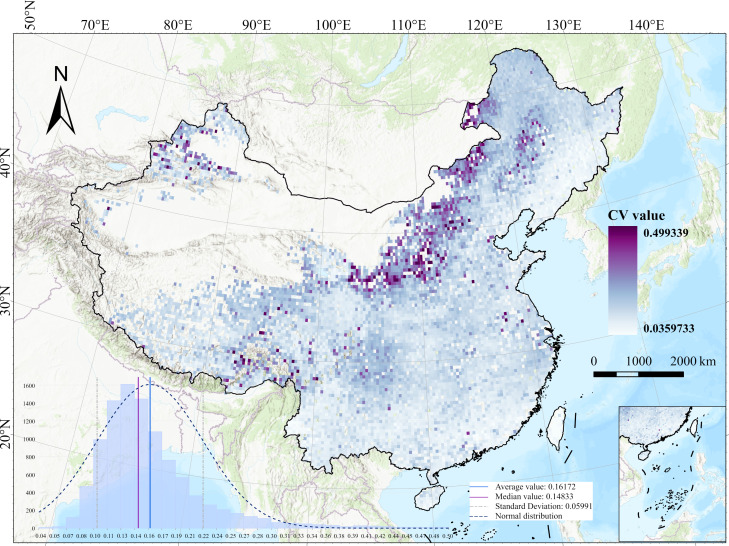 Figure 4
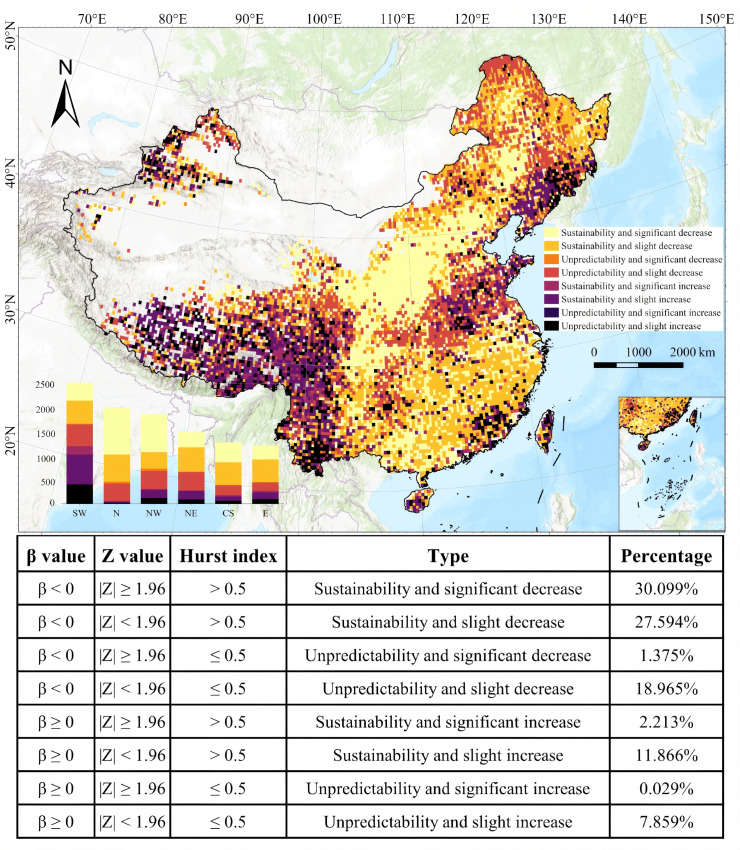 Figure 5
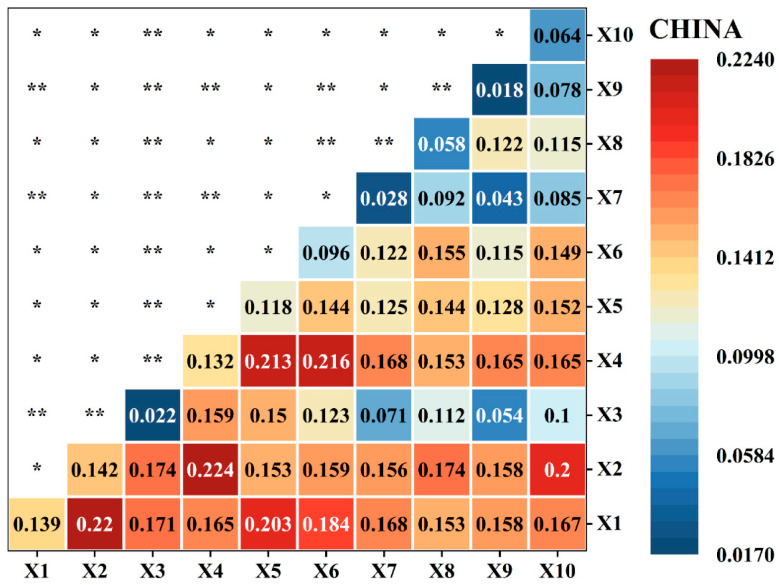 Figure 6
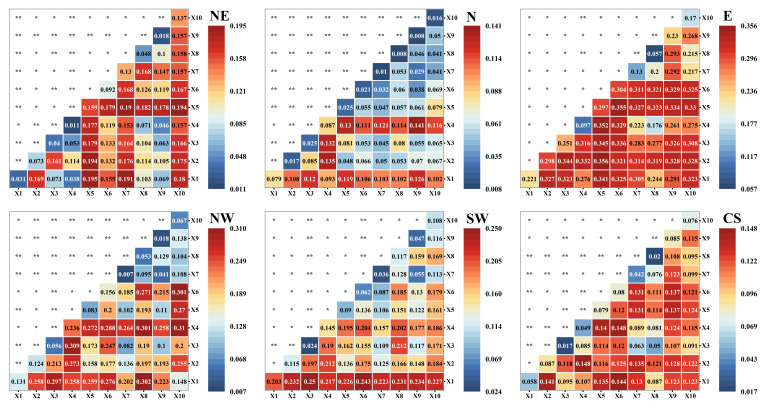 Figure 7
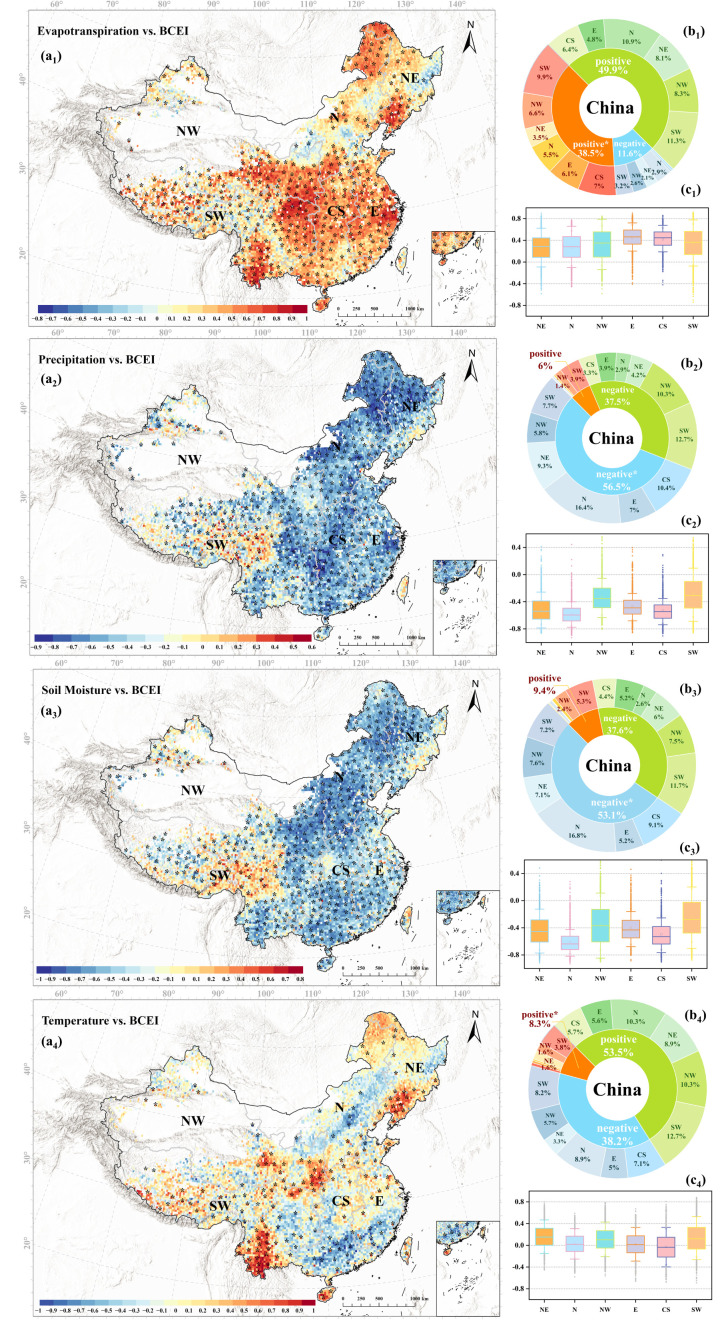 Figure 8
Peer Reviews
No public reviews on file for this paper yet. If you reviewed it on a platform where reviews are public (OpenReview, ICLR, NeurIPS, ICML), you can paste yours below so the community can read it here.
Videos
No videos yet. Explain this paper in a talk, walkthrough, or lecture? Add one.
Taxonomy
TopicsPlant Water Relations and Carbon Dynamics · Atmospheric and Environmental Gas Dynamics · Remote Sensing in Agriculture