Are We Chasing a Wild Goose? Rethinking Breeding Targets for Salinity Stress Tolerance in Rice
Qian Xu, Ping Yun, Kiril Tenekedjiev, Natalia Nikolova, Babar Shahzad, Jiarui Zheng, Lana Shabala, Meixue Zhou, Sergey Shabala

TL;DR
This study suggests that improving rice's ability to retain potassium and manage stomata is more effective for salt tolerance than focusing on sodium exclusion.
Contribution
The study introduces new breeding targets for salinity stress tolerance in rice by emphasizing K+ retention and stomatal regulation over Na+ exclusion.
Findings
The best model for predicting rice biomass under salinity uses stomatal conductance, chlorophyll content, and shoot K+ content.
Shoot Na+ content does not significantly affect biomass accumulation in rice under salt stress.
Breeding strategies should focus on K+ retention and stomatal regulation rather than Na+ exclusion for better salinity tolerance.
Abstract
Salinity stress has become an increasingly critical challenge for agricultural production, especially for rice, a staple crop that feeds over 50% of the world population but is extremely sensitive to salt stress. In this study, ten rice genotypes were treated with three salinity levels (0, 50, and 100 mM NaCl) to investigate the effects of salt stress on rice, and this data was then used to build regression models that describe plant growth responses as a function of stomatal conductance (Gs), chlorophyll content (SPAD), and shoot K+ and Na+ contents—parameters that can be used for high-throughput screening of rice plants for salinity stress tolerance. In silico modeling results showed that the best model for predicting shoot dry weight (SDW) was based on Gs, SPAD, and shoot K+ content, while shoot Na+ content had no significant influence on biomass accumulation. These findings…
Genes, proteins, chemicals, diseases, species, mutations and cell lines named across the full text — each resolved to its canonical identifier and authoritative record.
Click any figure to enlarge with its caption.
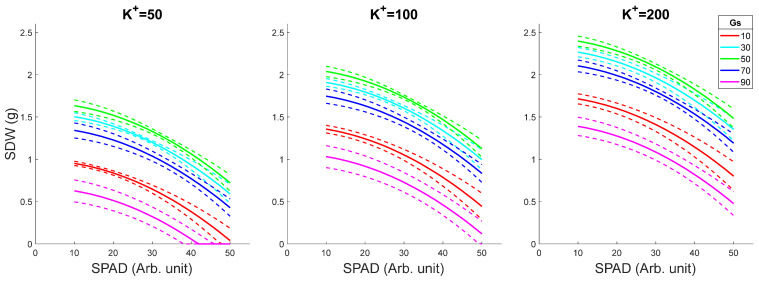 Figure 1
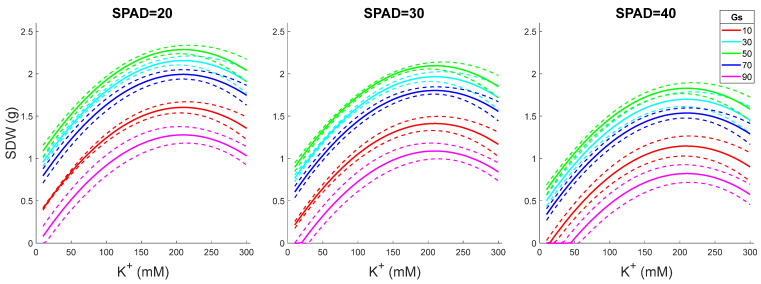 Figure 2
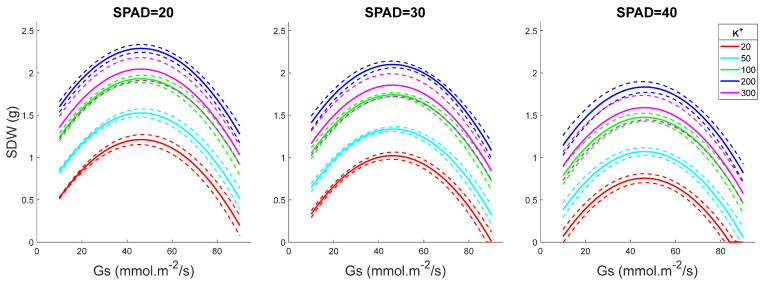 Figure 3
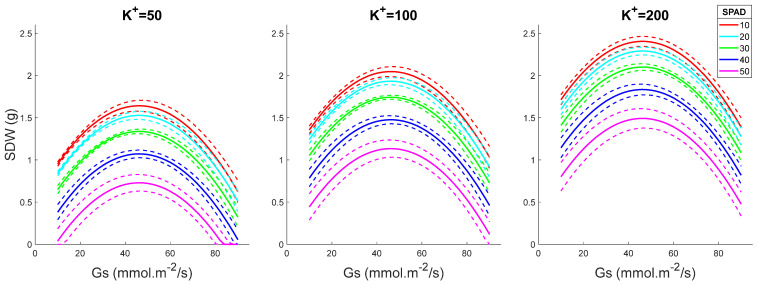 Figure 4
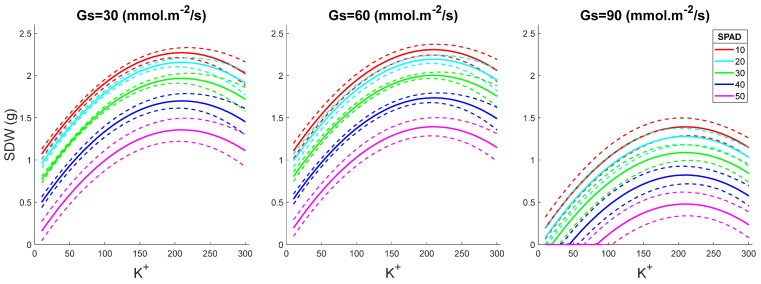 Figure 5
Peer Reviews
No public reviews on file for this paper yet. If you reviewed it on a platform where reviews are public (OpenReview, ICLR, NeurIPS, ICML), you can paste yours below so the community can read it here.
Videos
No videos yet. Explain this paper in a talk, walkthrough, or lecture? Add one.
Taxonomy
TopicsPlant Stress Responses and Tolerance · Aluminum toxicity and tolerance in plants and animals · Rice Cultivation and Yield Improvement