Preliminary Data Regarding the Potential of Oxytocin to Modulate Aggressive Behaviour in a VPA-Based Animal Model of Autism Spectrum Disorder
Oana-Georgiana Oprea, Petru Fabian Lungu, Alexandru Ionut Chelaru, Ioana-Miruna Balmus, Roxana Strungaru-Jijie, Gabriel Plavan, Mircea Nicusor Nicoara, Alin Ciobica, Diana Gheban, Stefan Chiriac

TL;DR
This study explores whether oxytocin can reduce aggressive behavior in a zebrafish model of autism, showing promising results similar to a common medication.
Contribution
The study provides preliminary evidence that oxytocin may help manage aggression in autism-related models as effectively as risperidone.
Findings
VPA treatment induced locomotion and socio-affective impairments and increased aggression in zebrafish.
Oxytocin and risperidone similarly reduced aggressive and anxiety-like behaviors in the VPA model.
Further research is needed to understand the mechanisms and potential synergy of oxytocin and risperidone.
Abstract
Background/Objectives: Aggressive behaviour is commonly associated with neurodevelopmental disorders, such as autism spectrum disorder (ASD), and could be understood as a response to daily stress routines, which negatively impacts patients’ quality of life. Oxytocin (OT), a neuropeptide involved in social bonding and socio-affective regulation, has emerged as a promising candidate to enrich, rather than replace, current pharmacological approaches in managing ASD-associated aggressive behaviour. In this study, we examined the potential of OT to modulate aggressive behaviour frequency in a VPA-based animal model of ASD. Methods: Sixty adult zebrafish (1:1 sex ratio) were divided into six groups (n = 10/group) and received the following treatment for 7 consecutive days: CTR—control (no treatment); VPA (28.8 mg/L valproic acid); OT (33.2 ng/mL oxytocin); RIS (170 μg/L risperidone); VPA + OT…
Genes, proteins, chemicals, diseases, species, mutations and cell lines named across the full text — each resolved to its canonical identifier and authoritative record.
Click any figure to enlarge with its caption.
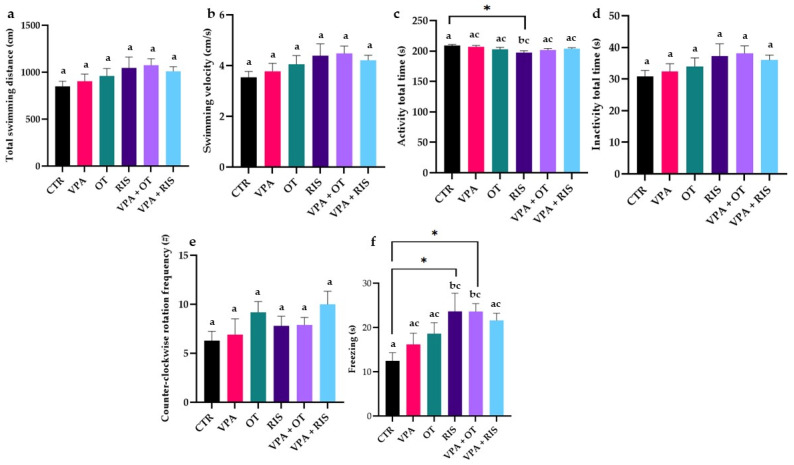 Figure 1
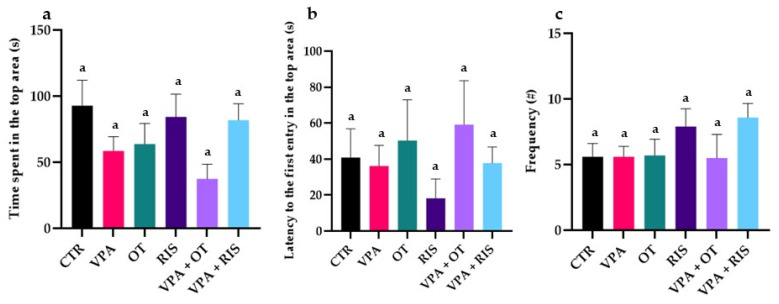 Figure 2
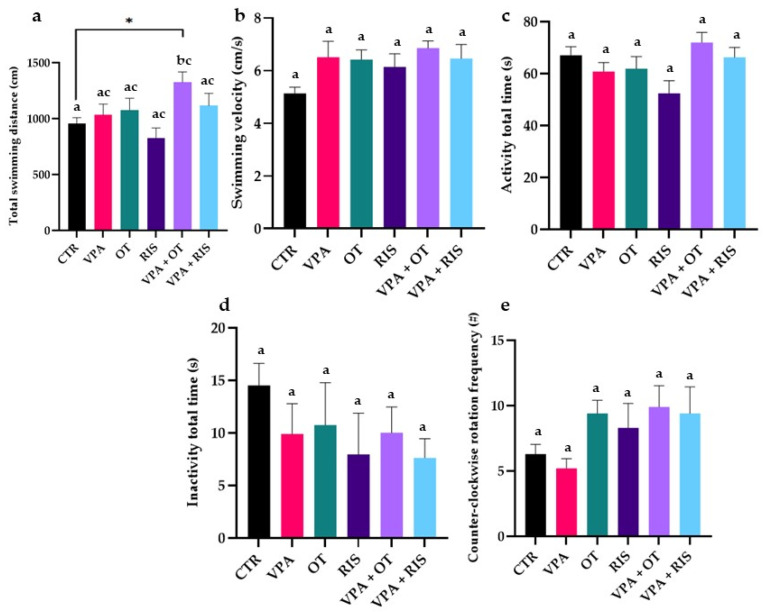 Figure 3
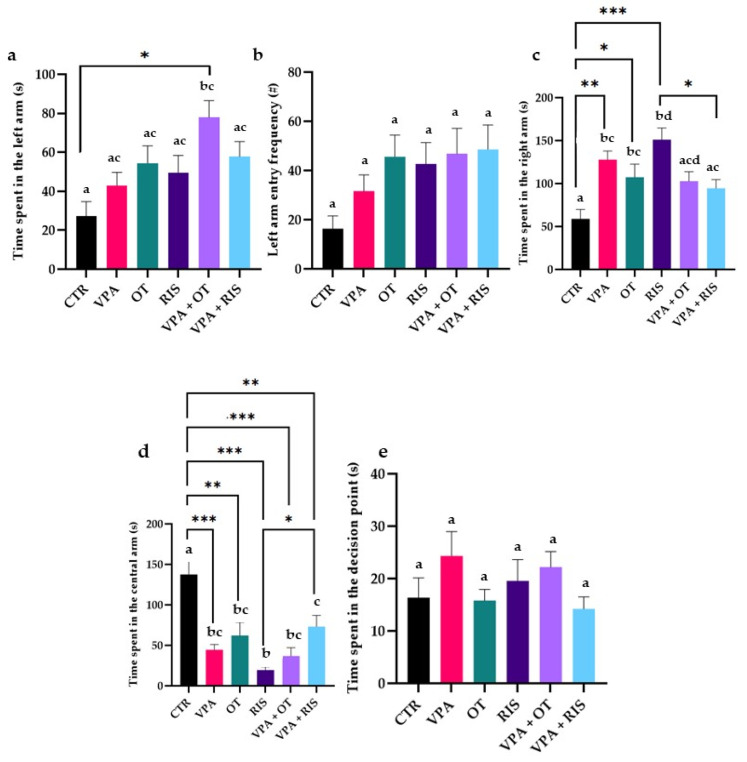 Figure 4
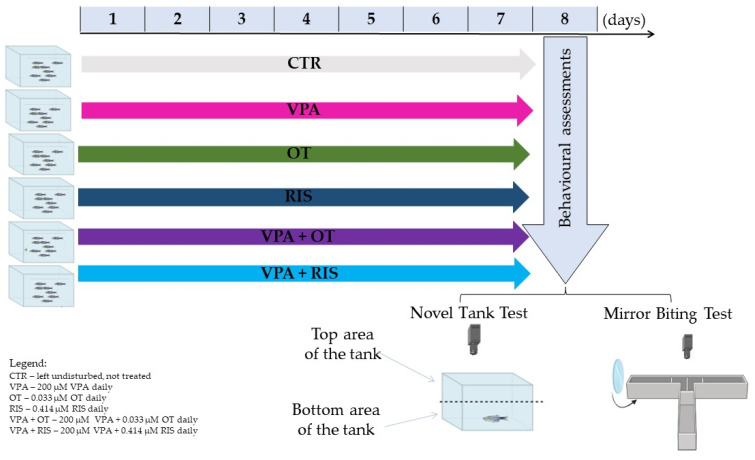 Figure 5
Peer Reviews
No public reviews on file for this paper yet. If you reviewed it on a platform where reviews are public (OpenReview, ICLR, NeurIPS, ICML), you can paste yours below so the community can read it here.
Videos
No videos yet. Explain this paper in a talk, walkthrough, or lecture? Add one.
Taxonomy
TopicsNeuroendocrine regulation and behavior · Zebrafish Biomedical Research Applications · Cephalopods and Marine Biology