Optimising Camera–ChArUco Geometry for Motion Compensation in Standing Equine CT: A CT-Motivated Benchtop Study
Cosimo Aliani, Cosimo Lorenzetto Bologna, Piergiorgio Francia, Leonardo Bocchi

TL;DR
This study explores how camera and marker placement affects motion tracking accuracy in equine CT scans to improve image quality.
Contribution
The study provides quantitative guidance on optimizing camera–ChArUco geometry for motion compensation in equine CT.
Findings
Cyclic repositioning does not increase variability compared to continuous acquisitions.
Frontal views minimize error but increase variability, while oblique views reduce jitter but increase bias.
Working distance significantly impacts repeatability, especially for depth components.
Abstract
Standing equine computed tomography (CT) acquisitions are susceptible to residual postural sway, which can introduce view-inconsistent motion and degrade image quality. External optical tracking based on ChArUco fiducials is a promising, low-cost strategy to enable projection-wise motion compensation, yet quantitative guidance on how camera–marker geometry affects pose-estimation performance remains limited. This CT-motivated benchtop study characterizes how the relative camera–ChArUco configuration influences both the accuracy (bias with respect to ground truth) and the precision (repeatability) of pose estimates obtained from RGB images using OpenCV ChArUco detection and reprojection-error minimization to estimate the rigid camera-to-board transformation. Controlled experiments systematically varied acquisition protocol (continuous repeated estimates at fixed pose versus cyclic…
Genes, proteins, chemicals, diseases, species, mutations and cell lines named across the full text — each resolved to its canonical identifier and authoritative record.
Click any figure to enlarge with its caption.
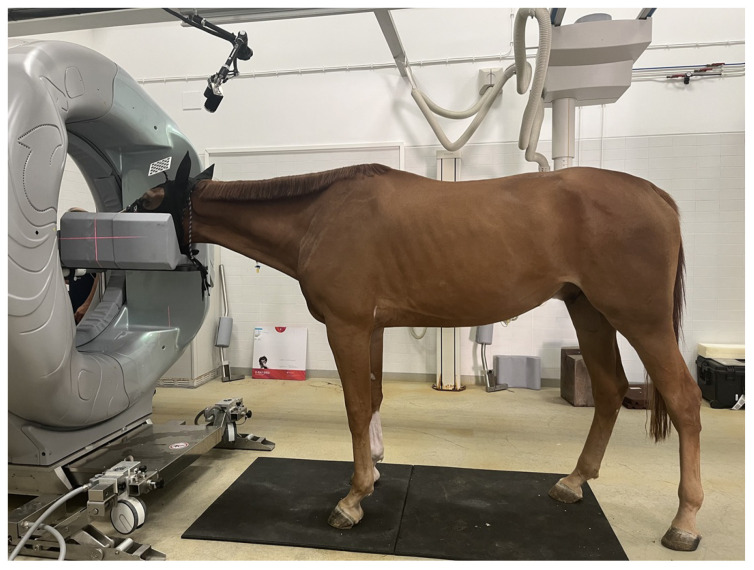 Figure 1
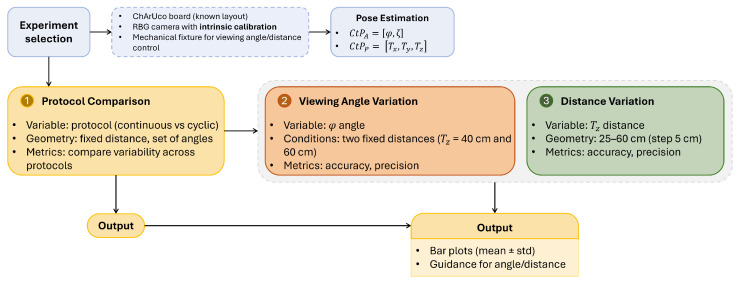 Figure 2
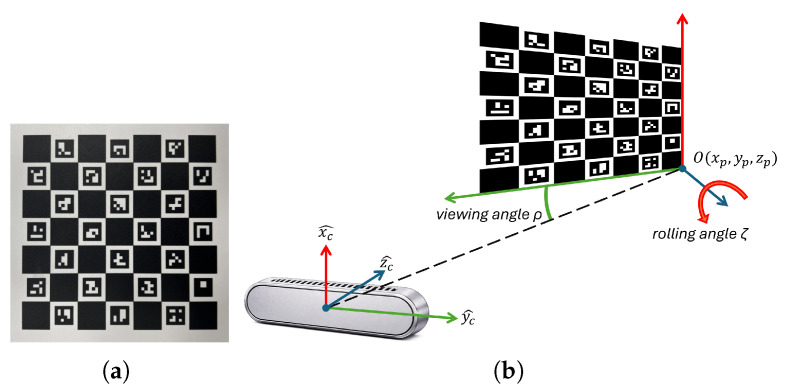 Figure 3
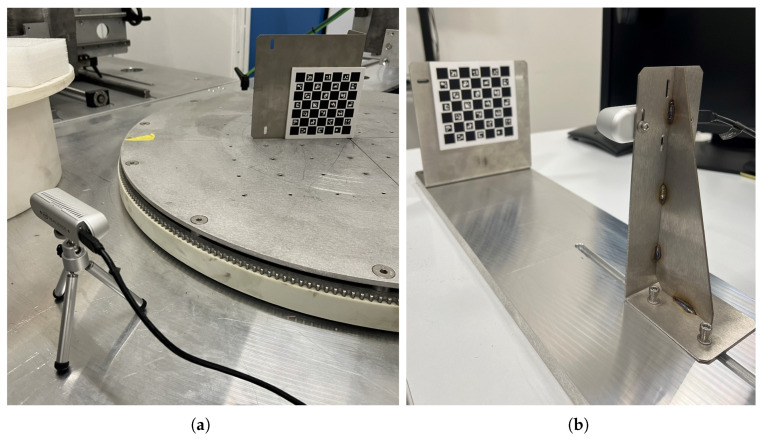 Figure 4
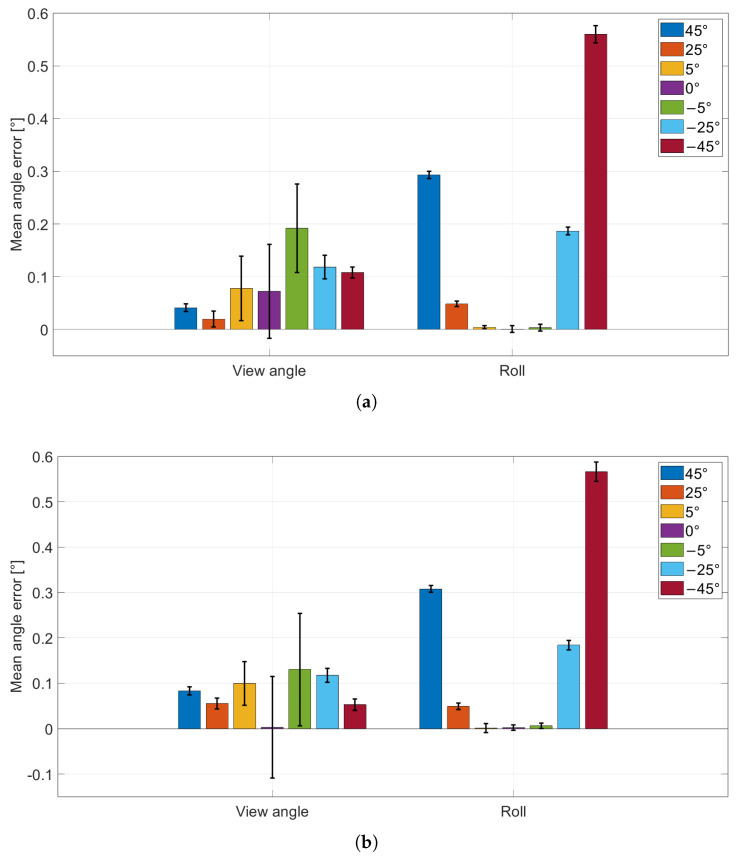 Figure 5
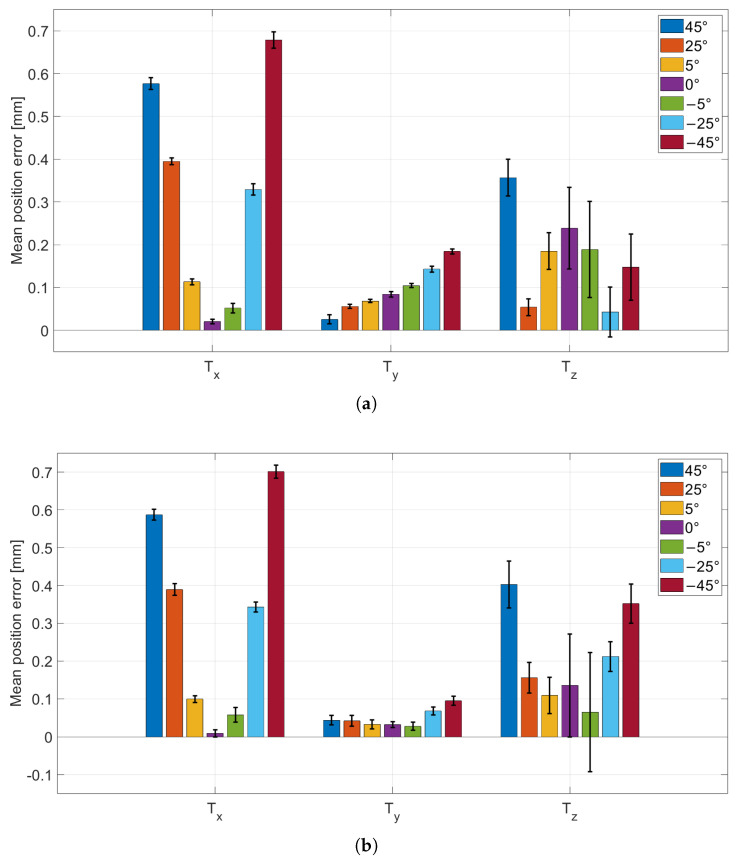 Figure 6
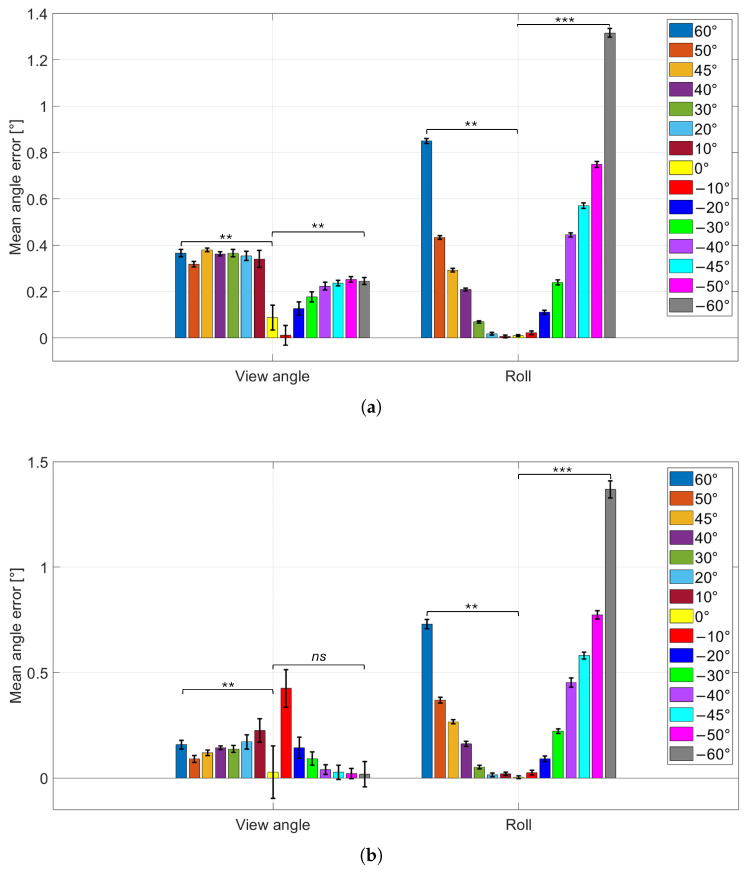 Figure 7
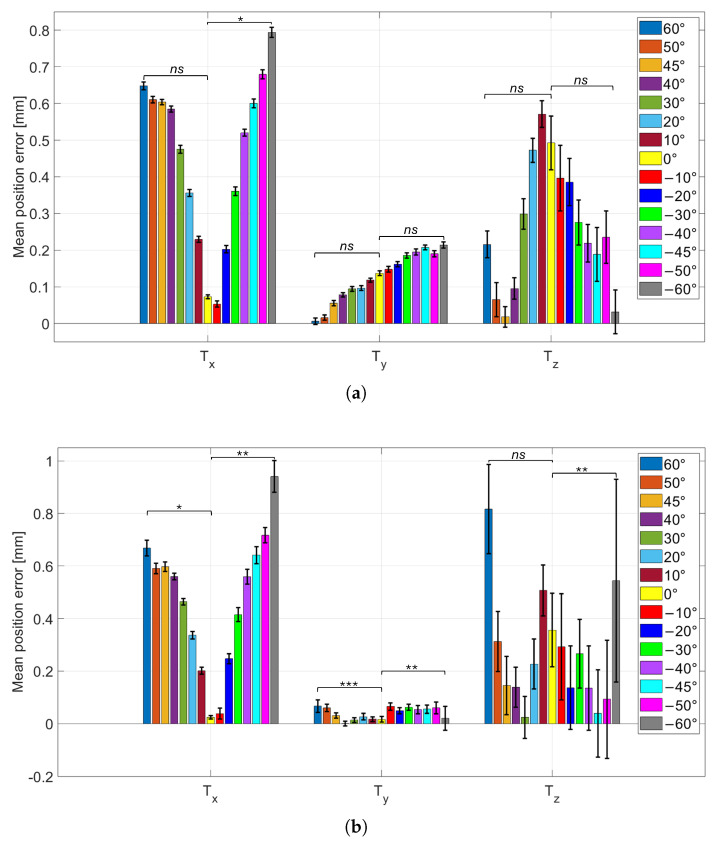 Figure 8
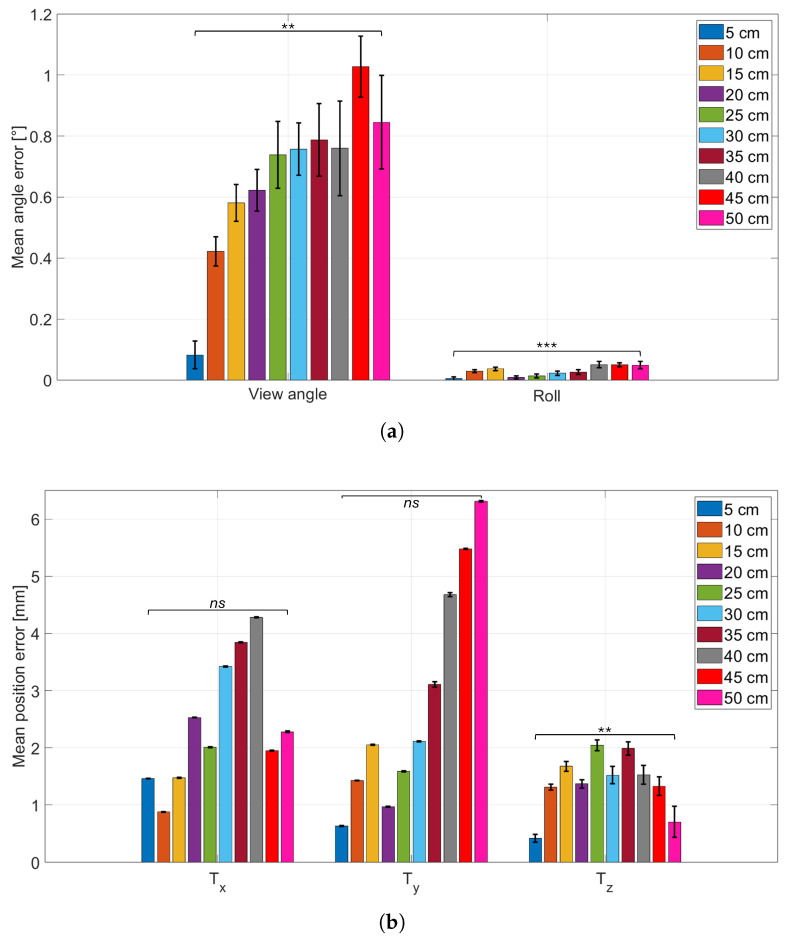 Figure 9
Peer Reviews
No public reviews on file for this paper yet. If you reviewed it on a platform where reviews are public (OpenReview, ICLR, NeurIPS, ICML), you can paste yours below so the community can read it here.
Videos
No videos yet. Explain this paper in a talk, walkthrough, or lecture? Add one.
Taxonomy
TopicsVeterinary Equine Medical Research · Veterinary Orthopedics and Neurology · Veterinary Pharmacology and Anesthesia