Frontiers in Antibody–Drug Conjugates: Mechanisms, Design Innovations, and Clinical Applications in Targeted Cancer Therapy
Xinghan Li, Jiaming Liu, Yitong Meng, Jun Li, Jieling Zhao, Dequan Liu, Xiaodong Zhang

TL;DR
This paper reviews antibody-drug conjugates (ADCs), a targeted cancer therapy that uses antibodies to deliver toxic drugs directly to tumor cells, reducing side effects.
Contribution
The paper provides a comprehensive overview of ADC mechanisms, design innovations, and clinical applications, emphasizing recent advancements and future directions.
Findings
ADCs use monoclonal antibodies to deliver cytotoxic agents to tumor cells, minimizing systemic toxicity.
Approved ADCs like gemtuzumab ozogamicin and trastuzumab emtansine have redefined cancer treatment.
Ongoing research addresses ADC challenges like tumor heterogeneity and resistance through new conjugation and payload technologies.
Abstract
Antibody–drug conjugates (ADCs) represent a transformative class of targeted therapies designed to deliver potent cytotoxic agents specifically to tumor cells, minimizing systemic toxicity. This review provides a comprehensive overview of ADCs, detailing their mechanisms of action, design strategies, and clinical advancements. ADCs utilize monoclonal antibodies to selectively bind tumor-associated antigens, enabling the precise delivery of toxic payloads to cancer cells. The review explores the critical components of ADCs, including the antibody, linker, and payload, and highlights how these elements can be optimized to improve efficacy and minimize off-target effects. We examine the evolution of ADC design from early constructs to the latest innovations and the development of novel payloads that extend therapeutic possibilities beyond traditional cytotoxic agents. Additionally, we…
Genes, proteins, chemicals, diseases, species, mutations and cell lines named across the full text — each resolved to its canonical identifier and authoritative record.
Click any figure to enlarge with its caption.
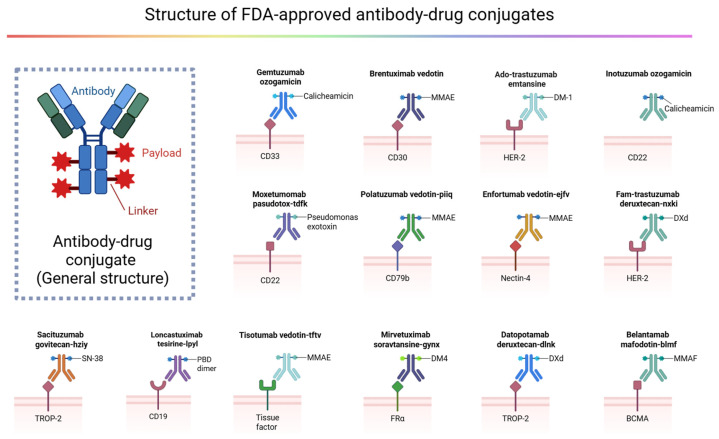 Figure 1
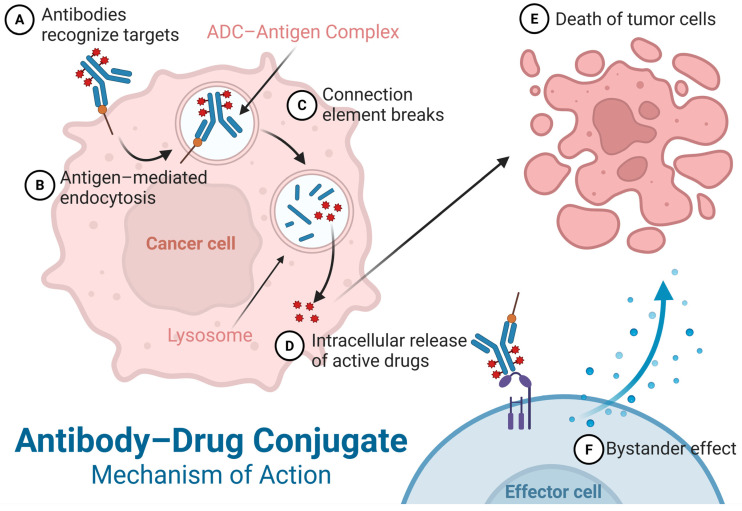 Figure 2
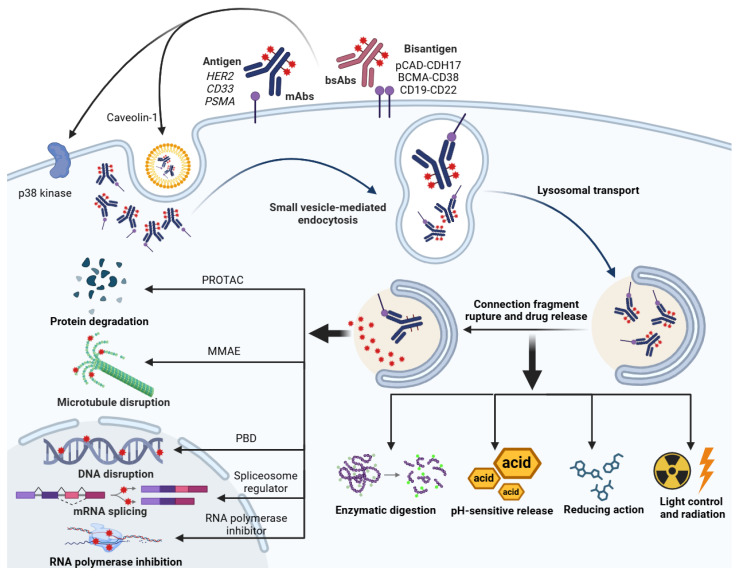 Figure 3
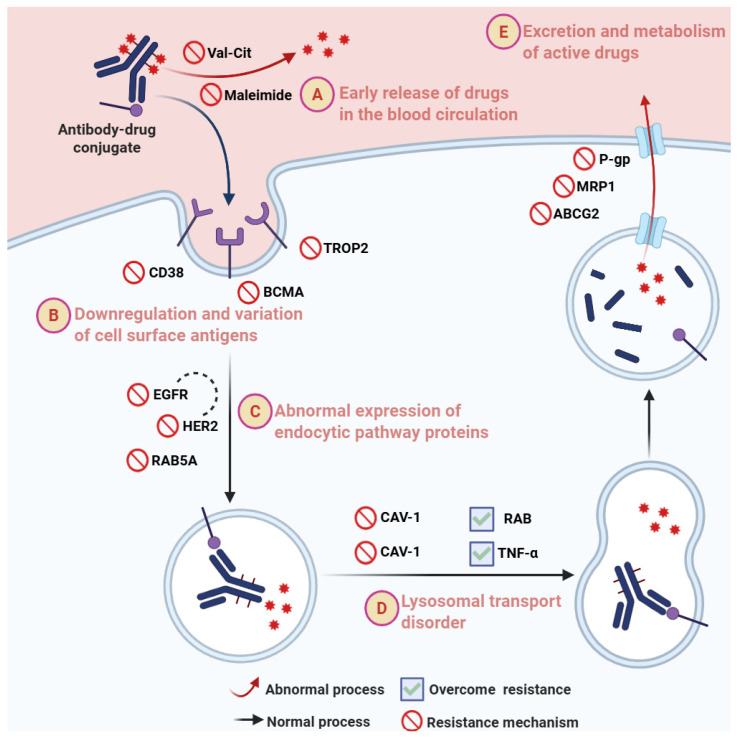 Figure 4
Peer Reviews
No public reviews on file for this paper yet. If you reviewed it on a platform where reviews are public (OpenReview, ICLR, NeurIPS, ICML), you can paste yours below so the community can read it here.
Videos
No videos yet. Explain this paper in a talk, walkthrough, or lecture? Add one.
Taxonomy
TopicsHER2/EGFR in Cancer Research · Monoclonal and Polyclonal Antibodies Research · Advanced Breast Cancer Therapies