An Overview of Anticoagulant Drugs Pharmacology, Therapeutic Approaches, Limitations and Perspectives
Claudiu Morgovan, Adina Frum, Laurentiu Stoicescu, Anca Butuca, Carmen Maximiliana Dobrea, Anca Maria Arseniu, Adriana Aurelia Chis, Maria Lucia Muresan, Felicia Gabriela Gligor, Ioana Rada Popa Ilie, Steliana Ghibu

TL;DR
This paper reviews anticoagulant drugs, their uses, limitations, and recent advancements in treating conditions like venous thrombosis.
Contribution
The paper provides a comprehensive overview of new anticoagulant drugs and their therapeutic benefits compared to older treatments.
Findings
New oral anticoagulants like dabigatran and rivaroxaban improve patient adherence and reduce bleeding risks.
Reversal agents for new anticoagulants have been developed for emergency situations.
Alternative anticoagulants for heparin-induced thrombocytopenia include argatroban and lepirudin.
Abstract
Coagulation is a physiological process necessary to achieve homeostasis. Many pathologies lead to spontaneous activation of the coagulation pathways and increase the risk of venous thrombosis (e.g., atrial fibrillation, orthopaedic surgery, cancer). Therefore, a lot of patients need anticoagulant drugs as preventive or curative treatment. In general, older molecules (unfractionated heparin, low-molecular-weight heparins, vitamin K antagonists) have good efficacy. Still, their adverse reactions, increased risk of bleeding, or difficult administration led to low adherence to treatment and had even limited their use. Recently, new molecules were authorised to improve patient adherence to treatment, mainly formulated for oral administration (e.g., dabigatran, rivaroxaban, apixaban, etc.). This therapeutic approach has a low risk of bleeding and does not require special monitoring by…
Genes, proteins, chemicals, diseases, species, mutations and cell lines named across the full text — each resolved to its canonical identifier and authoritative record.
Click any figure to enlarge with its caption.
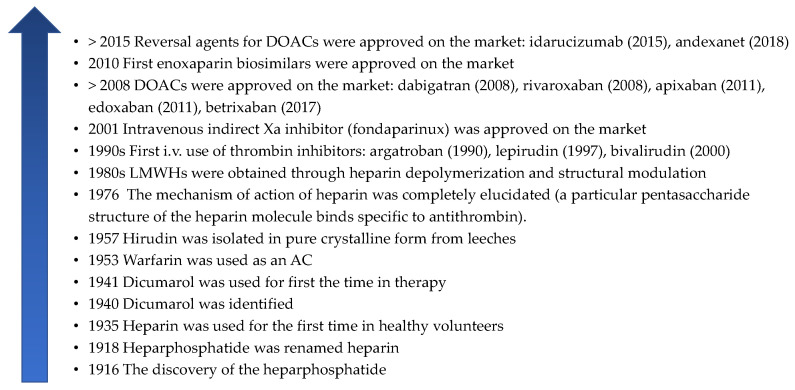 Figure 1
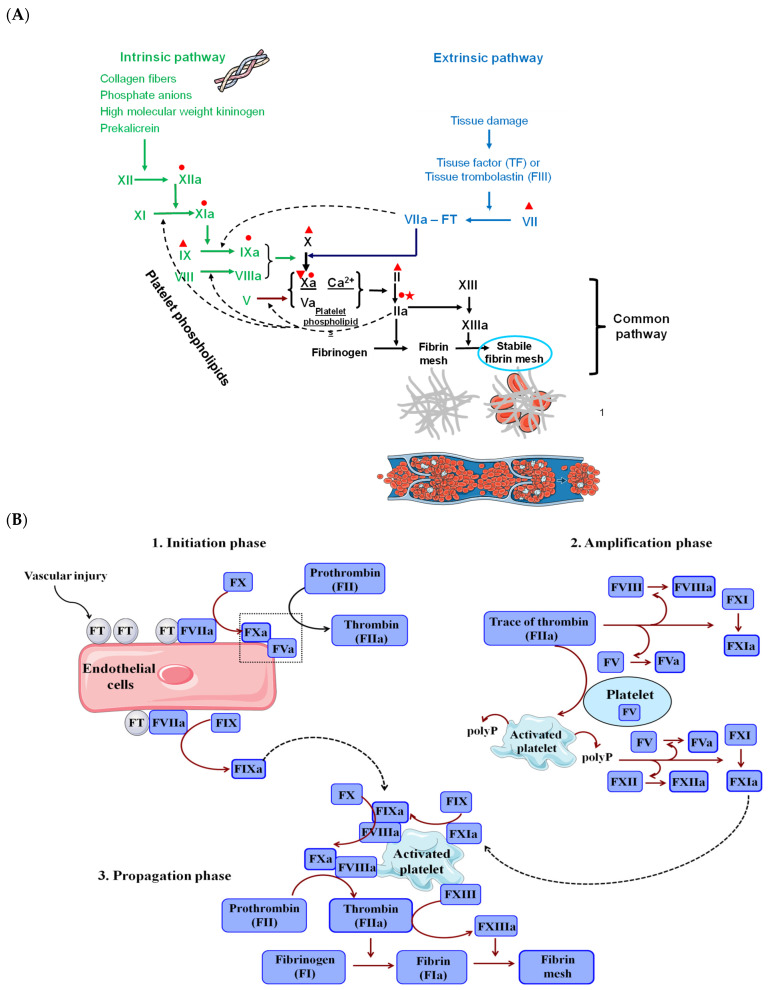 Figure 2
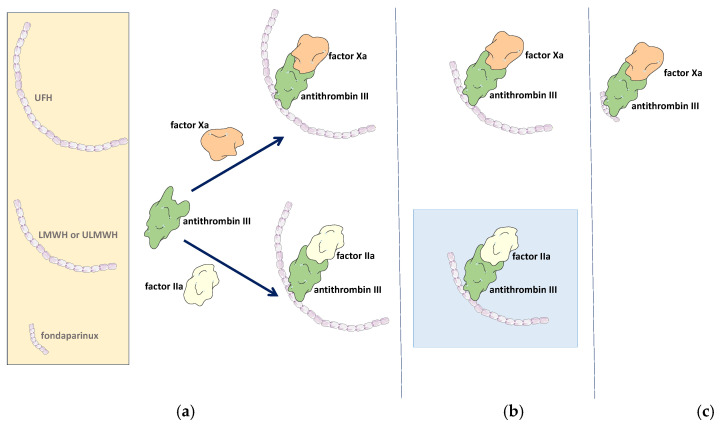 Figure 3
 Figure 4
 Figure 5
 Figure 6
 Figure 7
Peer Reviews
No public reviews on file for this paper yet. If you reviewed it on a platform where reviews are public (OpenReview, ICLR, NeurIPS, ICML), you can paste yours below so the community can read it here.
Videos
No videos yet. Explain this paper in a talk, walkthrough, or lecture? Add one.
Taxonomy
TopicsHeparin-Induced Thrombocytopenia and Thrombosis · Venous Thromboembolism Diagnosis and Management · Intramuscular injections and effects