Electron doping of exfoliated multilayer graphene induced by dissociative H2 adsorption due to long-term exposure to 80-bar H2 gas
Hyun-Seok Jang, Younghun Kim, Heewoo Lee, Soo Bong Choi, Jeongwoo Kim, Byung Hoon Kim

TL;DR
Exposing multilayer graphene to high-pressure hydrogen gas causes electron doping, changing its electronic properties in a simple and chemical-free way.
Contribution
A novel method for electron doping of multilayer graphene using dissociative hydrogen adsorption under high pressure is demonstrated.
Findings
Long-term exposure to 80 bar H2 induces electron doping in multilayer graphene.
Dissociative H2 adsorption leads to structural changes like increased C‒H bonding.
Molecular dynamics simulations confirm electron doping at surface layers and defects.
Abstract
Semiconducting graphene is expected to replace silicon in the electronics industry, and various methods have been proposed for this purpose. In this study, we demonstrate that the long-term exposure of multilayer graphene to 80 bar of molecular hydrogen induces electron doping in graphene. Ambipolarity behavior disappeared, and the current in the transfer curves decreased and increased in the negative gate voltage (Vg) and positive Vg regions, respectively. The charge neutrality point shifted from 4.18 to over −80 V. Two resonant scatterings due to hydrogen adatoms were observed in the temperature-dependent transfer curves. For multilayer graphene with a boundary (edge), different behavior was observed in the transfer characteristics. Upon exposure to 80 bar of H2 pressure, the drain current of the time-dependent transfer curve rapidly decreased; however, it increased in the positive Vg…
Genes, proteins, chemicals, diseases, species, mutations and cell lines named across the full text — each resolved to its canonical identifier and authoritative record.
Click any figure to enlarge with its caption.
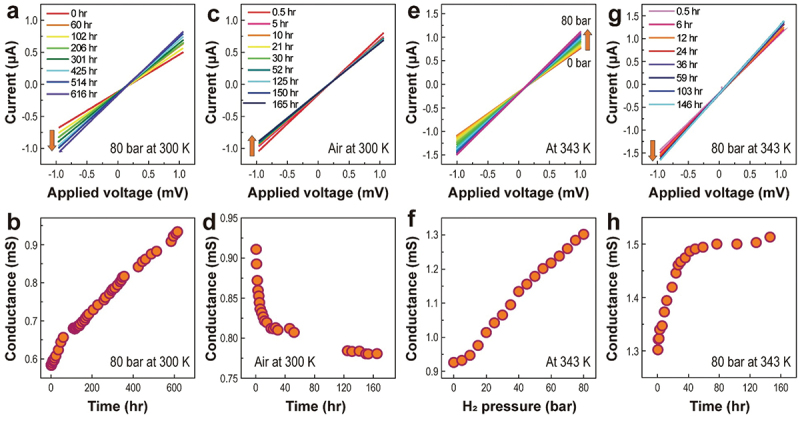 Figure 1
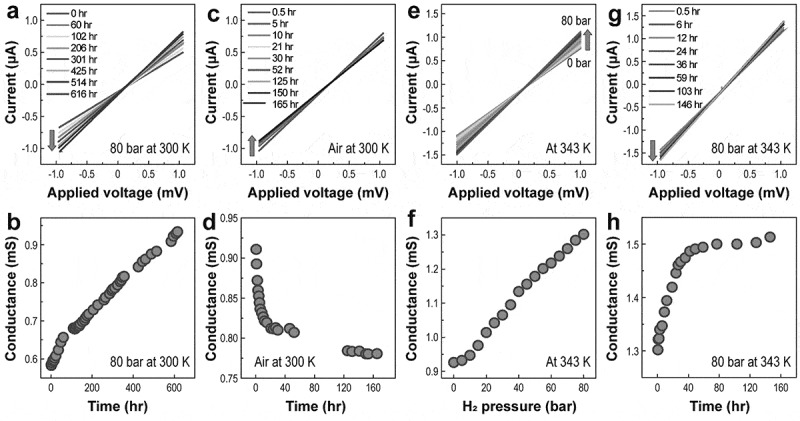 Figure 2
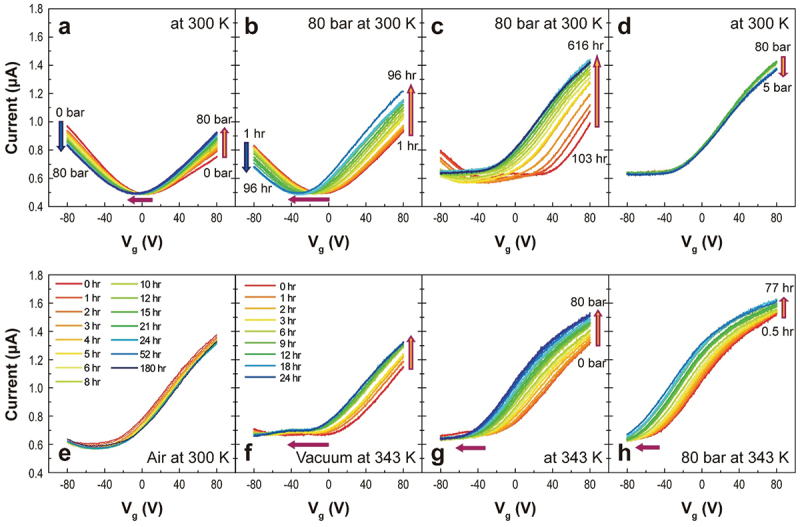 Figure 3
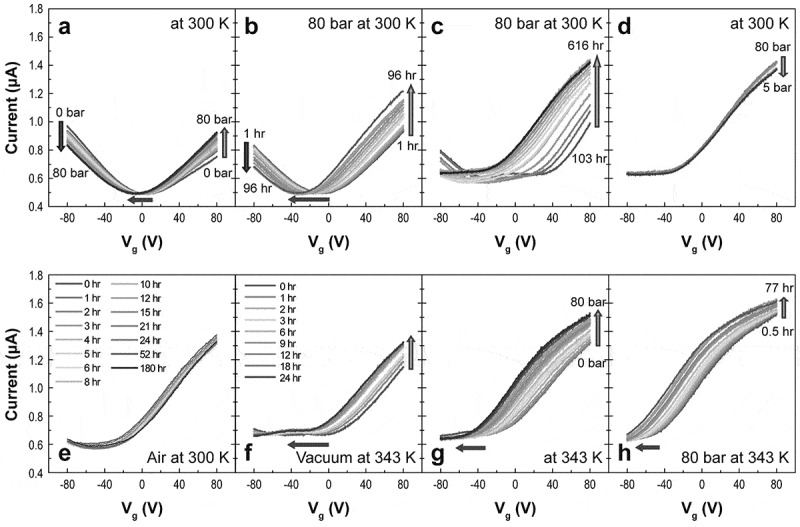 Figure 4
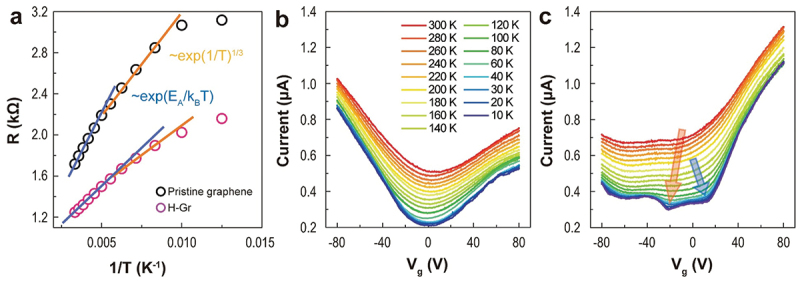 Figure 5
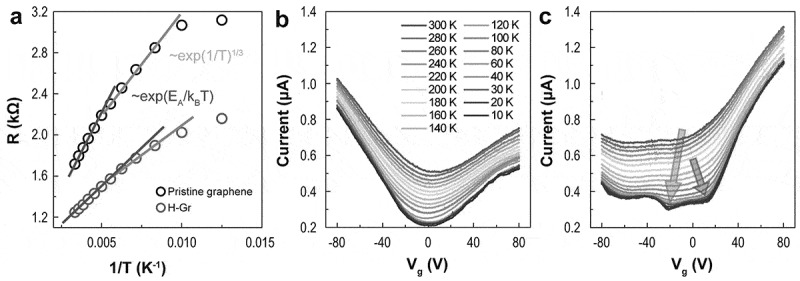 Figure 6
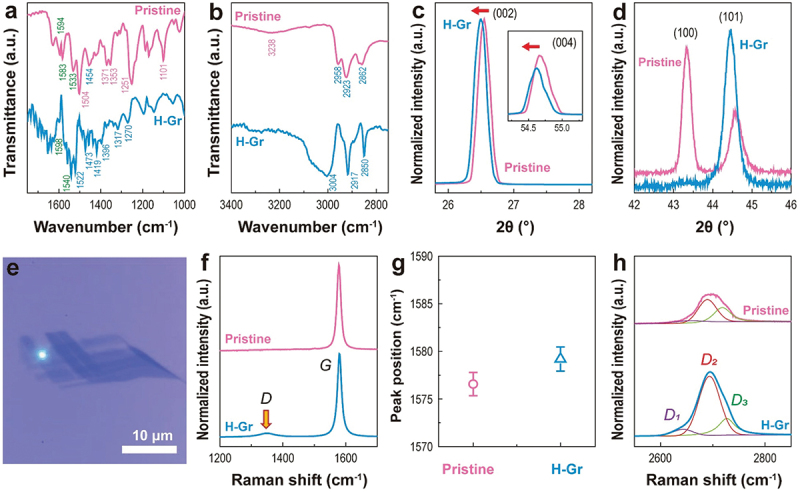 Figure 7
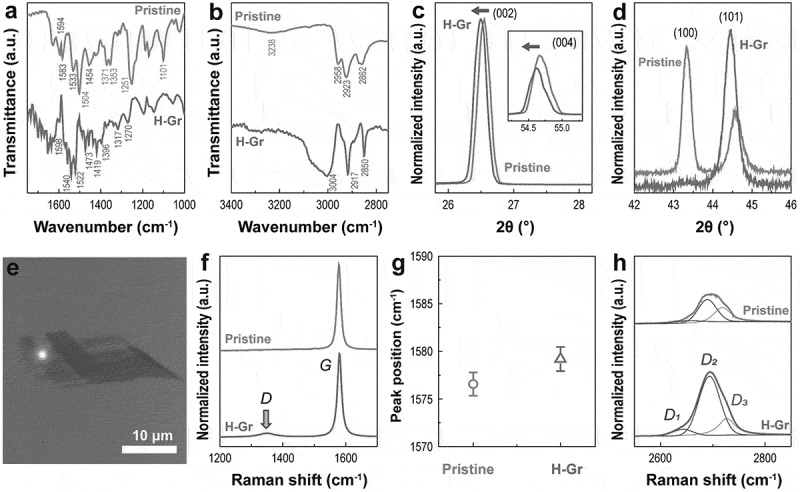 Figure 8
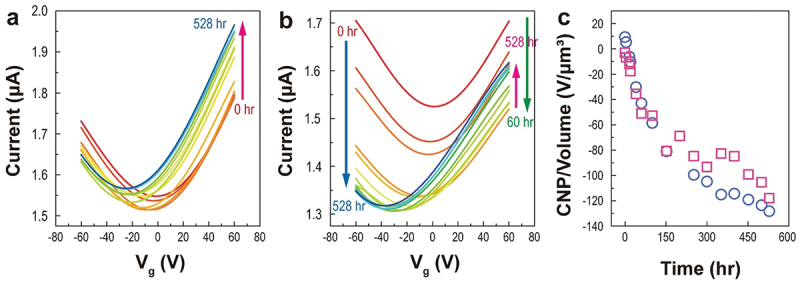 Figure 9
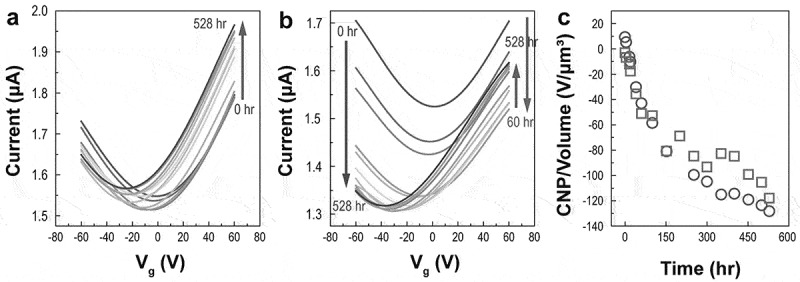 Figure 10
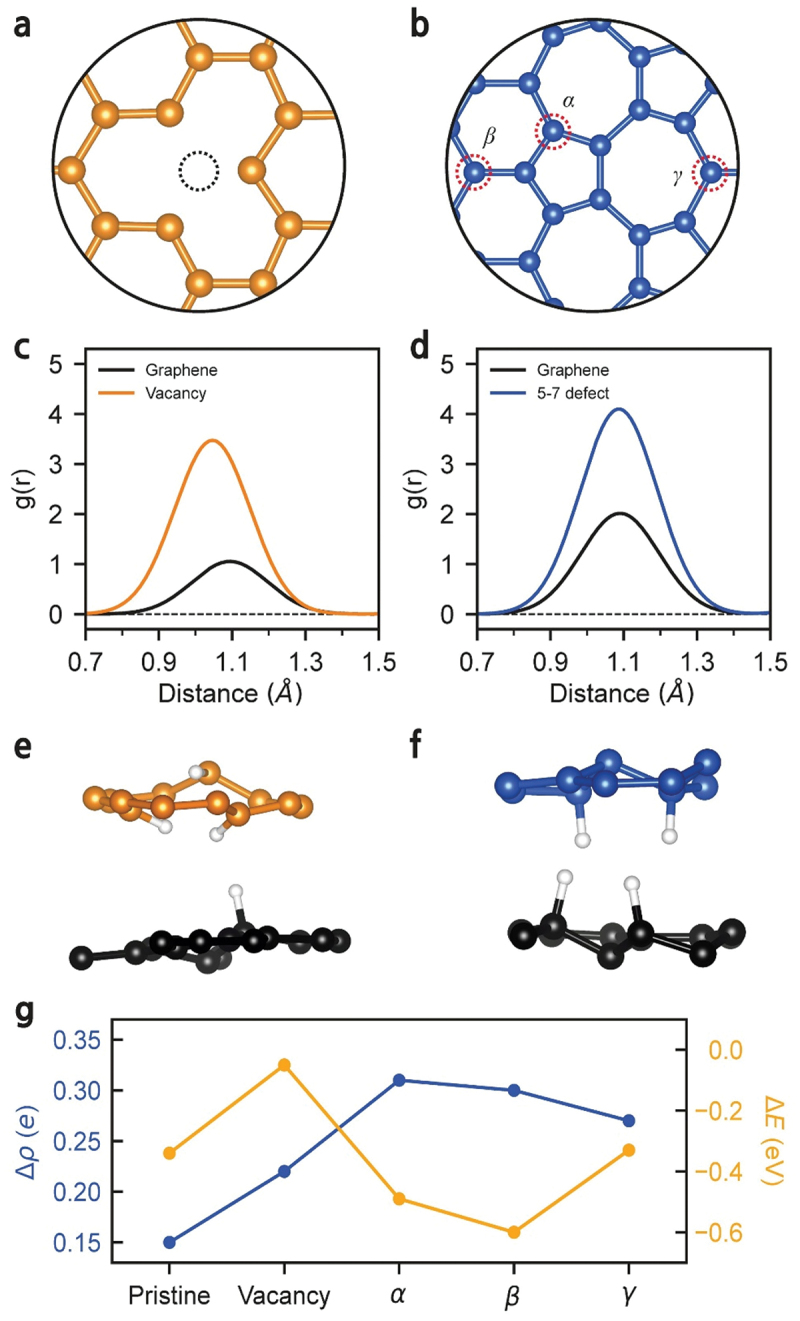 Figure 11
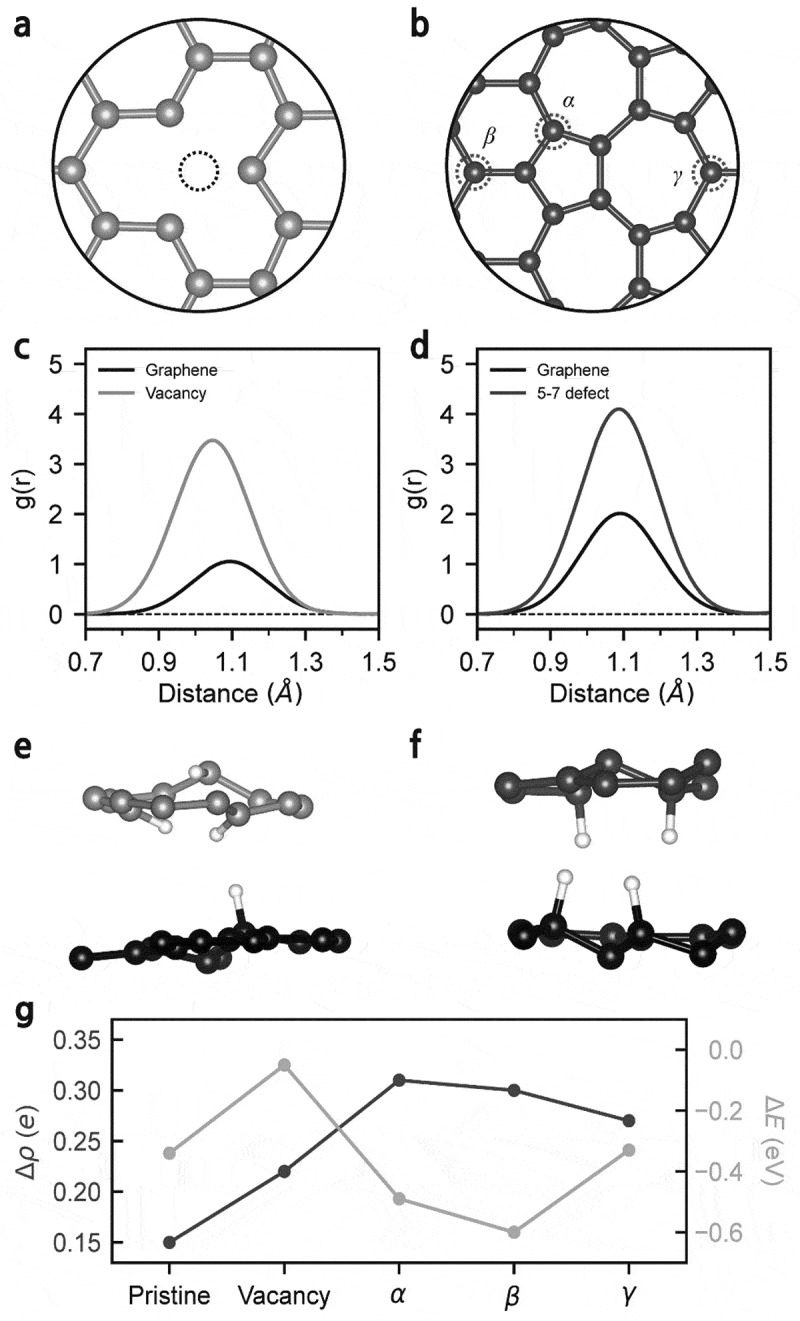 Figure 12
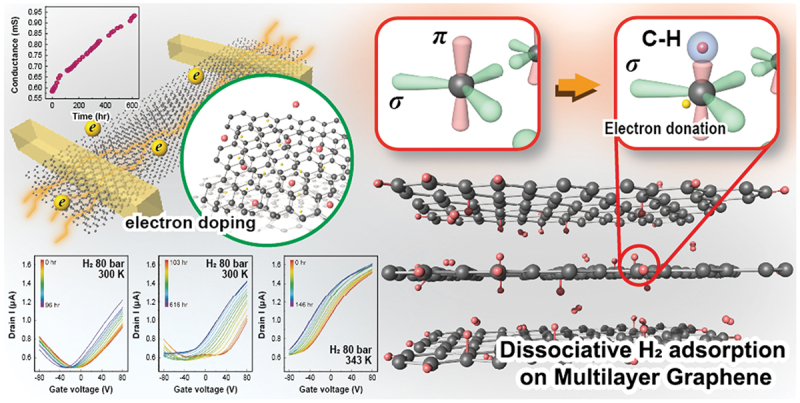 Figure 13
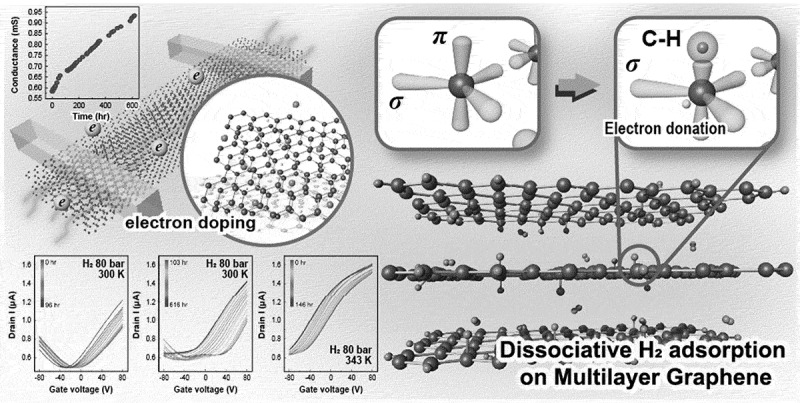 Figure 14
Peer Reviews
No public reviews on file for this paper yet. If you reviewed it on a platform where reviews are public (OpenReview, ICLR, NeurIPS, ICML), you can paste yours below so the community can read it here.
Videos
No videos yet. Explain this paper in a talk, walkthrough, or lecture? Add one.
Taxonomy
TopicsGraphene research and applications · Supercapacitor Materials and Fabrication · Electrocatalysts for Energy Conversion