The complete chloroplast genome sequence and phylogenetic analysis of an invasive plant Solanum carolinense Linnaeus (Solanaceae) in Korea
Hye Been Kim, Ju Eun Jang, Dong Chan Son, Eun Su Kang

TL;DR
This paper reports the complete chloroplast genome of the invasive plant Solanum carolinense in Korea and its phylogenetic relationships.
Contribution
The study provides the first complete chloroplast genome sequence of Solanum carolinense in Korea.
Findings
The chloroplast genome is 155,315 bp long with a GC content of 37.6% and a quadripartite structure.
S. carolinense is closely related to S. aridum and S. hieronymi based on phylogenetic analysis of 78 CDSs.
Abstract
Solanum carolinense Linnaeus, belonging to the family Solanaceae, is a perennial herb or subshrub. S. carolinense has become naturalized in Korea as an invasive species, forming a stable population that has grown naturally with native plants for more than 10 years. However, its chloroplast genome structure and complete sequence have not yet been reported. Therefore, we determined the complete chloroplast genome sequence of S. carolinense using genome sequencing, assembly, and annotation. The total length of the chloroplast genome was 155,315 bp with a GC content of 37.6%. It featured a quadripartite structure (a large single-copy region, 86,160 bp; a small single-copy region, 18,459 bp; and two inverted repeat regions, 25,348 bp each). It contains 129 genes, including 84 coding sequences (CDSs), 37 tRNA genes, 8 rRNA genes, and one pseudogene. Phylogenetic analysis of 78 CDSs revealed…
Genes, proteins, chemicals, diseases, species, mutations and cell lines named across the full text — each resolved to its canonical identifier and authoritative record.
Click any figure to enlarge with its caption.
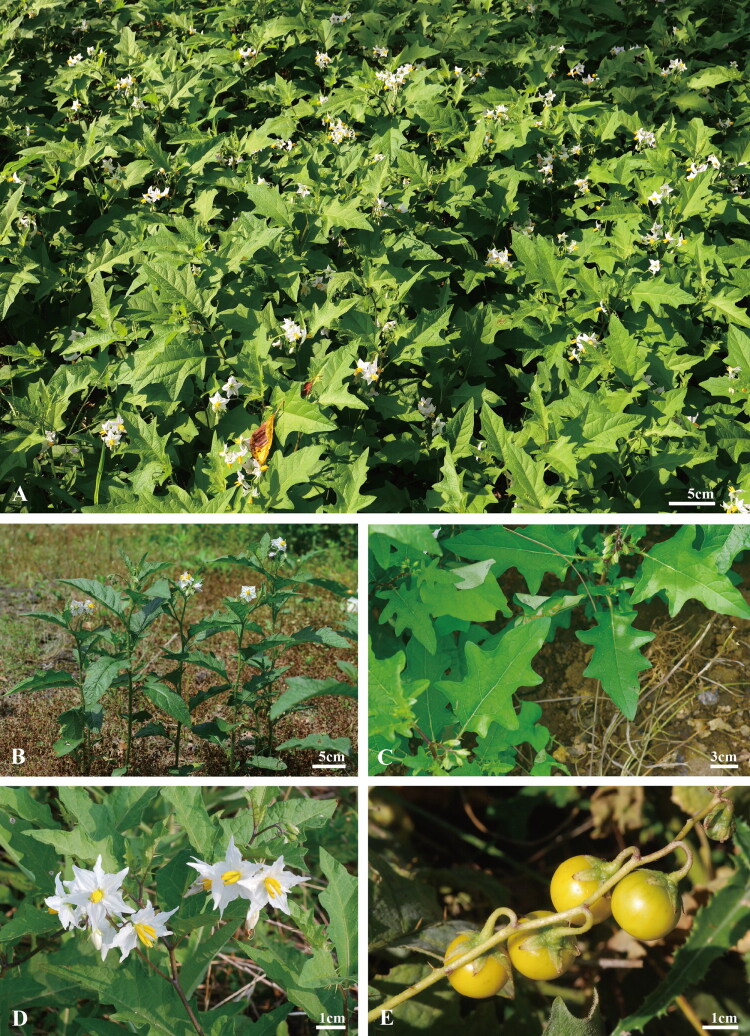 Figure 1
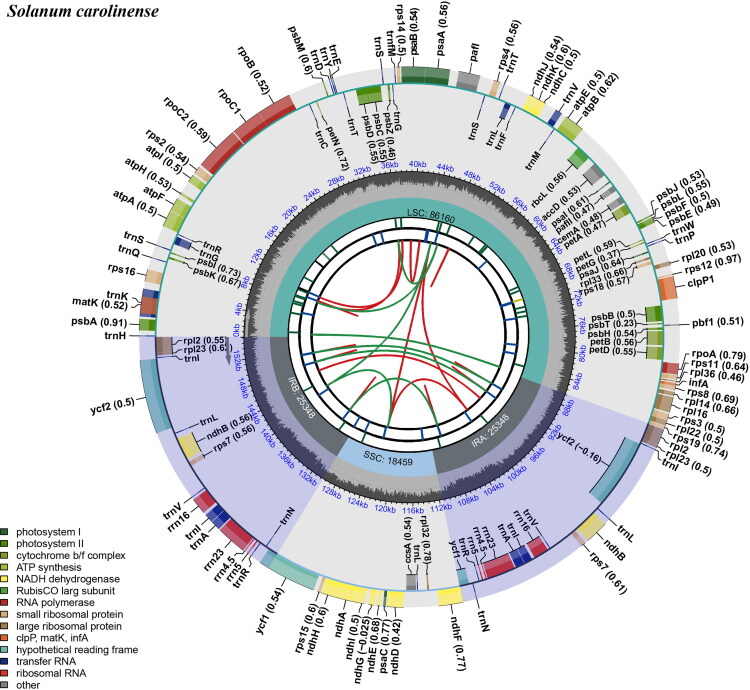 Figure 2
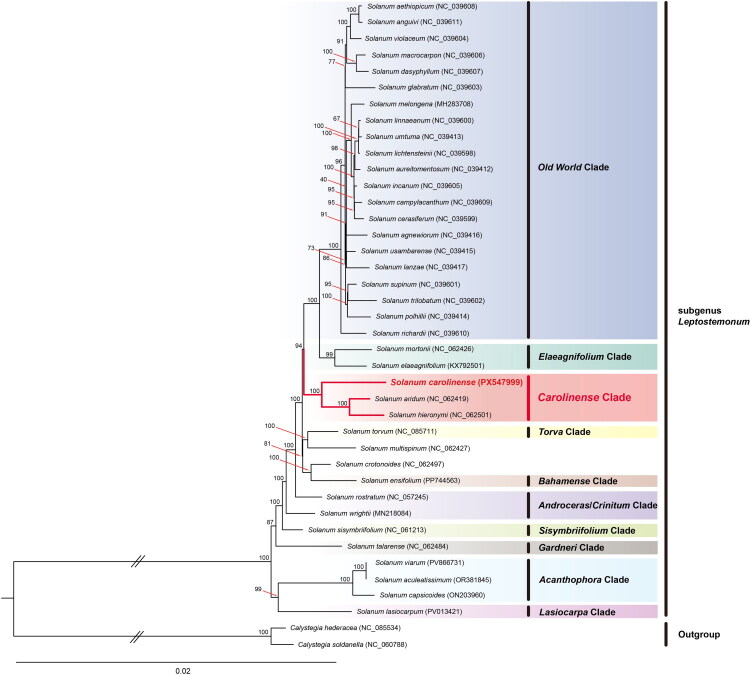 Figure 3
Peer Reviews
No public reviews on file for this paper yet. If you reviewed it on a platform where reviews are public (OpenReview, ICLR, NeurIPS, ICML), you can paste yours below so the community can read it here.
Videos
No videos yet. Explain this paper in a talk, walkthrough, or lecture? Add one.
Taxonomy
TopicsGenomics and Phylogenetic Studies · Plant Diversity and Evolution · Plant Pathogens and Fungal Diseases