Transient Intraperitoneal Residence of Dirofilaria immitis Larvae in the Mongolian Gerbil (Meriones unguiculatus)
Elyssa Campbell, Michael Dzimianski, Katelin Greenway, Kaori Sakamoto, Andrew Moorhead

TL;DR
This study explores why Dirofilaria immitis larvae fail to establish in Mongolian gerbils, finding a strong immune response after the third larval molt.
Contribution
The study identifies a specific larval stage where host immunity blocks D. immitis establishment in nonpermissive hosts.
Findings
Dirofilaria immitis larvae showed transient peritoneal residence peaking at 3 days post infection.
No viable D. immitis larvae were recovered by 36 days, unlike permissive Brugia malayi.
Macrophages were identified as a key component of the immune response against D. immitis larvae.
Abstract
Understanding the determinants of host specificity in Dirofilaria immitis can be advanced through the use of the nonpermissive Mongolian gerbil (jird) model. We hypothesized that host immunity dictates D. immitis establishment following the third larval molt. Jirds were infected intraperitoneally with 100 Brugia malayi (permissive control) or D. immitis third-stage larvae (L3). Necropsies occurred at 1, 3, 10, and 36 days post infection (dpi) to quantify larvae via peritoneal lavage. Initial recovery at 1 dpi showed 37.4% for B. malayi but only 0.4% for D. immitis (p < 0.0001). Dirofilaria immitis recovery increased to 23.6% by 3 dpi, suggesting a period of transient tissue residence during the third molt. Recovery for both species decreased by 10 dpi. Brugia malayi reached the immature adult stage (15.2%) by 36 dpi, whereas no viable D. immitis were recovered (p < 0.0001). These…
Genes, proteins, chemicals, diseases, species, mutations and cell lines named across the full text — each resolved to its canonical identifier and authoritative record.
Click any figure to enlarge with its caption.
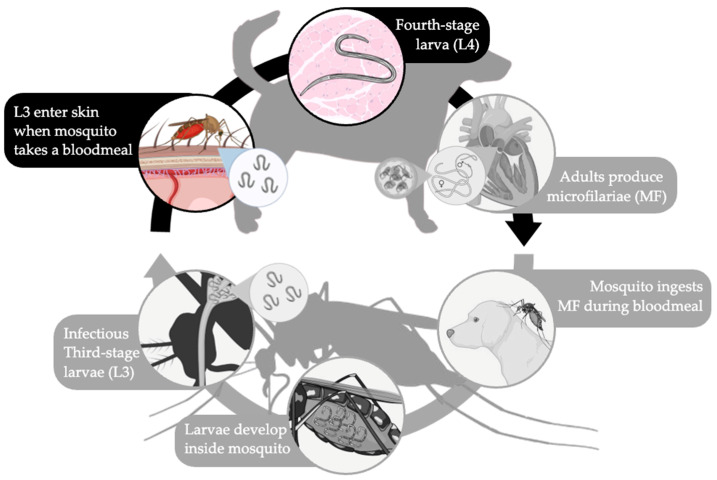 Figure 1
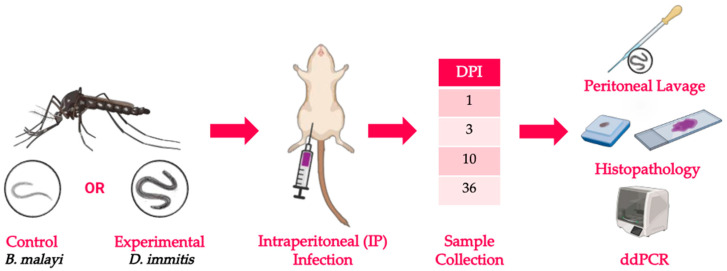 Figure 2
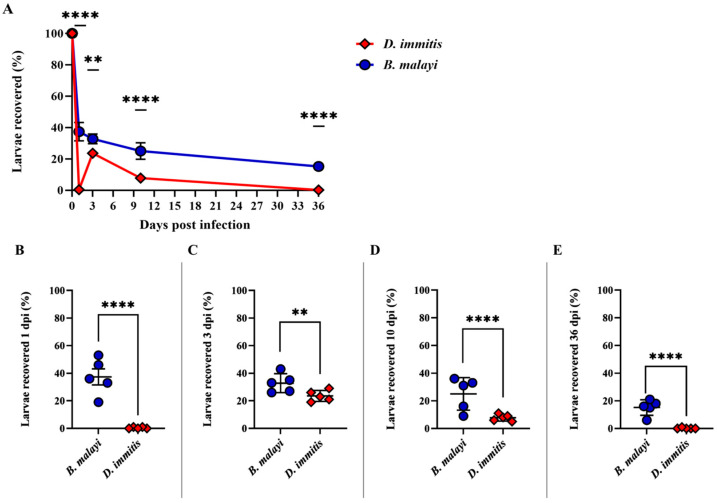 Figure 3
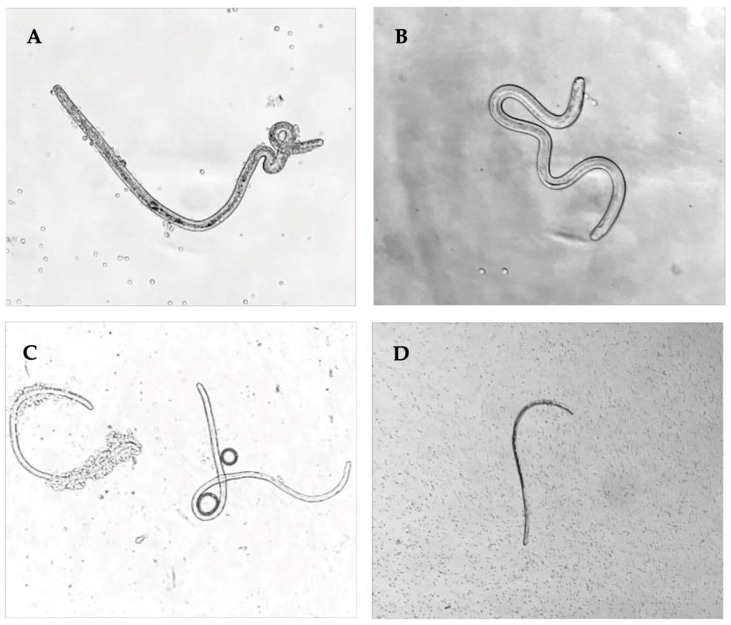 Figure 4
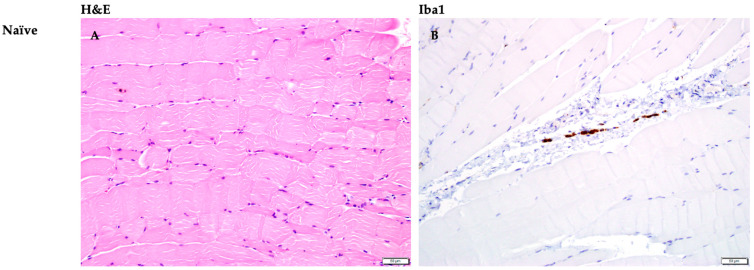 Figure 5
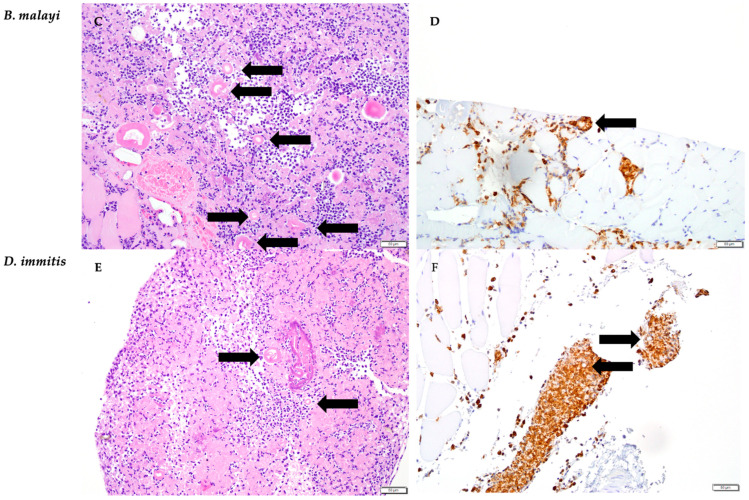 Figure 6
Peer Reviews
No public reviews on file for this paper yet. If you reviewed it on a platform where reviews are public (OpenReview, ICLR, NeurIPS, ICML), you can paste yours below so the community can read it here.
Videos
No videos yet. Explain this paper in a talk, walkthrough, or lecture? Add one.
Taxonomy
TopicsParasitic Diseases Research and Treatment · Helminth infection and control · Trypanosoma species research and implications