Synthesis of Hydrazidoureidobenzensulfonamides Incorporating a Nicotinoyl Tail and Their Carbonic Anhydrase I, II, IX and XII Inhibitory Activity
Alberto Deplano, Davide Moi, Serena Vittorio, Andrea Angeli, Claudiu T. Supuran, Valentina Onnis

TL;DR
Scientists created new compounds that effectively inhibit a specific carbonic anhydrase linked to cancer, showing potential for drug development.
Contribution
A novel series of benzenesulfonamides with a hydrazinocarbonyl-ureido linker and 6-arylpyridine tail was synthesized and tested for CA inhibition.
Findings
Some compounds showed strong inhibition of tumor-related CA XII over CA I and II.
Selected compounds displayed favorable drug-like properties in ADME predictions.
Molecular docking revealed insights into the binding mode of these compounds to hCA isoforms.
Abstract
Background: Carbonic anhydrases (CAs) are known to play important roles in several physiological and pathological processes; among them, CAs IX and XII are of particular relevance in cancer therapy due to their involvement in tumor growth and progression. Methods: In this study, a novel series of benzenesulfonamides incorporating a hydrazinocarbonyl-ureido linker alongside a 6-arylpyridine tail was synthesized and evaluated for inhibitory activity through a stopped-flow CO2 hydrase assay on four hCA isoforms. Results: Some of the new compounds exhibited great activity and selectivity toward the tumor-expressed CA XII isoform over the off-target isoforms CA I and CA II. Based on these results, they were selected for ADME prediction studies, showing favorable drug-like properties. To further investigate their binding mode, these compounds were docked into the four hCA isoforms.…
Genes, proteins, chemicals, diseases, species, mutations and cell lines named across the full text — each resolved to its canonical identifier and authoritative record.
Click any figure to enlarge with its caption.
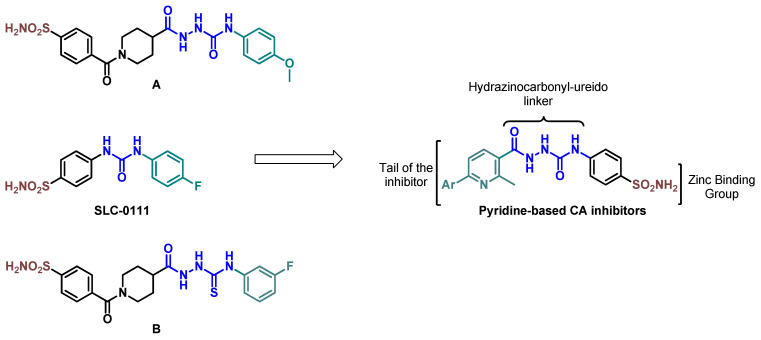 Figure 1
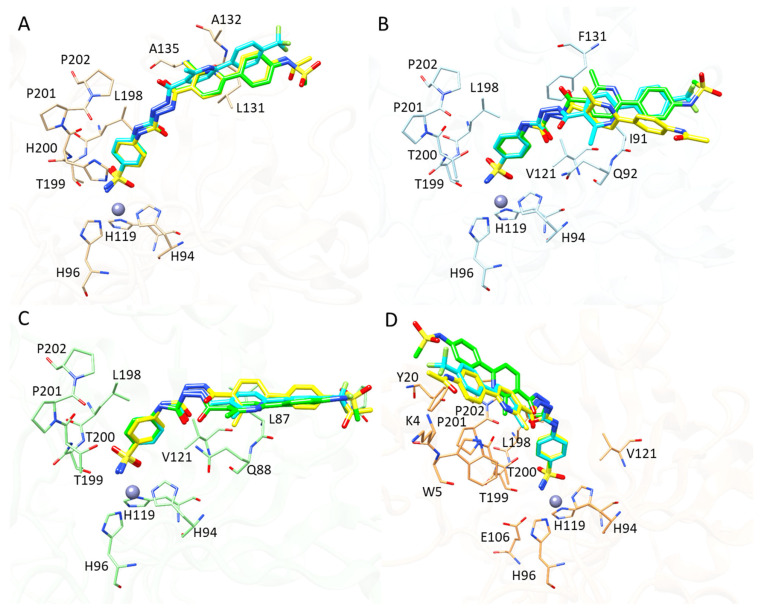 Figure 2
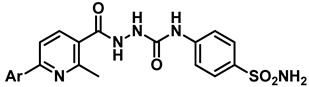 Figure 3
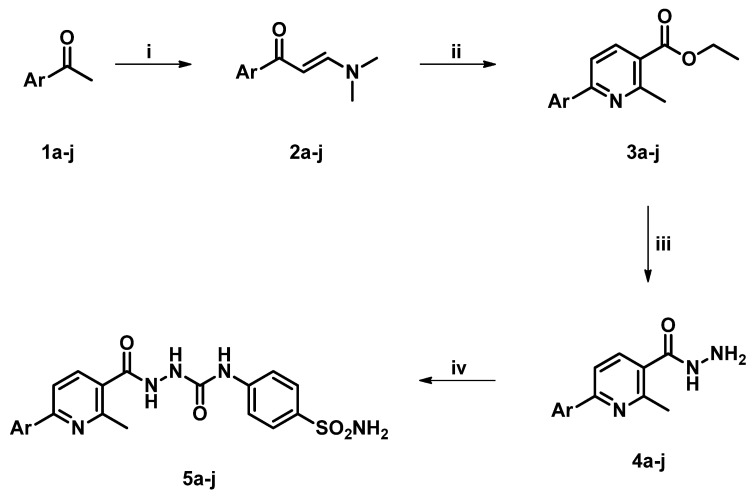 Figure 4
Peer Reviews
No public reviews on file for this paper yet. If you reviewed it on a platform where reviews are public (OpenReview, ICLR, NeurIPS, ICML), you can paste yours below so the community can read it here.
Videos
No videos yet. Explain this paper in a talk, walkthrough, or lecture? Add one.
Taxonomy
TopicsEnzyme function and inhibition · Phosphodiesterase function and regulation · Redox biology and oxidative stress