Management Practices for the Control of Haematobia irritans, Dermatobia hominis, and Cochliomyia hominivorax in Cattle Across Latin America: A Sustainable, Collective Approach
Roger I. Rodriguez-Vivas, Andre A. Cutolo, Antonio Thadeu M. de Barros, Ulises D. Cuore, Marcelo B. Molento, Sara López-Osorio, Daniel S. Rodrigues, Matias Spina, Fernando A. Borges, Welber D. Z. Lopes, Martín O. Pulido-Medellin, Cesar A. Fiel, Livio M. Costa-Junior

TL;DR
This paper reviews sustainable methods to control harmful flies affecting cattle in Latin America, aiming to reduce economic losses and improve animal welfare.
Contribution
The paper presents a collective and sustainable approach integrating non-chemical methods to combat insecticide-resistant fly populations in cattle.
Findings
Insecticide resistance in fly populations is a growing concern, reducing the effectiveness of chemical control.
Integrated non-chemical methods are being adopted to complement or replace insecticides for sustainable fly control.
Environmental and biological control strategies are gaining importance for livestock health and environmental safety.
Abstract
Bovines are suitable hosts and can be affected by fly infestations. Flies pose a significant threat to cattle livestock in Latin America (LA), causing substantial economic repercussions to animal production (reduced productivity, veterinary expenses, and decreased animal welfare) and damage to human health. The most important flies affecting cattle in Argentina, Brazil, Colombia, Mexico, and Uruguay are Haematobia irritans, Dermatobia hominis, and Cochliomyia hominivorax. Due to production losses and the consequent economic costs associated with these flies, control measures must be implemented, primarily relying on insecticidal products. However, decision-making for preventing and treating animals with insecticides varies due to differences in environmental conditions across countries and regions, production systems, animal populations, infestation levels, animal welfare, and the…
Genes, proteins, chemicals, diseases, species, mutations and cell lines named across the full text — each resolved to its canonical identifier and authoritative record.
Click any figure to enlarge with its caption.
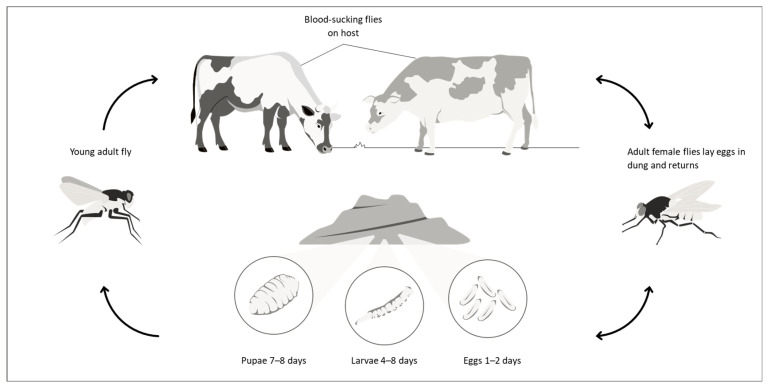 Figure 1
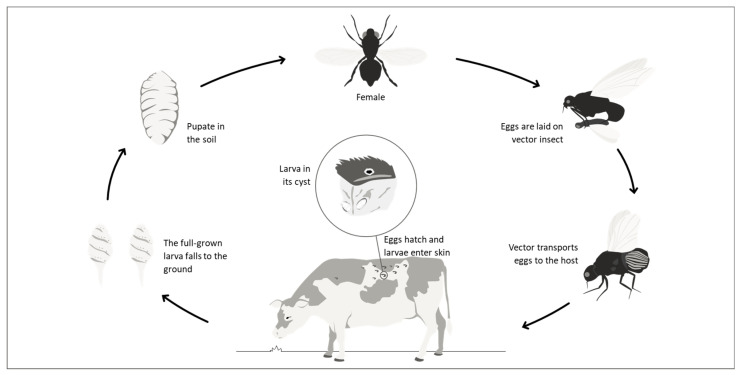 Figure 2
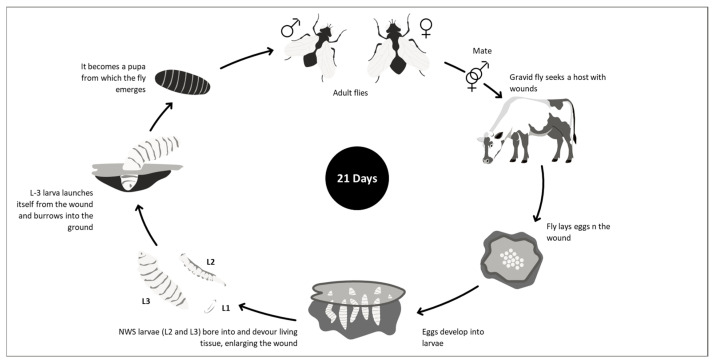 Figure 3
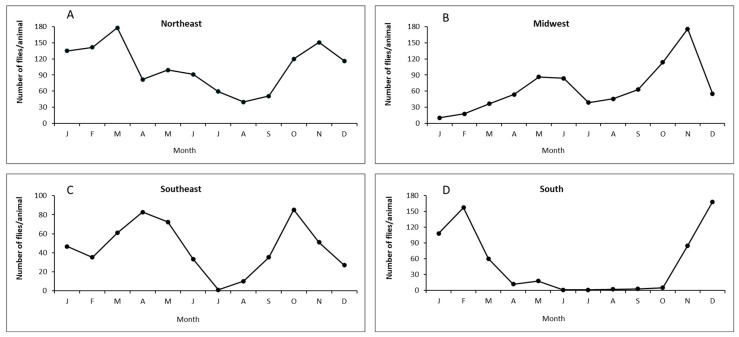 Figure 4
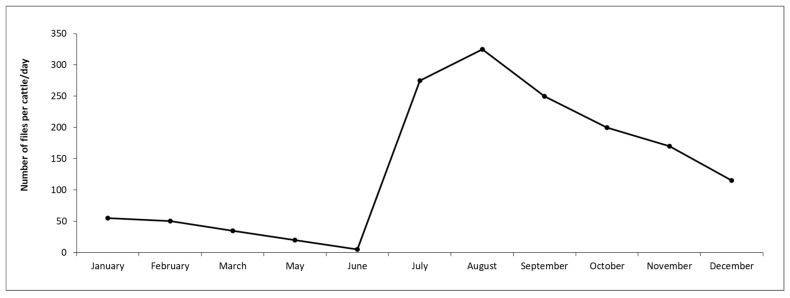 Figure 5
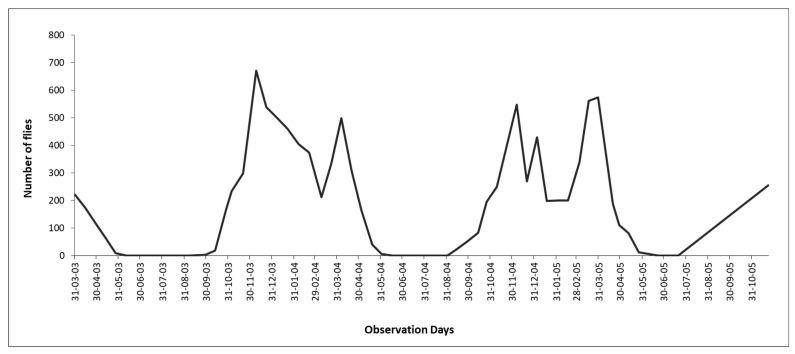 Figure 6
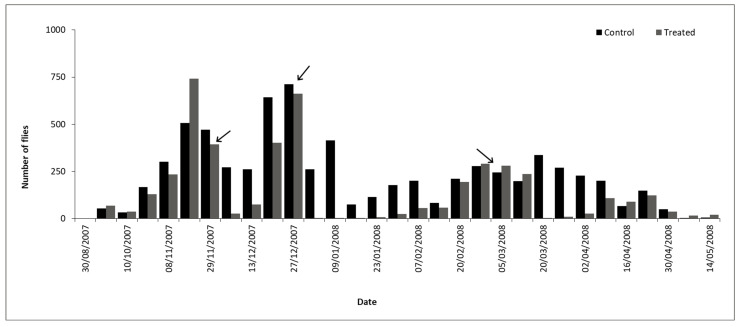 Figure 7
Peer Reviews
No public reviews on file for this paper yet. If you reviewed it on a platform where reviews are public (OpenReview, ICLR, NeurIPS, ICML), you can paste yours below so the community can read it here.
Videos
No videos yet. Explain this paper in a talk, walkthrough, or lecture? Add one.
Taxonomy
TopicsForensic Entomology and Diptera Studies · Helminth infection and control · Parasitic Diseases Research and Treatment