Selective Quenching of Peracetic Acid by Sodium Dithionite Enables Rapid, Non-Thermal Sterilization for Euglena gracilis Cultivation
Hyun-Jin Lim, Min-Su Kang, Min-Sung Kim, Jong-Hee Kwon

TL;DR
A new method using sodium dithionite quickly and selectively removes peracetic acid, enabling effective sterilization without harming the growth of Euglena gracilis.
Contribution
A selective and rapid quenching method for peracetic acid using sodium dithionite, independent of pH and nitrogen compounds.
Findings
Sodium dithionite reduced PAA completely within 5 seconds, regardless of pH or nitrogen compounds.
Selective removal of PAA allowed residual H2O2 to remain, supporting better growth of Euglena gracilis.
PAA-treated medium with quenching led to higher paramylon production compared to autoclaved medium.
Abstract
Peracetic acid (PAA) has strong biocidal activity against bacteria, fungi, and spores, even with short contact times. PAA-mediated sterilization is therefore an attractive method for sterilization of growth media that have heat-labile components or when polymer-based equipment is used. However, residual PAA and co-existing hydrogen peroxide (H2O2) can inhibit the growth of cultivated species, necessitating a fast and reliable quenching strategy that does not require rinsing. In contrast to Fe–EDTA-based catalytic decomposition that is strongly influenced by pH, buffers, and organic nitrogen, we demonstrate a fundamentally different, stoichiometric quenching strategy using sodium dithionite that enables instantaneous and selective removal of PAA. Na2S2O4 preferentially reduced PAA over H2O2 in a 0.03% PAA solution and achieved complete PAA reduction within 5 s, independent of pH and in…
Genes, proteins, chemicals, diseases, species, mutations and cell lines named across the full text — each resolved to its canonical identifier and authoritative record.
Click any figure to enlarge with its caption.
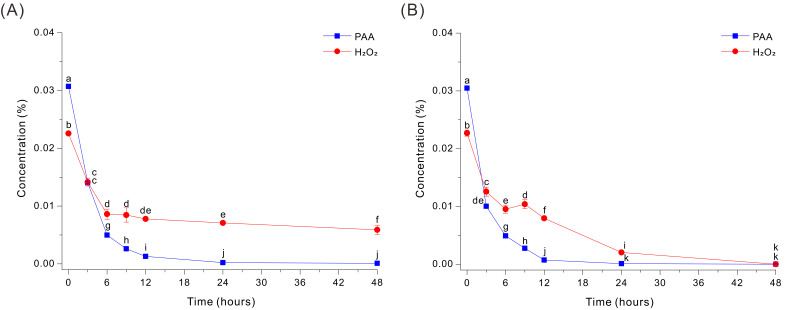 Figure 1
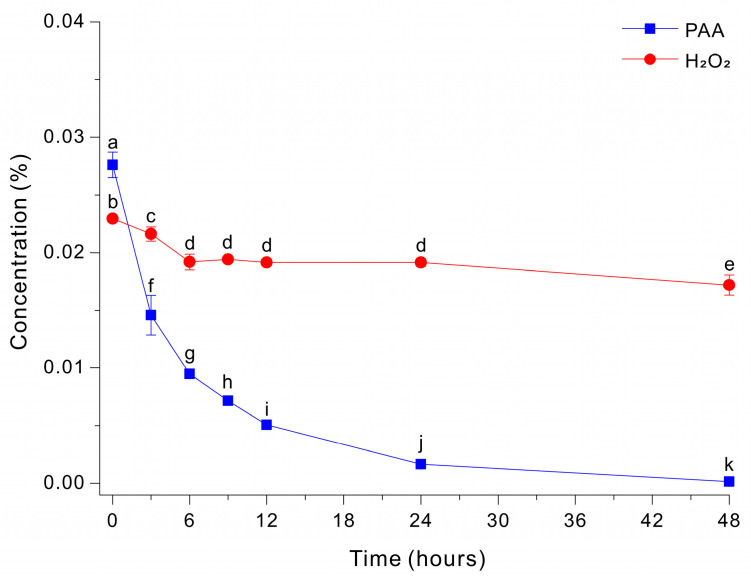 Figure 2
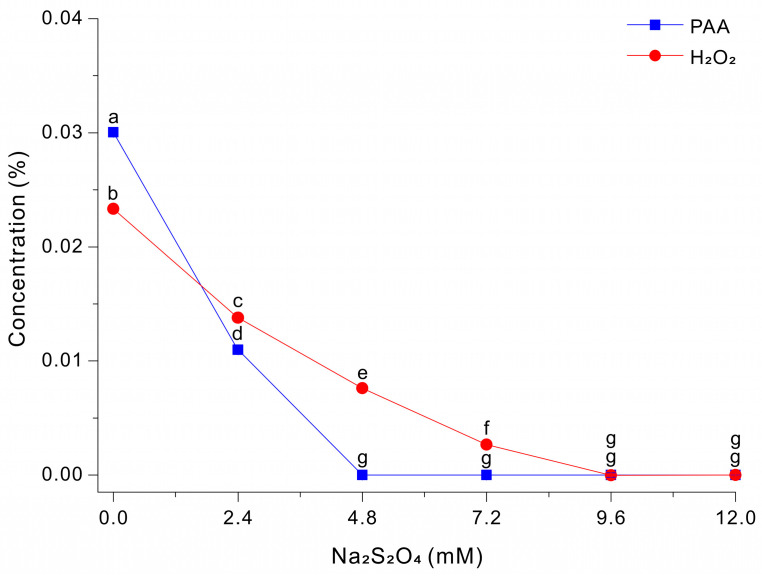 Figure 3
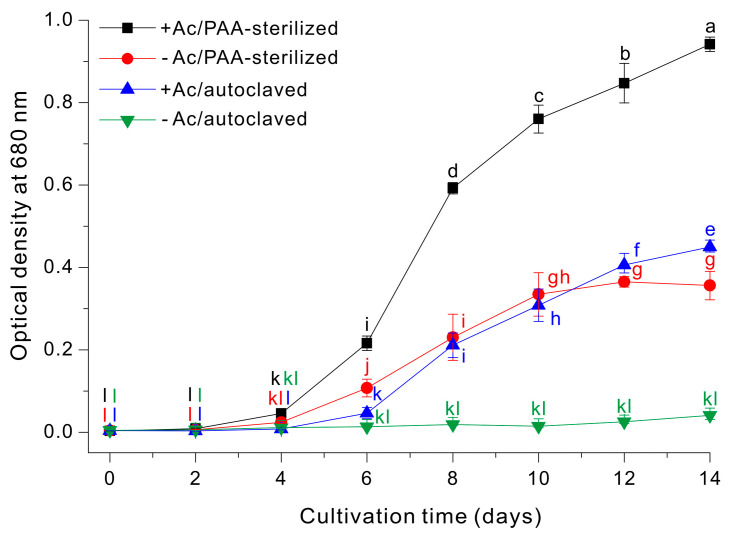 Figure 4
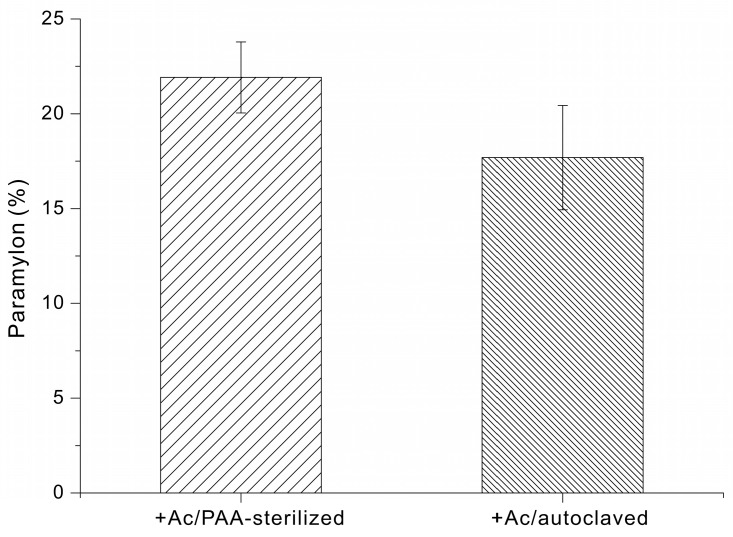 Figure 5
Peer Reviews
No public reviews on file for this paper yet. If you reviewed it on a platform where reviews are public (OpenReview, ICLR, NeurIPS, ICML), you can paste yours below so the community can read it here.
Videos
No videos yet. Explain this paper in a talk, walkthrough, or lecture? Add one.
Taxonomy
TopicsAlgal biology and biofuel production · Enzyme-mediated dye degradation · Listeria monocytogenes in Food Safety