Fungal Secondary Metabolites in Bioelectrochemical Systems: A Bibliometric Analysis and Critical Review of Emerging Trends and Challenges for Sustainable Energy
Segundo J. Rojas-Flores, Rafael Liza, Renny Nazario-Naveda, Félix Díaz, Daniel Delfin-Narciso, Moisés Gallozzo Cardenas

TL;DR
This paper explores how fungal secondary metabolites can improve sustainable energy systems, showing promising results in bioelectrochemical technologies.
Contribution
The study pioneers the integration of fungal secondary metabolites into bioelectrochemical systems for energy applications.
Findings
Quinones and organic acids from Aspergillus niger improved electron transfer efficiency by 35%.
Penicillium chrysogenum reduced internal electrode resistance by 40%.
Biosynthesized bis-quinones achieved a battery capacity of 1.58 Ah/L in redox flow batteries.
Abstract
The global energy crisis driven by an 80% reliance on fossil fuels and the urgent need to reduce greenhouse gas emissions demands the exploration of sustainable biotechnological alternatives. This study addresses a critical knowledge gap regarding the integration of fungal secondary metabolites into bioelectrochemical energy systems, as these compounds have traditionally been investigated for pharmacological purposes. The methodology involved a documentary analysis using the Scopus database (2000–2025), applying a search equation that combined terms such as “secondary metabolite”, “fungi”, and “bioenergy”. Data processing was conducted using R Studio (R 3.6.0+), VOSviewer (1.6.20) for collaboration networks, and Plotly Studio (v6.5.0) for interactive visualizations. Key findings revealed that redox mediators such as quinones and organic acids derived from Aspergillus niger enhanced…
Genes, proteins, chemicals, diseases, species, mutations and cell lines named across the full text — each resolved to its canonical identifier and authoritative record.
Click any figure to enlarge with its caption.
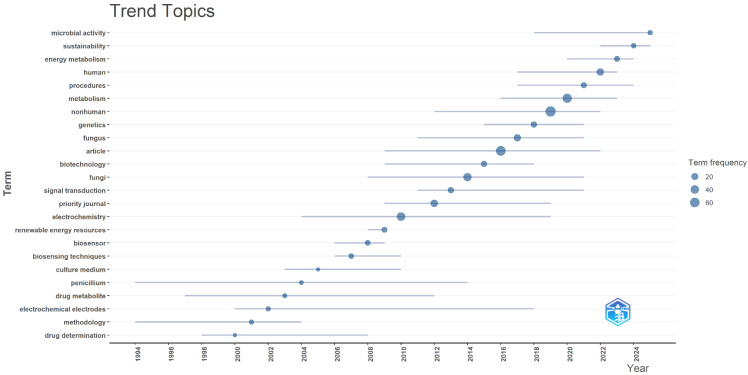 Figure 1
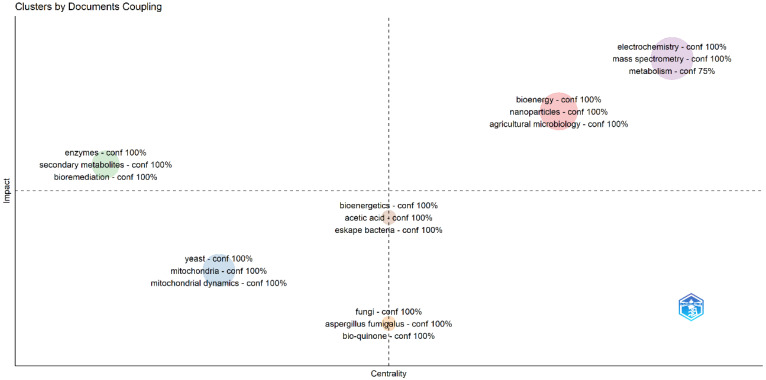 Figure 2
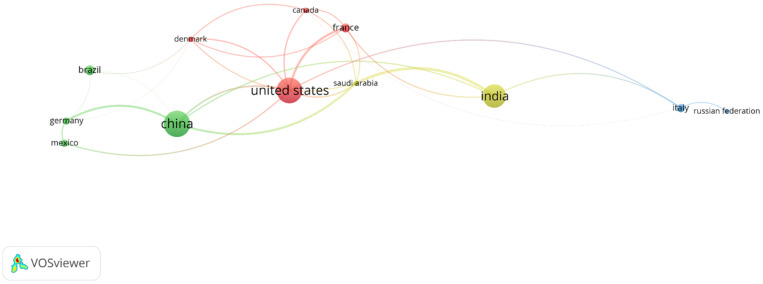 Figure 3
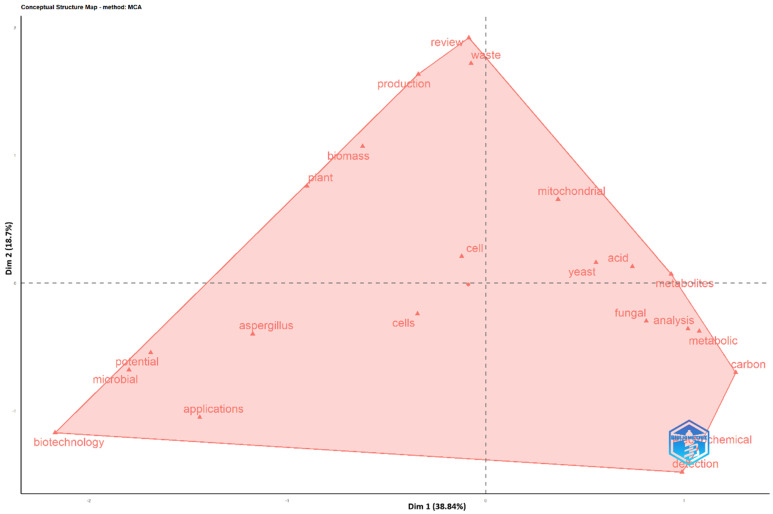 Figure 4
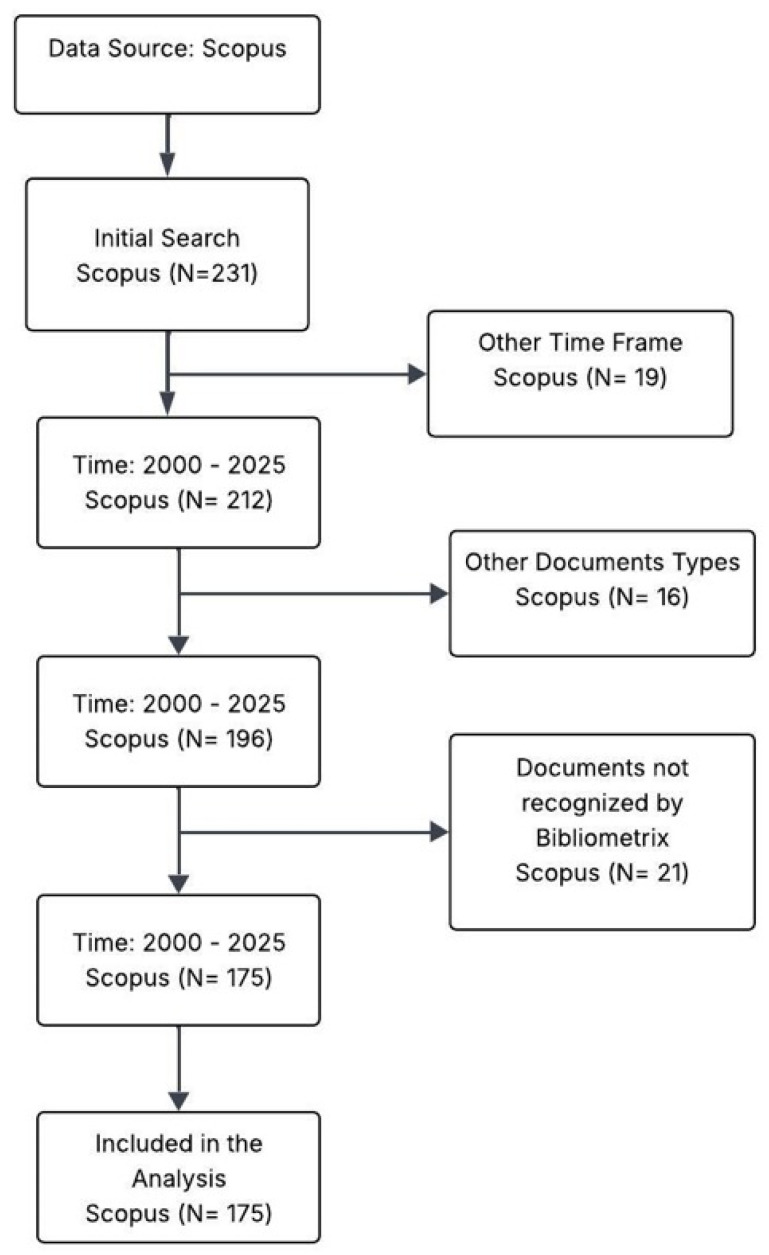 Figure 5
Peer Reviews
No public reviews on file for this paper yet. If you reviewed it on a platform where reviews are public (OpenReview, ICLR, NeurIPS, ICML), you can paste yours below so the community can read it here.
Videos
No videos yet. Explain this paper in a talk, walkthrough, or lecture? Add one.
Taxonomy
TopicsMicrobial Fuel Cells and Bioremediation · CO2 Reduction Techniques and Catalysts · Microbial Metabolic Engineering and Bioproduction