Vibrational Spectroscopy and Computational Studies of Cubane-1,4-Dicarboxylic Acid
Stewart F. Parker, James P. Tellam, Sarah E. Youngs

TL;DR
This paper studies the vibrational properties of a key cubane precursor and finds that its carboxylic acid and cubane core behave independently.
Contribution
The study provides the first detailed vibrational spectroscopy and computational analysis of cubane-1,4-dicarboxylic acid and its isotopomer.
Findings
The dynamics of the carboxylic acid and cubane core are largely independent due to the substituent's mass difference.
The syn and anti conformers of the carboxylic acid show different transition energies for C–O–H bending modes.
Most vibrational modes contribute equally from both conformers.
Abstract
Cubane-1,4-dicarboxylic acid is a key intermediate in the synthesis of the Platonic solid, cubane. While cubane has been extensively studied, its precursor has not. Here, we provide a comprehensive characterization of the vibrational spectra (infrared, Raman, inelastic neutron scattering (INS)) of cubane-1,4-dicarboxylic acid and its isotopomer with the acidic hydrogens exchanged for deuterium. In combination with density functional theory studies of the complete unit cell, we show that the dynamics of the carboxylic acid and the cubane core are largely independent; the effect is mostly the result of the increased mass of the substituent at the 1,4 positions: 45 versus 1. The known crystal structure is unusual in that the carboxylic acid is present as two conformers: syn and anti. The calculations show that the in-plane and out-of-plane C–O–H bending modes have different transition…
Genes, proteins, chemicals, diseases, species, mutations and cell lines named across the full text — each resolved to its canonical identifier and authoritative record.
Click any figure to enlarge with its caption.
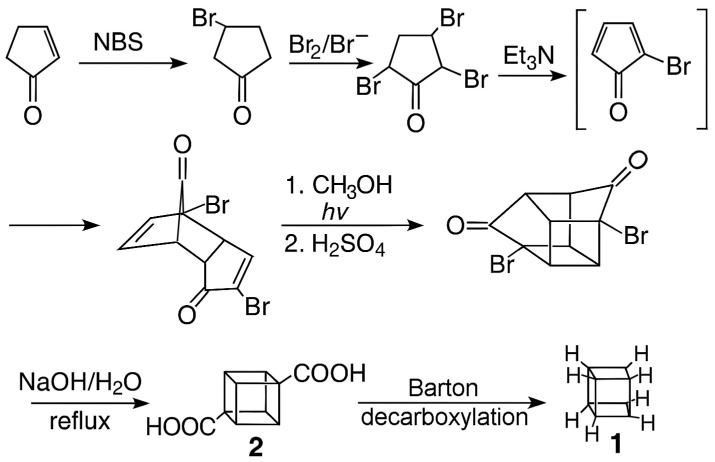 Figure 1
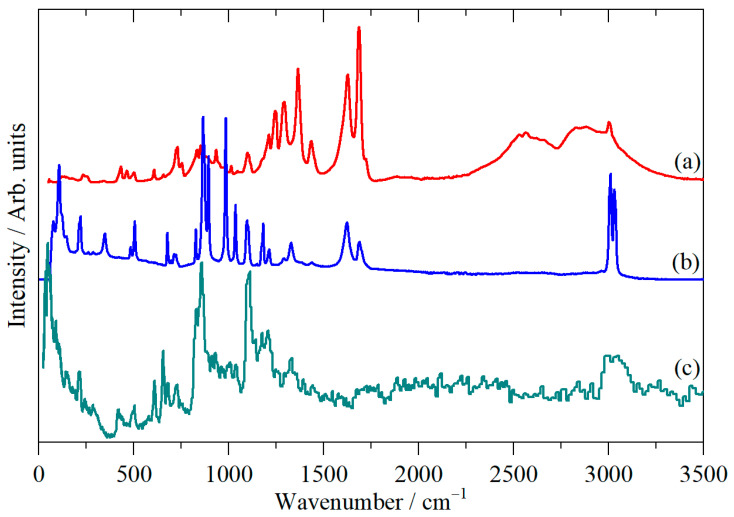 Figure 2
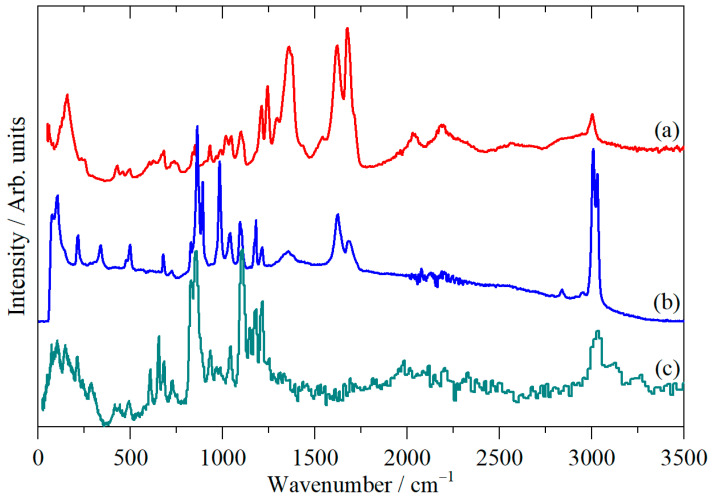 Figure 3
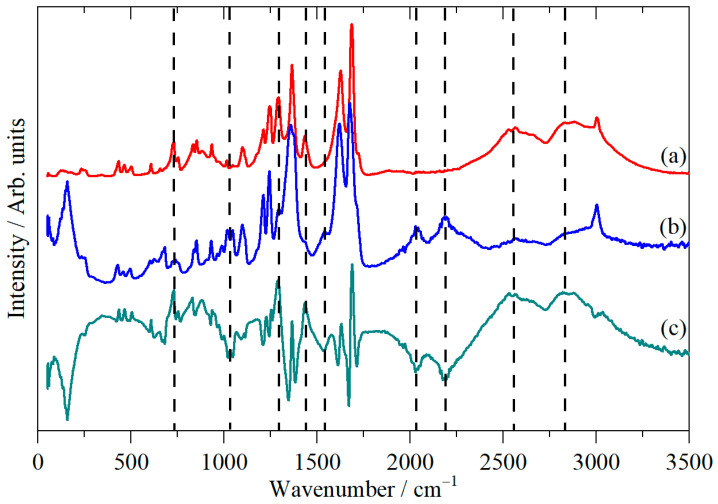 Figure 4
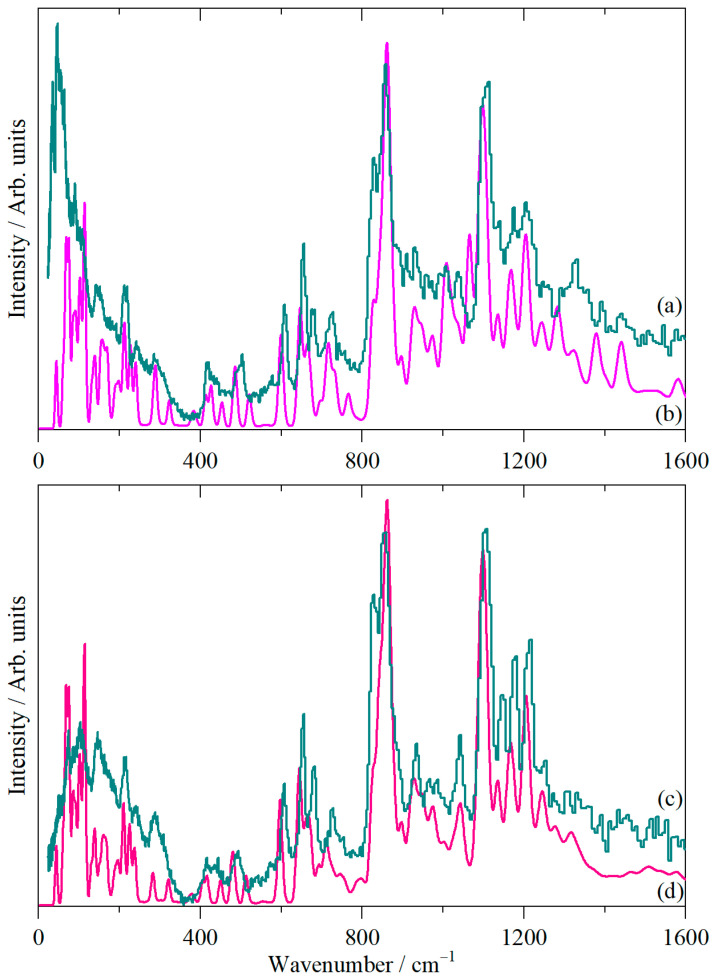 Figure 5
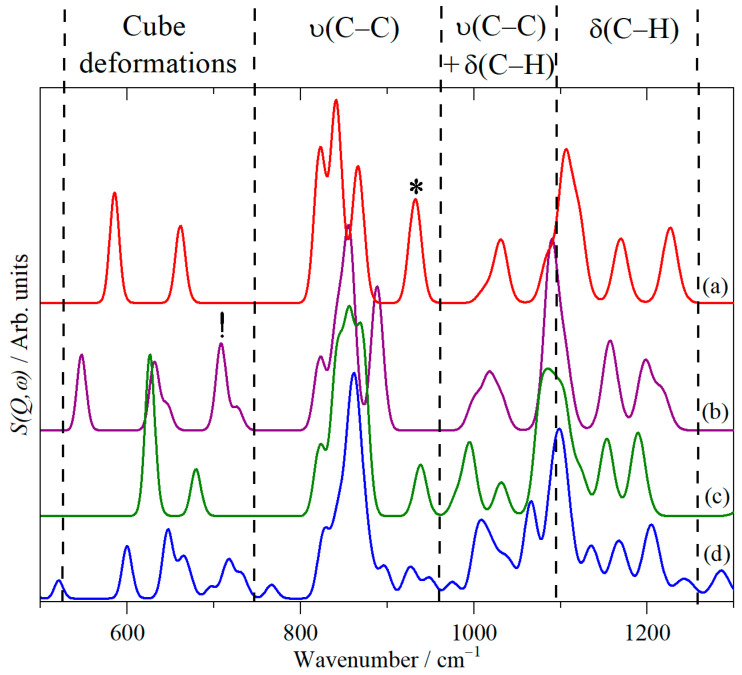 Figure 6
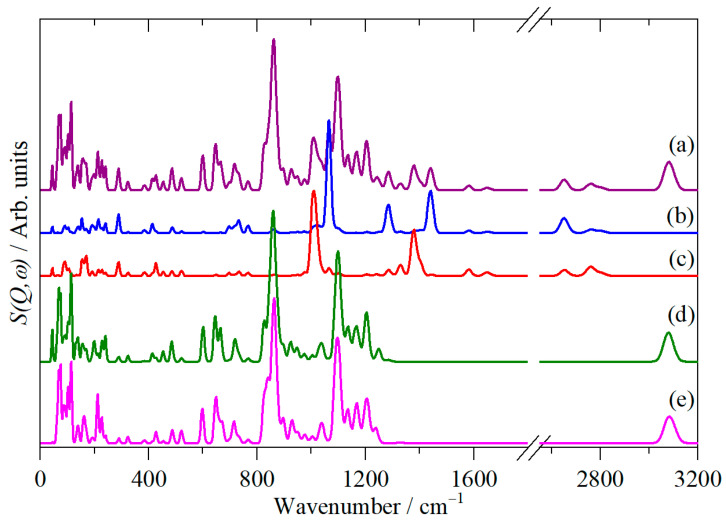 Figure 7
Peer Reviews
No public reviews on file for this paper yet. If you reviewed it on a platform where reviews are public (OpenReview, ICLR, NeurIPS, ICML), you can paste yours below so the community can read it here.
Videos
No videos yet. Explain this paper in a talk, walkthrough, or lecture? Add one.
Taxonomy
TopicsMolecular Spectroscopy and Structure · Advanced Chemical Physics Studies · Astrophysics and Star Formation Studies