Role of Next-Generation Sequencing in Excluding the Nosocomial Origin of a Case of Legionnaires’ Disease Integrating Environmental Surveillance and Clinical Diagnosis
Francesco Paglione, Cataldo Maria Mannavola, Marilena La Sorda, Maria Luisa Ricci, Maria Scaturro, Silvia Laura Bosello, Roberta Masnata, Francesca Romana Monzo, Sara Vincenti, Patrizia Laurenti, Maurizio Sanguinetti, Flavio De Maio

TL;DR
Next-generation sequencing helped determine that a Legionnaires' disease case was not caused by the hospital's water system, highlighting the importance of combining genomic tools with traditional methods.
Contribution
Demonstrates the use of whole-genome sequencing to exclude a hospital as the source of Legionnaires' disease in a complex clinical scenario.
Findings
Environmental isolates of Legionella were genetically identical but unrelated to the clinical isolate.
Detection of Legionella anisa in the plumbing system revealed structural contamination.
Integration of WGS with traditional methods improves surveillance accuracy and outbreak investigations.
Abstract
Legionella pneumophila (Lp) remains one of the major causes of community- and hospital-acquired pneumonia, yet its diagnosis and source attribution continue to pose significant challenges. Here, we describe the case of an immunocompromised patient who developed Legionnaires’ disease during hospitalization. Following activation of the hospital’s internal surveillance system, Lp and Legionella anisa (L. anisa) were recovered from multiple water distribution points using a simplified culture-based protocol. Whole-genome sequencing (WGS) demonstrated that all environmental isolates belonged to a single clonal strain, whereas the clinical isolate was genetically unrelated, thereby excluding the hospital water system as the source of infection. Although not implicated in the patient’s disease, the detection of both Lp and L. anisa within the plumbing system highlighted underlying structural…
Genes, proteins, chemicals, diseases, species, mutations and cell lines named across the full text — each resolved to its canonical identifier and authoritative record.
Click any figure to enlarge with its caption.
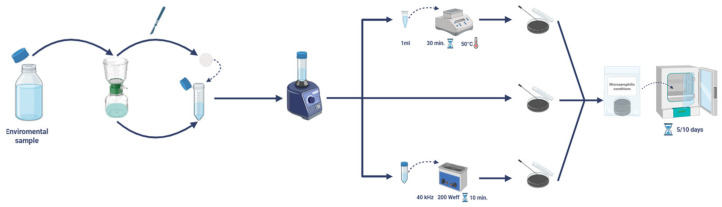 Figure 1
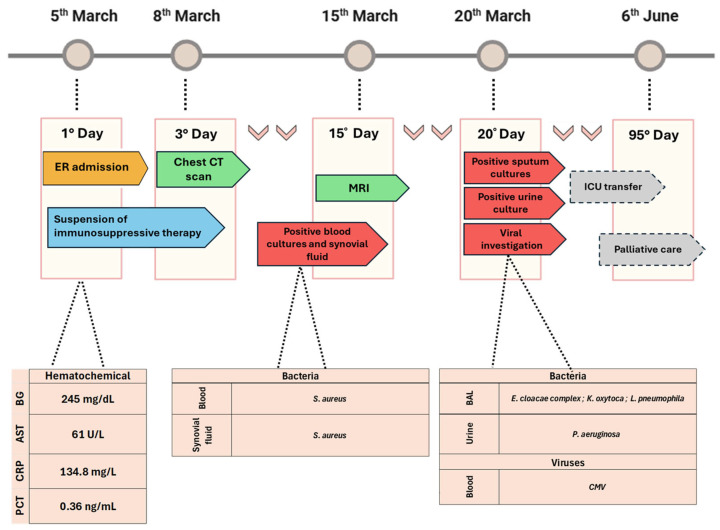 Figure 2
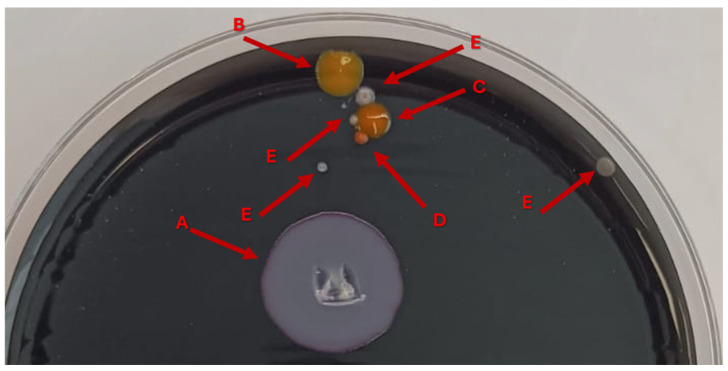 Figure 3
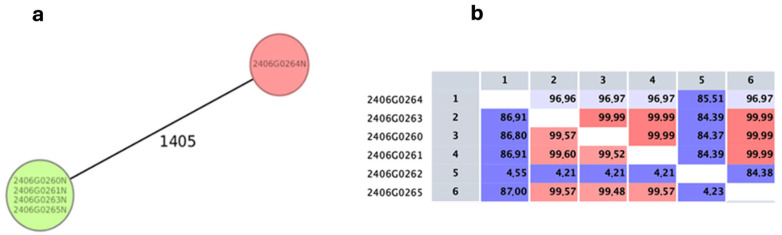 Figure 4
Peer Reviews
No public reviews on file for this paper yet. If you reviewed it on a platform where reviews are public (OpenReview, ICLR, NeurIPS, ICML), you can paste yours below so the community can read it here.
Videos
No videos yet. Explain this paper in a talk, walkthrough, or lecture? Add one.
Taxonomy
TopicsLegionella and Acanthamoeba research · Antibiotic Resistance in Bacteria · Antifungal resistance and susceptibility