Negative Energy Balance in Transition Cows Induces Complex Changes in Lipid Profile of Milk
Zhiqian Liu, Vilnis Ezernieks, Joanne E. Hemsworth, Coralie M. Reich, Carolyn R. Bath, Monique J. Berkhout, Muhammad S. Tahir, Leah C. Marett, Amanda J. Chamberlain, Mike E. Goddard, Ruidong Xiang, Simone J. Rochfort

TL;DR
This study shows that negative energy balance in dairy cows during the transition period causes complex changes in milk lipid profiles, identifying potential biomarkers for energy status.
Contribution
The study identifies nine specific lipids as potential biomarkers for negative energy balance in dairy cows.
Findings
NEB caused significant modifications in multiple milk lipid classes, including phospholipids and triglycerides.
Lipids like PE 33:1 and several LacCer and SM species were identified as potential biomarkers for NEB.
Species with de novo and odd-chain fatty acids were downregulated, while those with long-chain preformed fatty acids were upregulated.
Abstract
Background: Negative energy balance (NEB) during the transition period is associated with profound changes in the body condition and metabolic dynamics of dairy cows. However, the detailed lipidomic changes in milk induced by NEB are unclear, and lipid biomarkers that indicate the energy status of cows remain to be established. Methods: Using a combination of GC-FID, HILIC-MS and RP-LC-MS, we performed a systematic comparison of lipid composition between early lactating (DIM: 5–14) and mid-lactating (DIM: 65–80) milk. Results: We found that NEB in cows caused a profound modification in the profile of all the lipid classes surveyed, including phosphatidylcholine (PC), phosphatidylethanolamine (PE), phosphatidylserine (PS), phosphatidylinositol (PI), sphingomyelin (SM), lysophosphatidylcholine (LPC), PC-plasmalogen (PCP), PE-plasmalogen (PEP), lactosylceramide (LacCer), acylcarnitine…
Genes, proteins, chemicals, diseases, species, mutations and cell lines named across the full text — each resolved to its canonical identifier and authoritative record.
Click any figure to enlarge with its caption.
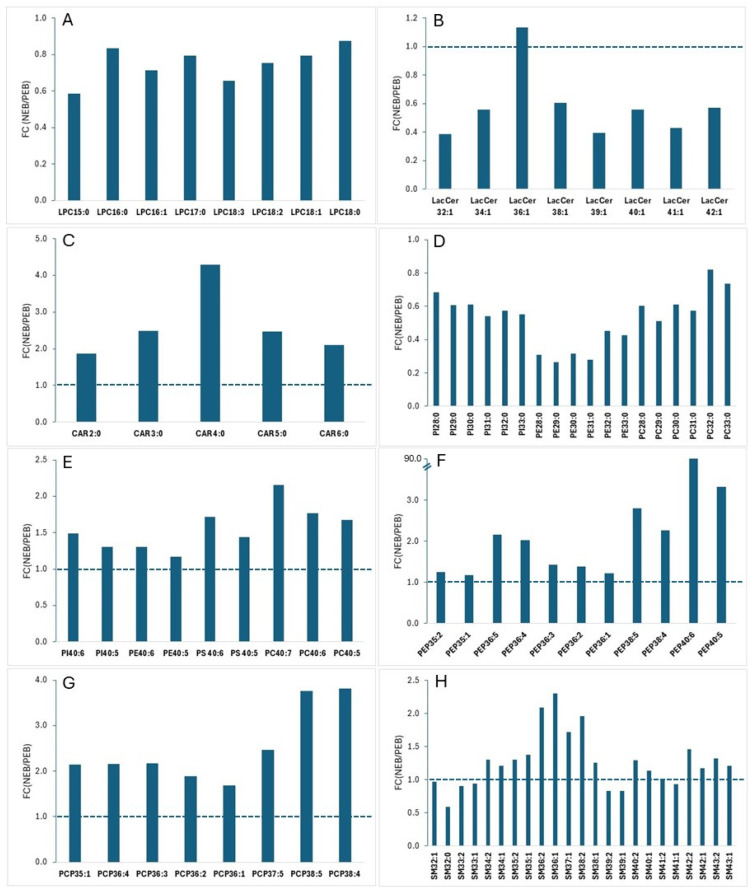 Figure 1
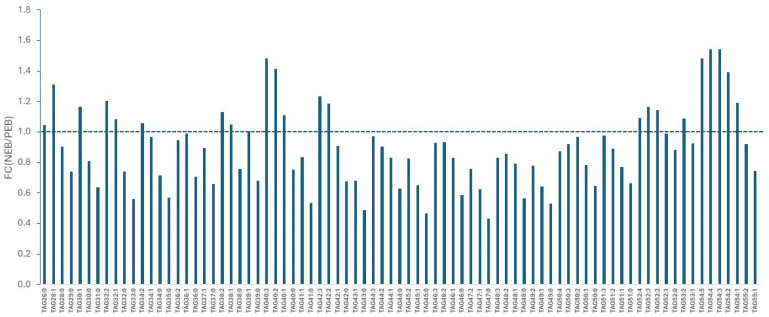 Figure 2
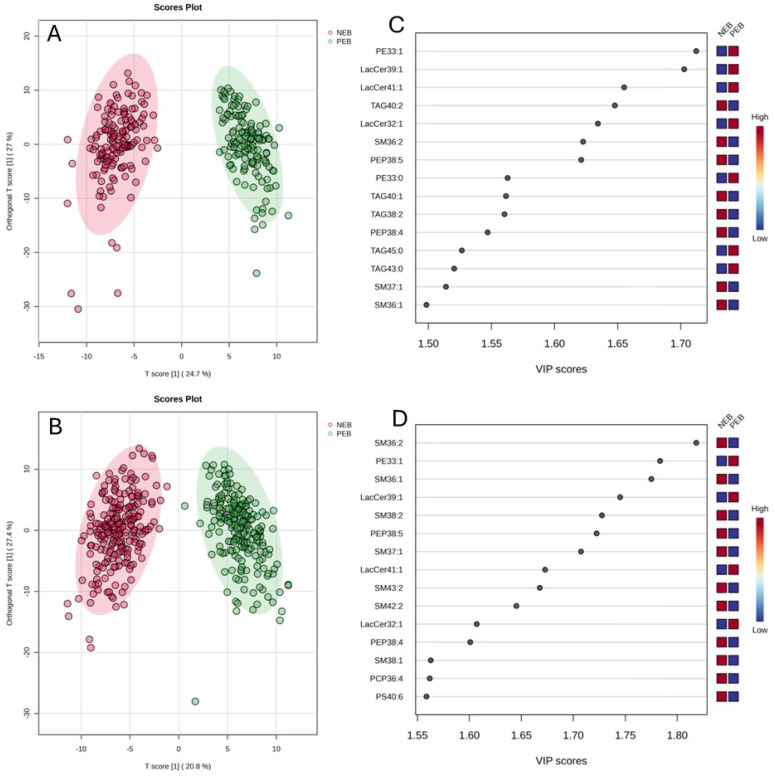 Figure 3
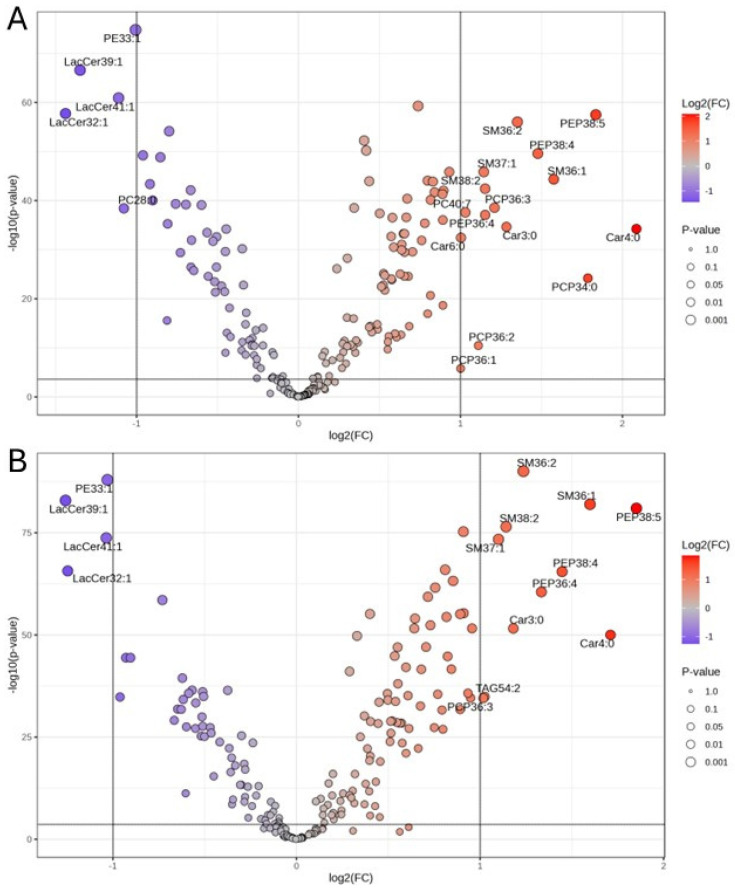 Figure 4
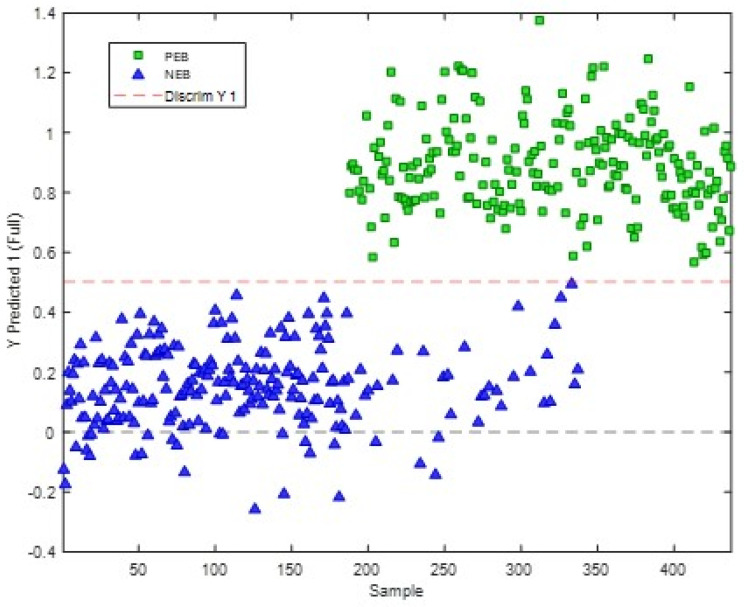 Figure 5
Peer Reviews
No public reviews on file for this paper yet. If you reviewed it on a platform where reviews are public (OpenReview, ICLR, NeurIPS, ICML), you can paste yours below so the community can read it here.
Videos
No videos yet. Explain this paper in a talk, walkthrough, or lecture? Add one.
Taxonomy
TopicsReproductive Physiology in Livestock · Milk Quality and Mastitis in Dairy Cows · Fatty Acid Research and Health