GWAS and Machine Learning Screening of Genomic Determinants Underlying Host Adaptation in Swine and Chicken Salmonella Typhimurium Isolates
Yifan Liu, Yuhao Wang, Yaxi Wang, Xiao Liu, Shuang Wang, Yao Peng, Ziyu Liu, Zhenpeng Li, Xin Lu, Biao Kan

TL;DR
This study identifies genetic features in Salmonella Typhimurium that help it adapt to pigs and chickens, using genomics and machine learning.
Contribution
The study combines GWAS and interpretable machine learning to reveal host-specific genomic signatures in Salmonella Typhimurium.
Findings
Chicken-adapted S. Typhimurium subpopulations show lower genetic diversity and distinct virulence factors.
GWAS identified 1878 host-associated genes and SNPs/indels linked to metabolism and regulation.
A Random Forest model accurately distinguished swine and chicken origins with an AUC of 0.974.
Abstract
Salmonella Typhimurium is a major zoonotic pathogen, with pigs and chickens serving as key reservoirs for human infection, yet the genomic determinants of its host adaptation remain incompletely understood. This study integrated comparative genomics, genome-wide association studies (GWASs), and interpretable machine learning on 1654 high-quality genomes of swine- and chicken-origin S. Typhimurium isolates to identify host-associated genetic features. Phylogenetic analysis revealed host-preferred lineages and significantly lower genetic diversity within chicken-adapted subpopulations. Meta-analysis identified distinct host-associated profiles of antimicrobial resistance genes (e.g., higher prevalence of floR and blaTEM-1 in swine) and virulence factors (e.g., enrichment of allB and the yersiniabactin system in chickens). GWASs pinpointed 1878 host-associated genes and multiple…
Genes, proteins, chemicals, diseases, species, mutations and cell lines named across the full text — each resolved to its canonical identifier and authoritative record.
Click any figure to enlarge with its caption.
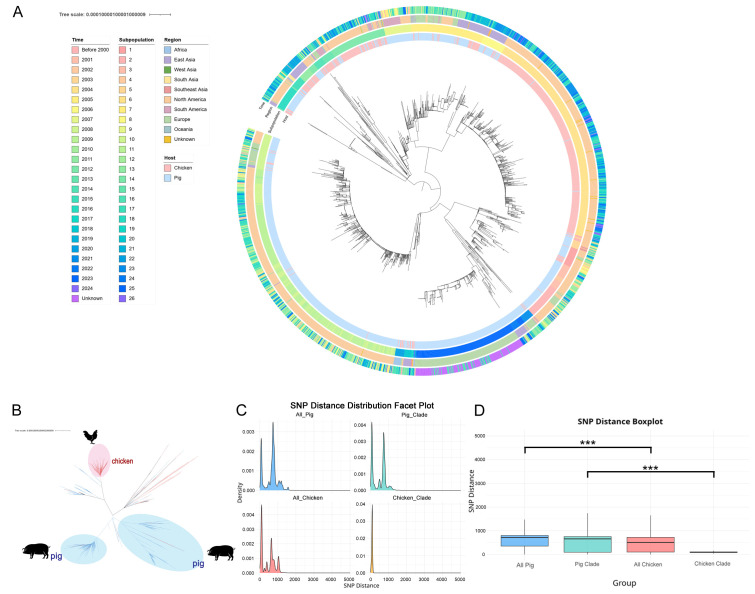 Figure 1
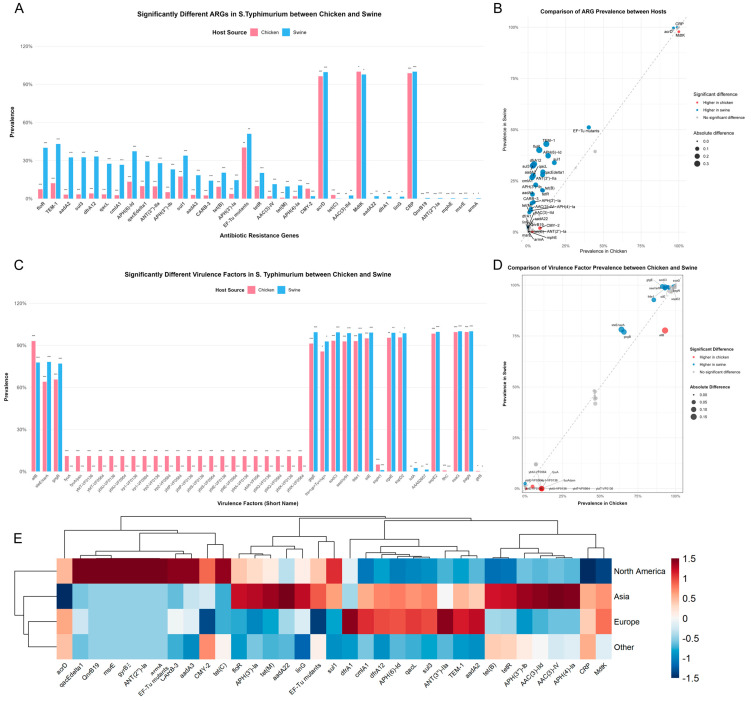 Figure 2
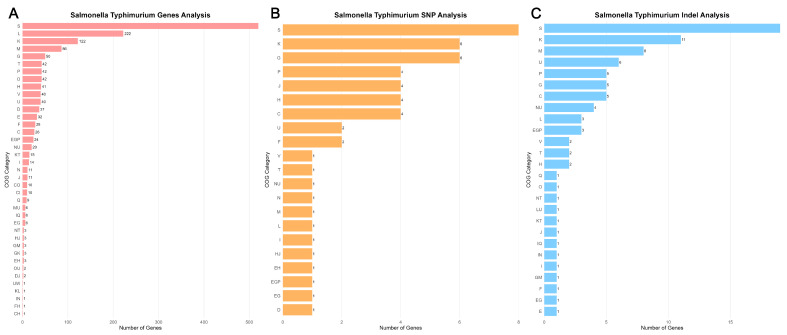 Figure 3
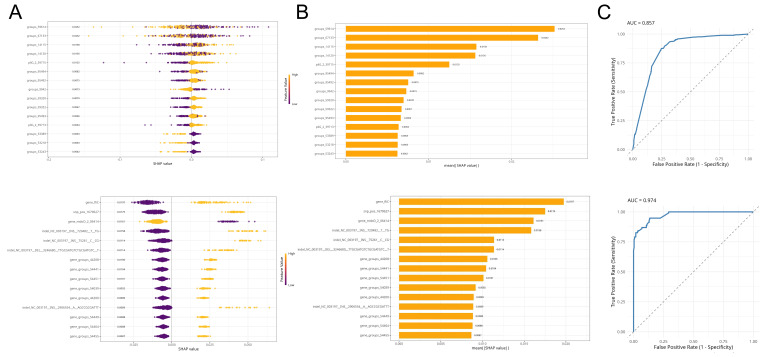 Figure 4
Peer Reviews
No public reviews on file for this paper yet. If you reviewed it on a platform where reviews are public (OpenReview, ICLR, NeurIPS, ICML), you can paste yours below so the community can read it here.
Videos
No videos yet. Explain this paper in a talk, walkthrough, or lecture? Add one.
Taxonomy
TopicsSalmonella and Campylobacter epidemiology · Yersinia bacterium, plague, ectoparasites research · Escherichia coli research studies