Detection and Fate of Microplastics and Nanoplastics and Technologies for Their Removal
Qiuping Zhang, Qi Wang, Jifei Xu, Jianguo Liu

TL;DR
This paper reviews how microplastics and nanoplastics are detected, their environmental impact, and methods to remove them.
Contribution
The paper provides a comprehensive review of detection techniques, environmental fate, and removal strategies for microplastics and nanoplastics.
Findings
Microplastics and nanoplastics persist in the environment and accumulate in biota.
Various detection methods like FT-IR microscopy and Raman spectroscopy are used for accurate identification.
Removal strategies include physical, chemical, and biological methods with specific pros and cons.
Abstract
As primary degradation products of persistent plastic waste, microplastics (MPs, <5 mm) and nanoplastics (NPs, <1 μm) have emerged as a critical global environmental concern, with their ubiquitous distribution documented across aquatic, terrestrial, and atmospheric ecosystems. With annual plastic production exceeding 460 million metric tons, their widespread presence in environmental matrices and biota—from marine organisms to human tissues—poses significant, yet incompletely understood, threats to ecological integrity and public health. This paper systematically reviews the state-of-the-art detection techniques, environmental fate processes, and remediation strategies for MPs and NPs. In terms of detection, we cover microscopy, mass spectrometry, flow cytometry, chromatography, and spectroscopy, emphasizing hyphenated techniques (e.g., FT-IR microscopy, Raman spectroscopy) for…
Genes, proteins, chemicals, diseases, species, mutations and cell lines named across the full text — each resolved to its canonical identifier and authoritative record.
Click any figure to enlarge with its caption.
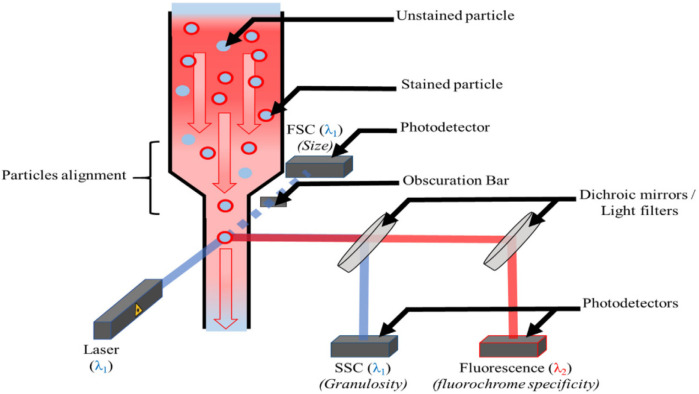 Figure 1
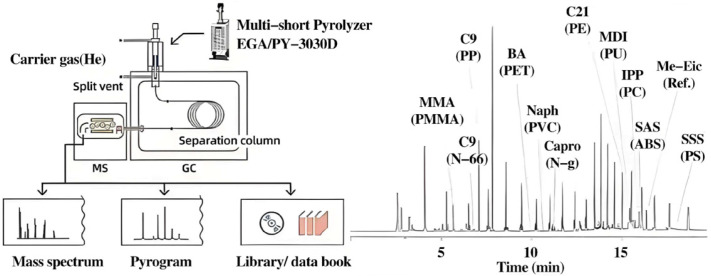 Figure 2
Peer Reviews
No public reviews on file for this paper yet. If you reviewed it on a platform where reviews are public (OpenReview, ICLR, NeurIPS, ICML), you can paste yours below so the community can read it here.
Videos
No videos yet. Explain this paper in a talk, walkthrough, or lecture? Add one.
Taxonomy
TopicsMicroplastics and Plastic Pollution · biodegradable polymer synthesis and properties · Marine Biology and Environmental Chemistry