Training–Fuel Coupling (TFC): A Molecular Sports Nutrition Framework for Energy Availability, Chrono-Nutrition, and Performance Optimization
Mirela Stoian, Dan Cristian Mănescu

TL;DR
This paper introduces a new framework called Training–Fuel Coupling (TFC) that explains how nutrition and exercise interact at the molecular level to optimize athletic performance.
Contribution
The paper proposes TFC as a novel systems physiology framework linking nutrient availability, timing, and exercise adaptation.
Findings
AMPK and mTOR signaling pathways are modulated by energy availability, influencing metabolic flexibility and recovery.
Alternating between low-energy and nutrient-replete states may enhance adaptive efficiency through oscillatory signaling.
TFC offers a hypothesis-generating model for managing energy availability and preventing maladaptive states like RED-S.
Abstract
In sports nutrition, performance adaptation emerges from the coordinated molecular interaction between physical training and nutrient availability. This narrative review with conceptual synthesis advances Training–Fuel Coupling (TFC) as a systems physiology framework that conceptualizes nutrient availability, timing, and recovery feeding as molecular control variables proposed to govern exercise-induced adaptation. Integrating evidence from exercise metabolism and nutritional science, the model conceptualizes how substrate availability may modulate the dynamic crosstalk between AMP-activated protein kinase (AMPK) and mechanistic target of rapamycin (mTOR), shaping metabolic flexibility, anabolic recovery, and long-term performance optimization. Low-energy and low-glycogen contexts preferentially activate AMPK-dependent pathways supporting mitochondrial remodeling and oxidative…
Genes, proteins, chemicals, diseases, species, mutations and cell lines named across the full text — each resolved to its canonical identifier and authoritative record.
Click any figure to enlarge with its caption.
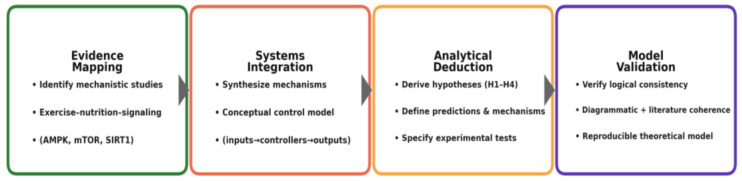 Figure 1
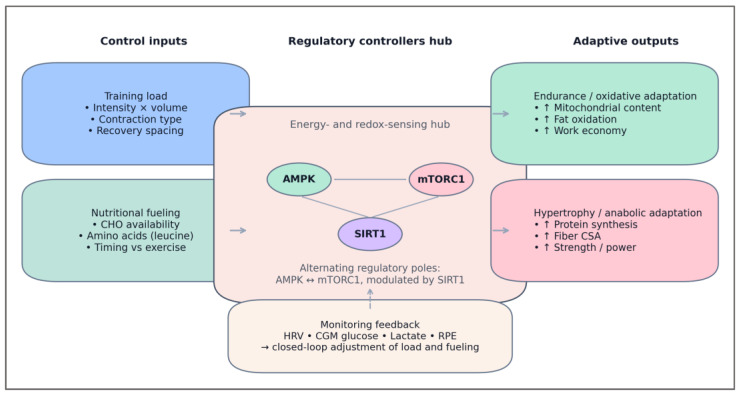 Figure 2
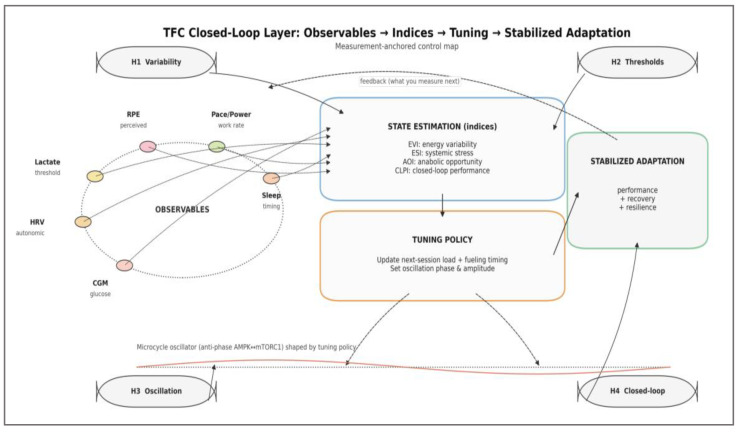 Figure 3
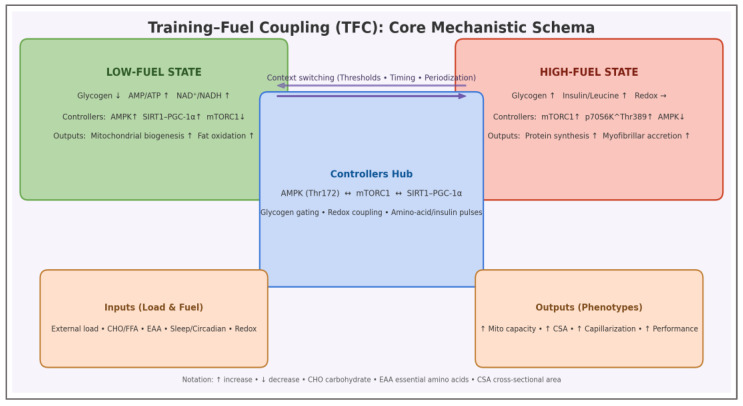 Figure 4
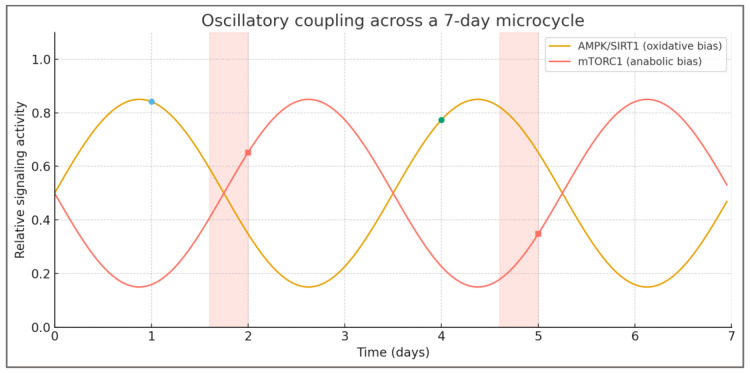 Figure 5
Peer Reviews
No public reviews on file for this paper yet. If you reviewed it on a platform where reviews are public (OpenReview, ICLR, NeurIPS, ICML), you can paste yours below so the community can read it here.
Videos
No videos yet. Explain this paper in a talk, walkthrough, or lecture? Add one.
Taxonomy
TopicsMuscle metabolism and nutrition · Metabolism, Diabetes, and Cancer · Adipose Tissue and Metabolism