Beyond Taste: The Impact of Chocolate on Cardiovascular and Steatotic Liver Disease Risk Factors
Júlia Mayumi Tomaru, Iara Ribeiro Nunes, Caroline Fernandes de Souza Santiago, Alda Maria Machado Bueno Otoboni, Claudemir Gregorio Mendes, Adriana Maria Ragassi Fiorini, Elen Landgraf Guiguer, Claudia Cristina Teixeira Nicolau, Antonelly Cassio Alves Carvalho

TL;DR
Dark chocolate may help reduce risks of heart disease and fatty liver by improving factors like inflammation and cholesterol, though more research is needed.
Contribution
This review uniquely integrates evidence on chocolate's effects on both cardiovascular and liver health, highlighting shared mechanisms.
Findings
Chocolate improves flow-mediated dilation and lipid profiles, including increased HDL-c and reduced LDL-c.
It reduces intestinal permeability and endotoxemia while increasing plasma polyphenols.
Chocolate consumption may attenuate hepatocyte apoptosis and improve platelet function.
Abstract
Cardiovascular diseases and metabolic dysfunction-associated steatotic liver disease (MASLD) are increasing sharply worldwide and share overlapping pathophysiological pathways, including oxidative stress, inflammation, hyperglycemia, obesity, dyslipidemia, and hypertension. Dark chocolate, rich in cocoa flavanols such as epicatechin and catechin, exhibits antioxidant and anti-inflammatory effects. Based on these properties, this narrative review uniquely integrates evidence on chocolate’s effects on both cardiovascular and hepatic health, exploring shared mechanisms and clinical implications. Evidence from clinical studies suggests that chocolate modulates nitric oxide bioavailability and NADPH oxidase activity. Clinical findings demonstrate improvements in flow-mediated dilation, decreased NT-proBNP, reduced intestinal permeability and endotoxemia, improved lipid profile (increased…
Genes, proteins, chemicals, diseases, species, mutations and cell lines named across the full text — each resolved to its canonical identifier and authoritative record.
Click any figure to enlarge with its caption.
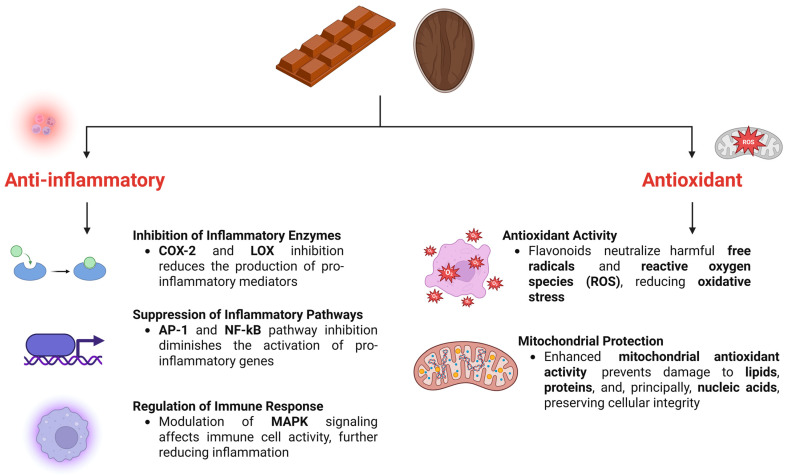 Figure 1
 Figure 2
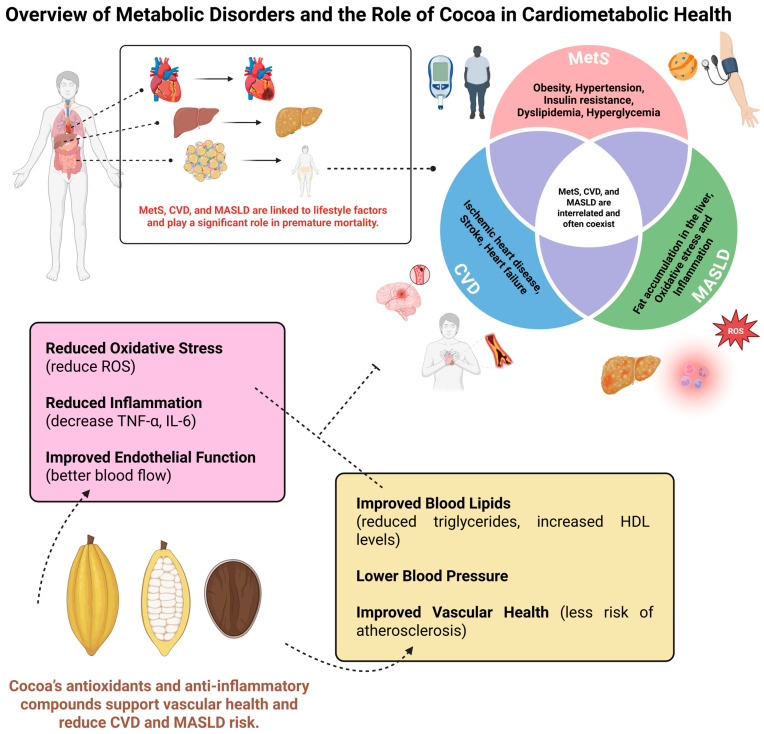 Figure 3
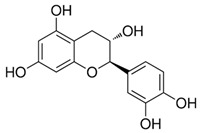 Figure 4
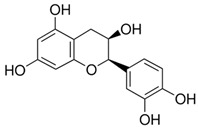 Figure 5
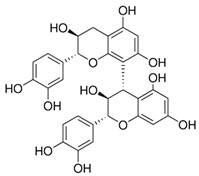 Figure 6
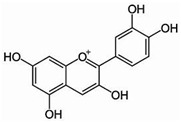 Figure 7
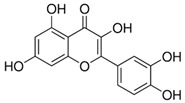 Figure 8
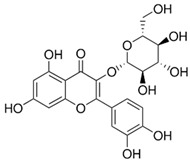 Figure 9
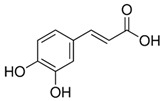 Figure 10
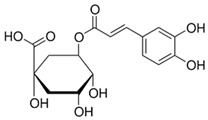 Figure 11
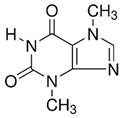 Figure 12
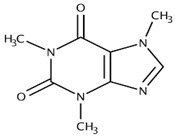 Figure 13
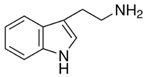 Figure 14
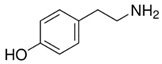 Figure 15
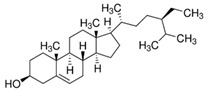 Figure 16
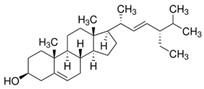 Figure 17
Peer Reviews
No public reviews on file for this paper yet. If you reviewed it on a platform where reviews are public (OpenReview, ICLR, NeurIPS, ICML), you can paste yours below so the community can read it here.
Videos
No videos yet. Explain this paper in a talk, walkthrough, or lecture? Add one.
Taxonomy
TopicsPhytochemicals and Antioxidant Activities · Food Chemistry and Fat Analysis · Food composition and properties