Declined Circulation and Seasonal Shifts of Human Coronavirus 229E in the Republic of Korea: Implications for Respiratory Virus Surveillance
Mi-Ru Oh, Jeong Su Han, Sung Hun Jang, Ga-Yeon Kim, Jae Kyung Kim

TL;DR
This study tracks the declining presence and seasonal patterns of HCoV-229E in South Korea from 2007 to 2024, highlighting the importance of ongoing virus surveillance.
Contribution
The study provides the first long-term analysis of HCoV-229E circulation and seasonal trends in South Korea.
Findings
HCoV-229E positivity declined significantly over time (OR per year, 0.916).
Winter had the highest positivity (2.69%) and summer the lowest (0.29%).
Children aged 1–5 years had the highest positivity rate (1.89%).
Abstract
Human coronavirus 229E (HCoV-229E) is an alphacoronavirus that typically causes mild upper respiratory infections but remains understudied in terms of its long-term immuno-ecological behavior. Although the COVID-19 pandemic markedly altered human behavior and viral transmission, extended circulation patterns of HCoV-229E remain poorly defined. We analyzed annual, seasonal, and age-specific trends using real-time PCR–based respiratory virus surveillance data from Dankook University Hospital collected between 2007 and 2024. Among 23,284 nasopharyngeal swab specimens, 344 were positive for HCoV-229E (overall positivity, 1.43%). Positivity declined significantly over time (OR per year, 0.916; 95% CI, 0.894–0.939; p < 0.001). Compared with spring (1.04%), positivity was highest in winter (2.69%) and lowest in summer (0.29%) (both p < 0.001), whereas autumn (0.81%) showed no significant…
Genes, proteins, chemicals, diseases, species, mutations and cell lines named across the full text — each resolved to its canonical identifier and authoritative record.
Click any figure to enlarge with its caption.
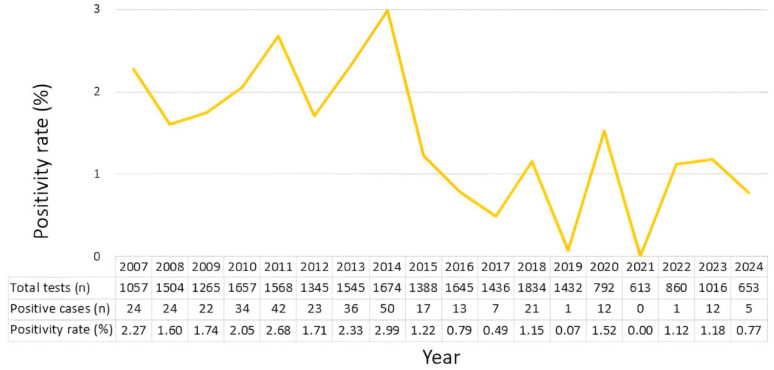 Figure 1
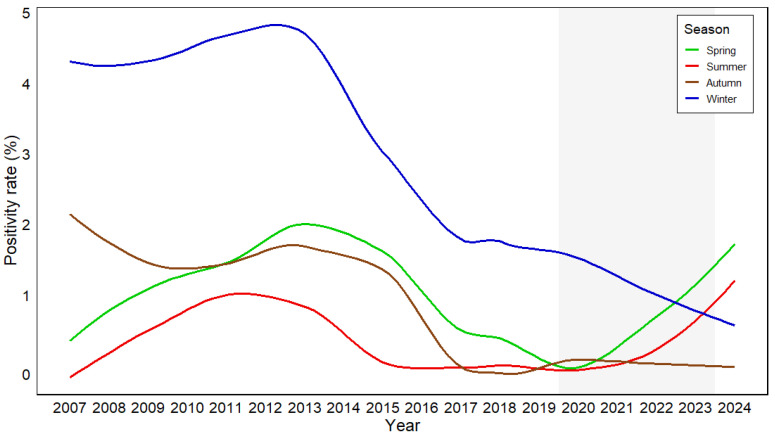 Figure 2
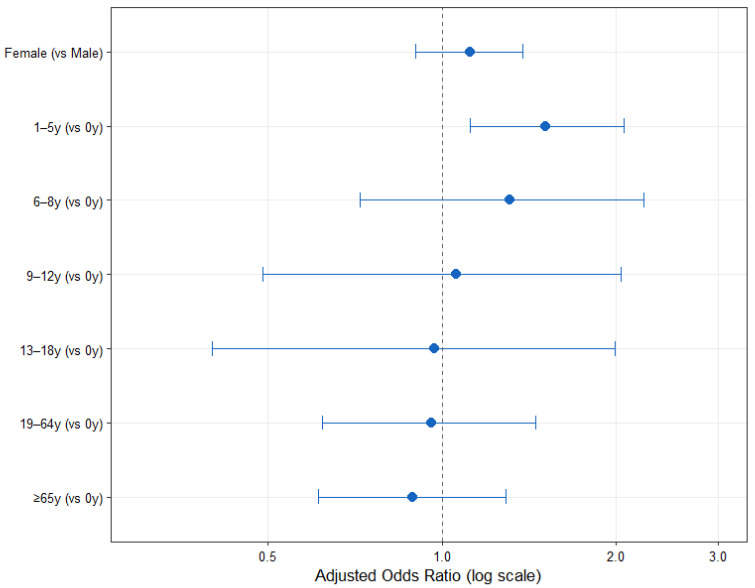 Figure 3
Peer Reviews
No public reviews on file for this paper yet. If you reviewed it on a platform where reviews are public (OpenReview, ICLR, NeurIPS, ICML), you can paste yours below so the community can read it here.
Videos
No videos yet. Explain this paper in a talk, walkthrough, or lecture? Add one.
Taxonomy
TopicsRespiratory viral infections research · SARS-CoV-2 detection and testing · COVID-19 Clinical Research Studies