Trends in Leishmaniasis: A 32-Year Review in an Endemic Area in the South of Madrid Region
Víctor Antón-Berenguer, Óscar Manuel Muñoz Clemente, Beatriz López Quintana, Belén Martínez Mondéjar, Sara Moreno-García, Montserrat Chao Crecente, José Miguel Rubio Muñoz, Francisco Jesús Merino Fernández, Carmen Chicharro Gonzalo, Emilia García Díez

TL;DR
This study reviews 32 years of leishmaniasis cases in an endemic area of Madrid, showing changes in patient demographics, diagnosis, and treatment over time.
Contribution
The study provides a long-term analysis of leishmaniasis trends in a specific endemic region, including shifts in patient groups and medical practices.
Findings
Visceral leishmaniasis (VL) shifted from affecting HIV patients to elderly and non-HIV immunosuppressed individuals.
Diagnostic methods evolved from microscopy to molecular and chemiluminescence assays.
Amphotericin B became the preferred treatment for VL over meglumine antimoniate.
Abstract
In Spain, Leishmania infantum causes both cutaneous (CL) and visceral leishmaniasis (VL). This study aimed to analyse trends in the clinical presentation, diagnosis, management, and epidemiology of leishmaniasis at Severo Ochoa University Hospital in Leganés, an endemic area in Southern Madrid affected by Europe’s largest outbreak (2009–2015). A retrospective study was conducted, including all confirmed cases from January 1992 to December 2024, using clinical records. Cases were stratified into pre-outbreak, outbreak, and post-outbreak periods. A total of 151 cases were identified, including 129 VL, 21 CL, and 1 simultaneous VL/CL. VL predominated among adults during the HIV epidemic, later shifting to elderly and non-HIV immunosuppressed patients, while paediatric cases remained stable. Diagnostic methods evolved from bone marrow microscopy, culture, and IFAT to molecular and…
Genes, proteins, chemicals, diseases, species, mutations and cell lines named across the full text — each resolved to its canonical identifier and authoritative record.
Click any figure to enlarge with its caption.
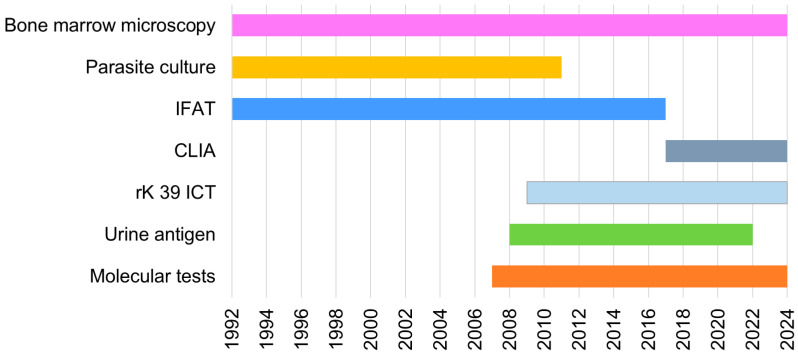 Figure 1
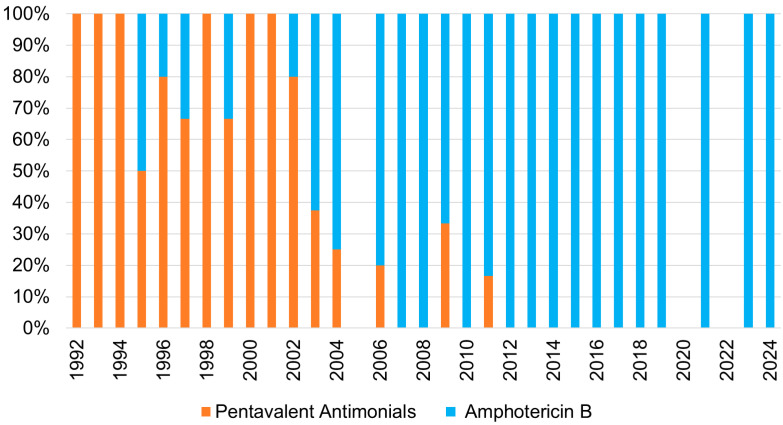 Figure 2
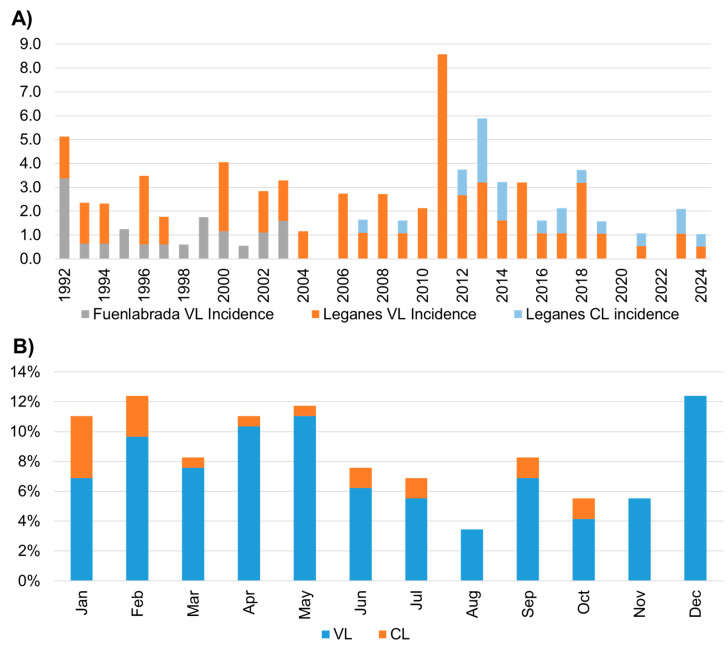 Figure 3
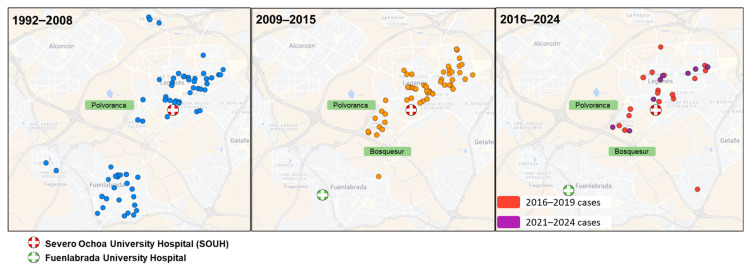 Figure 4
Peer Reviews
No public reviews on file for this paper yet. If you reviewed it on a platform where reviews are public (OpenReview, ICLR, NeurIPS, ICML), you can paste yours below so the community can read it here.
Videos
No videos yet. Explain this paper in a talk, walkthrough, or lecture? Add one.
Taxonomy
TopicsResearch on Leishmaniasis Studies · Trypanosoma species research and implications · Health, Education, and Cultural Studies