Age‐Related Clinical Agreement Between Noncycloplegic Autorefraction and Subjective Refraction: A Power‐Vector Analysis
Ozlem Candan, Irem Saglam, Gozde Orman, Nurten Unlu, Ayse Burcu

TL;DR
This study compares noncycloplegic autorefraction and subjective refraction across age groups, finding strong agreement in spherical error but noting minor astigmatic shifts with age.
Contribution
The study introduces a power-vector analysis to evaluate clinical agreement across age groups and refractive types in a large real-world dataset.
Findings
Spherical equivalent agreement was high (90.8% within ±0.50 D) across all age groups.
Astigmatic shifts with age were minimal and had limited clinical impact.
Axis deviations over 10° occurred in 27.2% of eyes, mostly with low cylinder power.
Abstract
To assess the agreement between noncycloplegic autorefraction and subjective refraction across age groups and refractive error types in a large real‐world clinical study using clinically meaningful thresholds for spherical and astigmatic components. This retrospective study analyzed 827 eyes from patients aged 7–85 years examined between May 2023 and January 2025. Objective refraction was measured using a KR‐1 autorefractor (Topcon, Tokyo, Japan), followed by standard subjective refinement. Spherical equivalent (SE), cylinder power (CP), and power vectors (J0, J45) were calculated using Fourier vector analysis. Agreement was evaluated using absolute differences and predefined clinical criteria (SE ± 0.50 D; CP ± 0.25 D; axis ≤ 10° when CP ≥ 0.50 D). Comparisons were performed across three age groups (7–21, 22–49, ≥ 50 years) and refractive subgroups. SE agreement was high across all…
Genes, proteins, chemicals, diseases, species, mutations and cell lines named across the full text — each resolved to its canonical identifier and authoritative record.
Click any figure to enlarge with its caption.
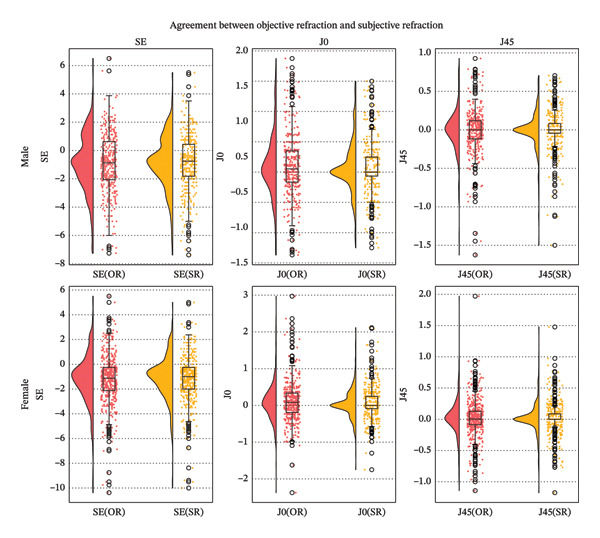 Figure 1
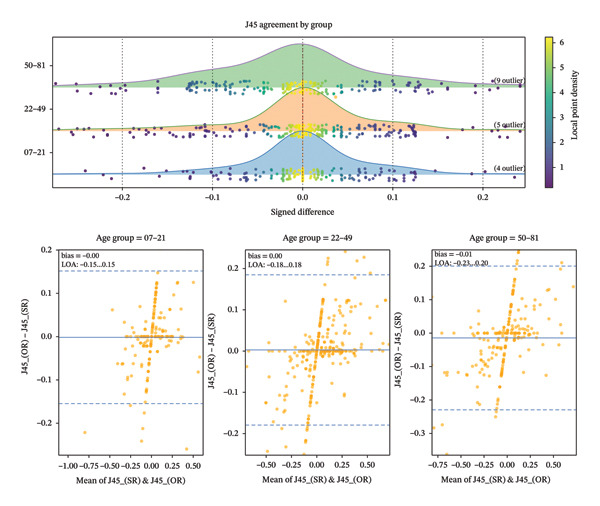 Figure 2
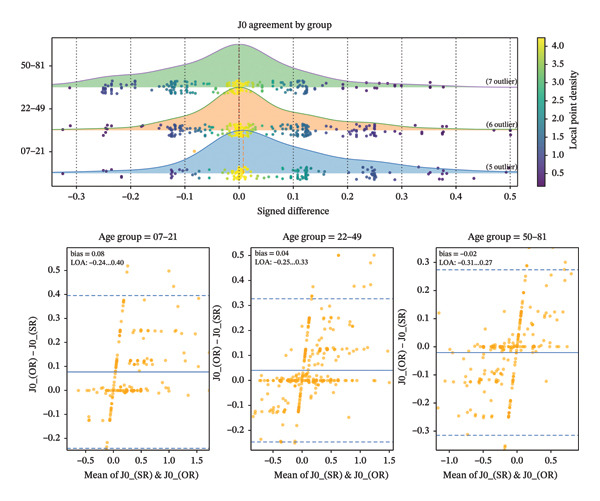 Figure 3
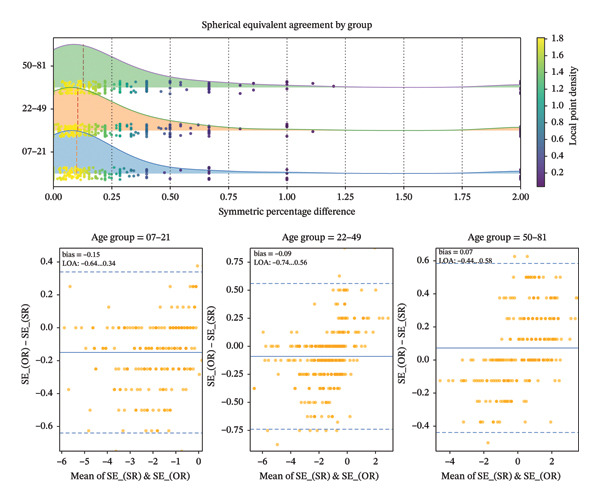 Figure 4
Peer Reviews
No public reviews on file for this paper yet. If you reviewed it on a platform where reviews are public (OpenReview, ICLR, NeurIPS, ICML), you can paste yours below so the community can read it here.
Videos
No videos yet. Explain this paper in a talk, walkthrough, or lecture? Add one.
Taxonomy
TopicsOphthalmology and Visual Impairment Studies · Corneal surgery and disorders · Ophthalmology and Eye Disorders