Optimizing the Flavor Profile of Brazilian Spirits: Torrefaction Modeling of Native Woods for Cachaça Maturation
Amanda F. Reitenbach, Adriana Sturion Lorenzi, Nicole P. Catibe, Renata P. I. Tormena, Diego C. B. D. Santos, Ana Carolina Broch, Edgar A. Silveira, Talita Souza Carmo, Paulo Anselmo Z. Suarez, Grace F. Ghesti

TL;DR
This study explores how heating different Brazilian woods affects the taste of cachaça, a Brazilian spirit, and uses AI to optimize the aging process for better flavor.
Contribution
The study introduces a novel AI-driven model to optimize wood selection and toasting for cachaça maturation, enabling customized sensory profiles.
Findings
Each wood species develops unique sensory characteristics based on toasting parameters like time and temperature.
A five-wood cachaça was produced with enhanced complexity and tailored sensory attributes using the predictive model.
Current Brazilian practices of uniform toasting are challenged by the study's data-driven approach.
Abstract
Cachaça, a traditional Brazilian spirit, undergoes significant sensory refinement through barrel aging. In this study, we investigated how heat treatment of Brazilian woods (Balsam, Jaqueira, Jequitibá, Amburana, and Ipê) affects the sensory profile of cachaça, using Oak as a benchmark. Physicochemical characterization, toasting assessments, sensory analysis, and artificial intelligence (AI) were integrated to develop a predictive model for optimizing wood selection and heat-treatment conditions to achieve targeted sensory profiles. Applying this model, we produced a five-wood cachaça, a novel spirit distinguished by its complexity and customized sensory attributes. This approach reveals that each wood species develops distinct characteristics depending on toasting parameters such as time and temperature, challenging the current Brazilian practice where a single toasting condition is…
Genes, proteins, chemicals, diseases, species, mutations and cell lines named across the full text — each resolved to its canonical identifier and authoritative record.
Click any figure to enlarge with its caption.
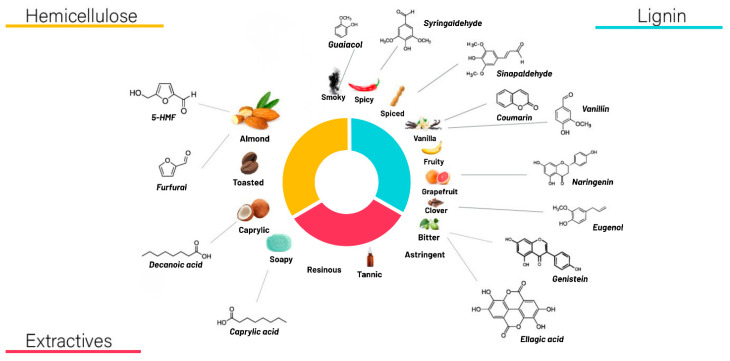 Figure 1
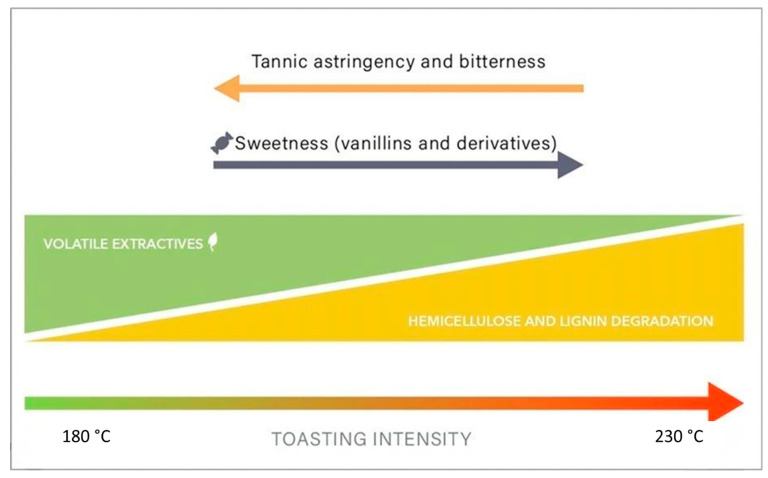 Figure 2
Peer Reviews
No public reviews on file for this paper yet. If you reviewed it on a platform where reviews are public (OpenReview, ICLR, NeurIPS, ICML), you can paste yours below so the community can read it here.
Videos
No videos yet. Explain this paper in a talk, walkthrough, or lecture? Add one.
Taxonomy
TopicsFermentation and Sensory Analysis · Sensory Analysis and Statistical Methods · Food Drying and Modeling