Isolation and Screening of Hydrogen-Oxidizing Bacteria from Mangrove Sediments for Efficient Single-Cell Protein Production Using CO2
Xiaxing Cao, Liang Cui, Shuai Sun, Tingzhao Li, Yong Wang, Shasha Wang, Rongfeng Hong, Pufan Xu, Xuewen Gao, Lijing Jiang, Zongze Shao

TL;DR
Scientists isolated bacteria from mangrove sediments that can efficiently convert hydrogen and CO2 into high-protein biomass, offering a sustainable protein source.
Contribution
A novel hydrogen-oxidizing bacterium, Thiomicrolovo sp. ZZH C-3, was identified and optimized for efficient single-cell protein production from CO2.
Findings
Strain ZZH C-3 achieved a protein content of 73.56% with a biomass yield of 3.01 g/g H2.
Optimized cultivation conditions increased the maximum specific growth rate to 0.46 h−1 and biomass concentration to 0.60 g/L.
ZZH C-3 outperformed Cupriavidus necator in hydrogen-to-CO2 conversion efficiency and protein content.
Abstract
The escalating global demand for large-scale, cost-effective, and sustainable high-quality protein has positioned single-cell protein (SCP) production from one-carbon (C1) gases as a highly promising solution. In this study, eight chemolithoautotrophic hydrogen-oxidizing bacteria (HOB) were isolated from mangrove sediments. Based on the 16S rRNA gene sequence analysis, they belonged to genera Sulfurimonas, Sulfurovum, Thiomicrolovo, and Marinobacterium. Among these, Thiomicrolovo sp. ZZH C-3 was identified as the most promising candidate for SCP production based on the highest biomass and protein content, and was selected for further characterization. Strain ZZH C-3 is a Gram-negative, short rod-shaped bacterium with multiple flagella. It can grow chemolithoautotrophically by using molecular hydrogen as an energy source and molecular oxygen as an electron acceptor. Genomic analysis…
Genes, proteins, chemicals, diseases, species, mutations and cell lines named across the full text — each resolved to its canonical identifier and authoritative record.
Click any figure to enlarge with its caption.
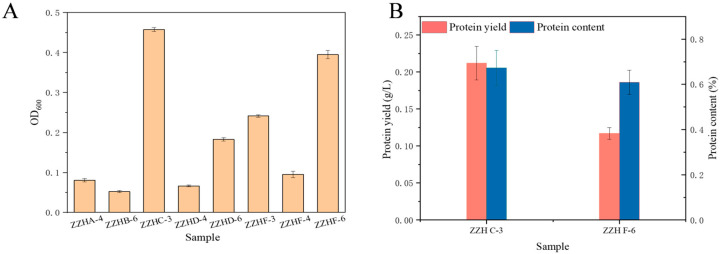 Figure 1
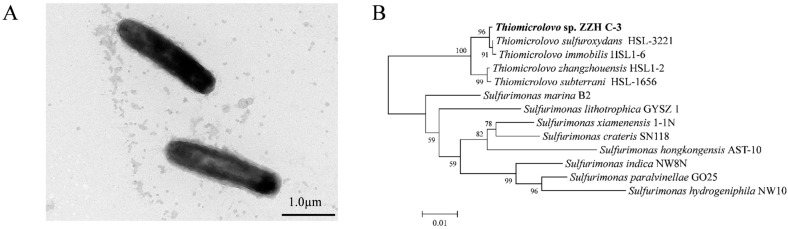 Figure 2
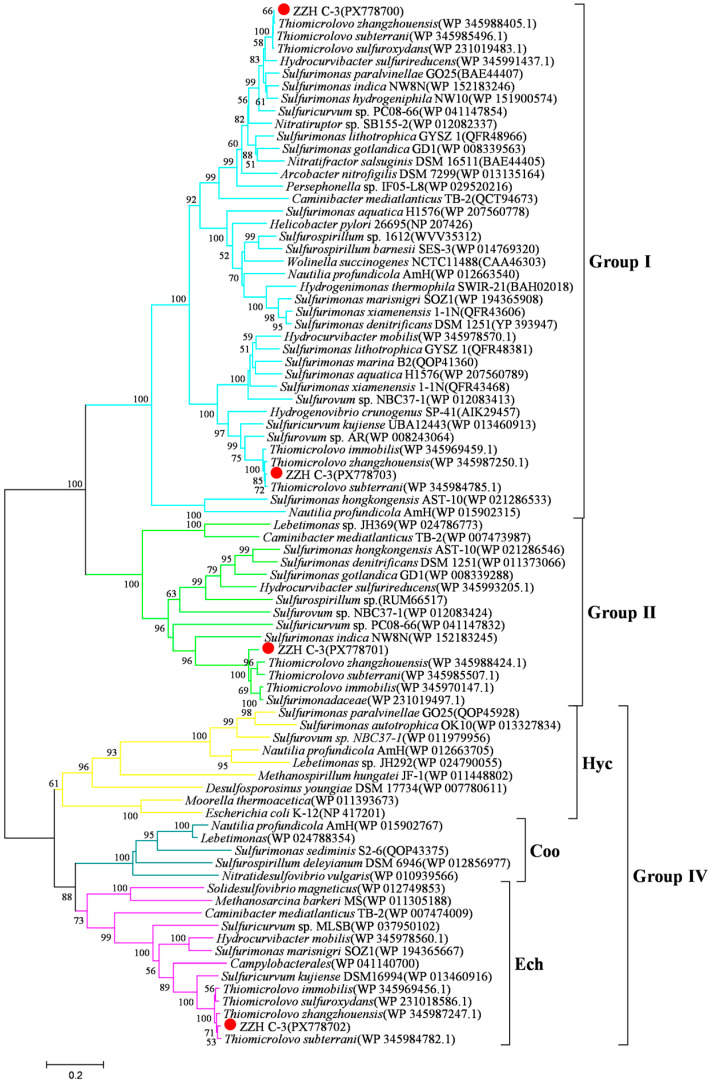 Figure 3
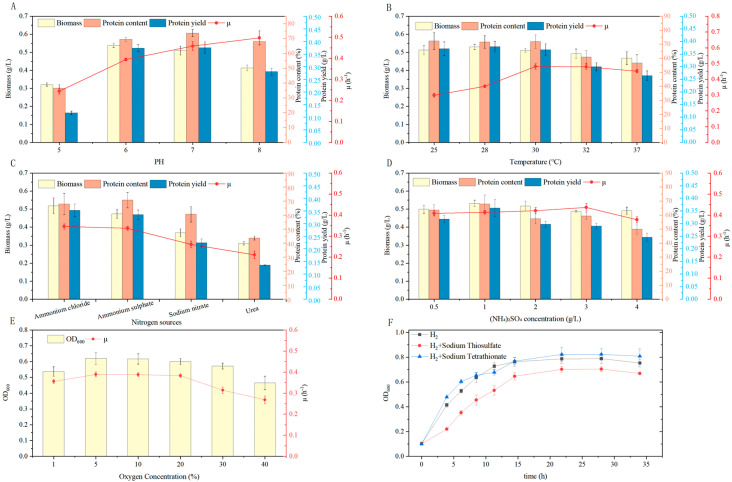 Figure 4
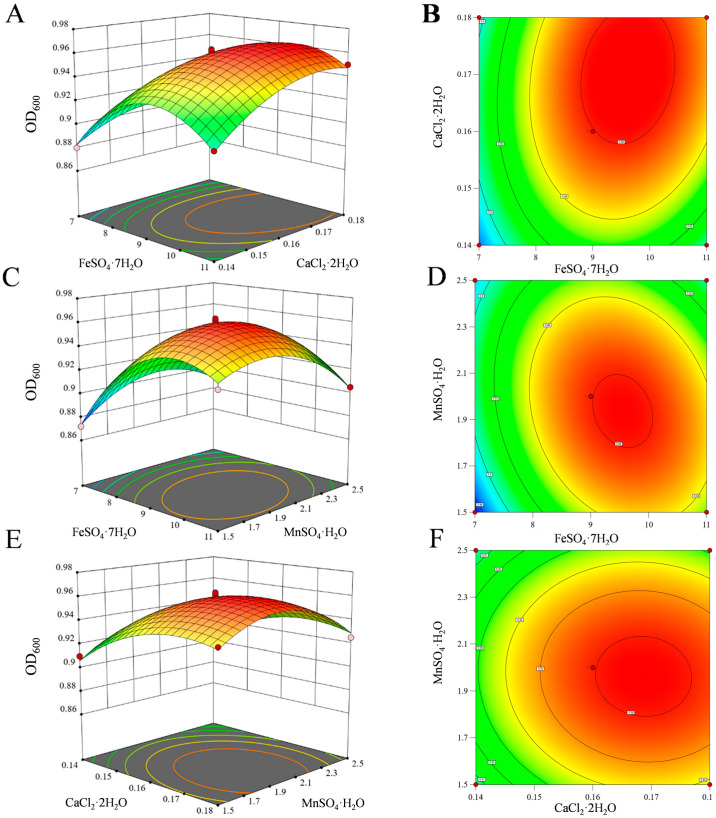 Figure 5
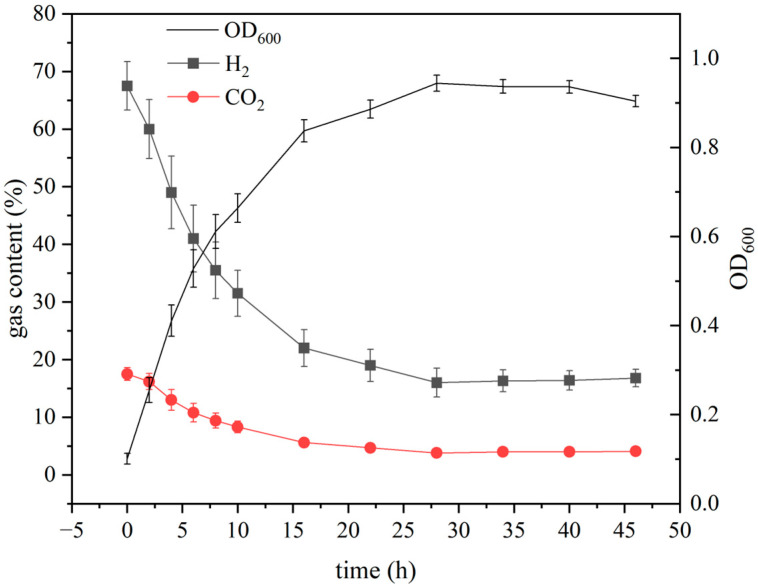 Figure 6
Peer Reviews
No public reviews on file for this paper yet. If you reviewed it on a platform where reviews are public (OpenReview, ICLR, NeurIPS, ICML), you can paste yours below so the community can read it here.
Videos
No videos yet. Explain this paper in a talk, walkthrough, or lecture? Add one.
Taxonomy
TopicsMicrobial metabolism and enzyme function · Microbial Fuel Cells and Bioremediation · Anaerobic Digestion and Biogas Production