Spin–Orbit Torque-Driven Perpendicular Magnetization Switching for Artificial Synapses in Co/Ho Multilayer Systems
Shaomin Li, Yidan Wei, Yuanyuan Chen, Kangyue Qu, Pingping Yu, Yanfeng Jiang

TL;DR
This paper explores using Co/Ho multilayer systems for artificial synapses, leveraging spin-orbit torque to enable efficient and stable magnetization switching for neuromorphic computing.
Contribution
The study introduces a Co/Ho multilayer system with high SOT efficiency and stable perpendicular magnetization for artificial synapses.
Findings
Co/Ho multilayer structures maintain high perpendicular magnetic anisotropy in thick layers.
Antiferromagnetic coupling between Co and Ho enhances spin-orbit torque efficiency with a spin Hall angle of 0.22.
Multistate magnetization switching is demonstrated, suitable for simulating synaptic weight updates in neural networks.
Abstract
Spin–orbit torque (SOT)-based spintronic devices have emerged as a preferred candidate for next-generation artificial synaptic devices due to their advantages of non-volatility, high speed, and low power consumption. The development of high-performance SOT-based artificial synaptic devices relies on the breakthrough in SOT-driven magnetization switching, wherein the performance regulation and structural design of the magnetic layer are the core critical factors. In this work, the Co/Ho multilayer system is employed as the magnetic layer to investigate its SOT-driven magnetization switching characteristics and application potential in artificial synapses. By regulating the periodic parameters of the Co/Ho multilayer structure, high perpendicular magnetic anisotropy (PMA) can be stably maintained in devices with relatively thick ferrimagnetic layers. Moreover, we elucidate the role of the…
Genes, proteins, chemicals, diseases, species, mutations and cell lines named across the full text — each resolved to its canonical identifier and authoritative record.
Click any figure to enlarge with its caption.
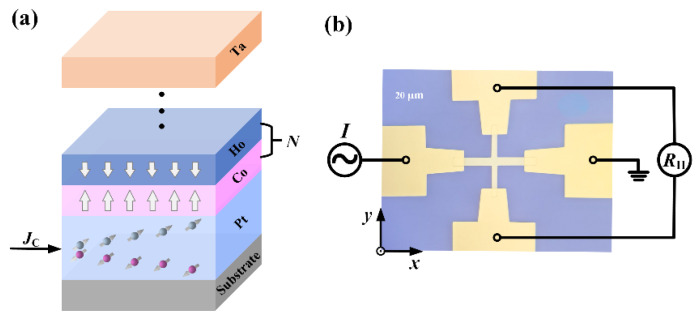 Figure 1
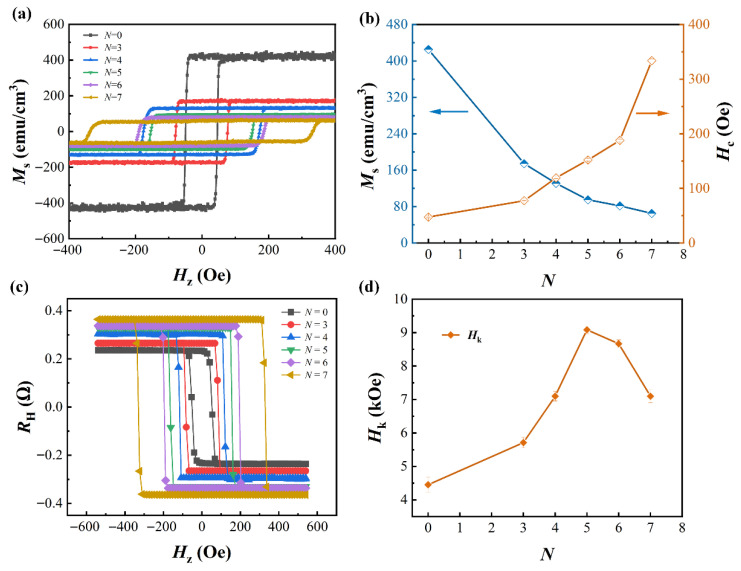 Figure 2
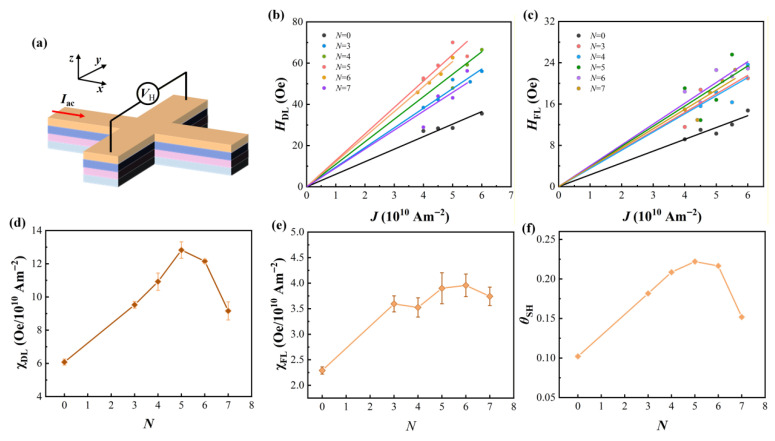 Figure 3
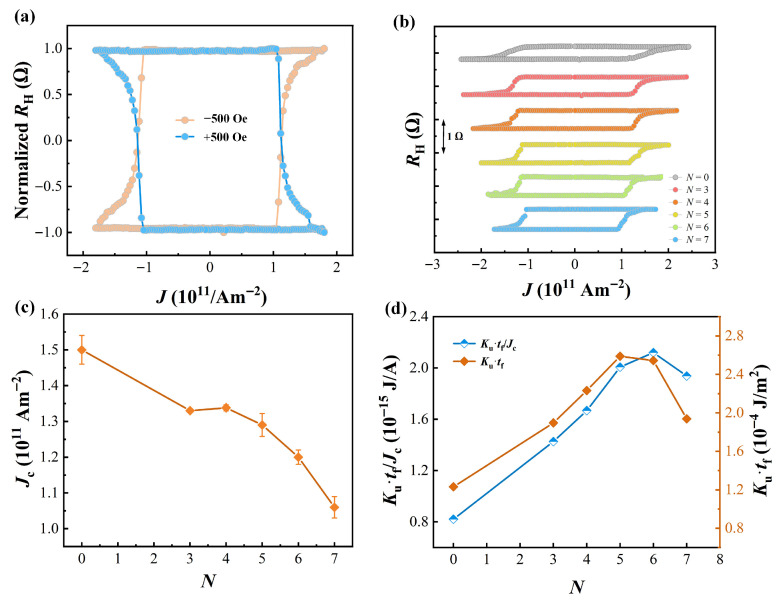 Figure 4
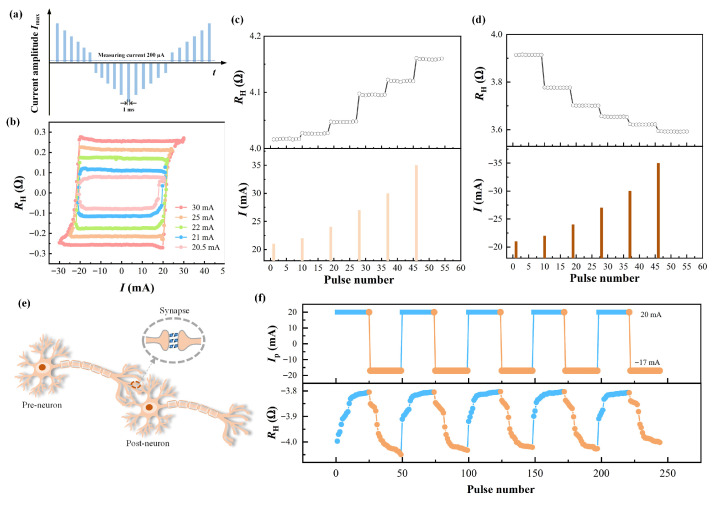 Figure 5
- —2025 Young Scholars Fund Project (Science and Engineering Category) of the Fundamental Research Funds for the Central Universities
Peer Reviews
No public reviews on file for this paper yet. If you reviewed it on a platform where reviews are public (OpenReview, ICLR, NeurIPS, ICML), you can paste yours below so the community can read it here.
Videos
No videos yet. Explain this paper in a talk, walkthrough, or lecture? Add one.
Taxonomy
TopicsMagnetic properties of thin films · Advanced Memory and Neural Computing · Multiferroics and related materials
1. Introduction
Artificial intelligence (AI)-driven digital transformation of modern society requires high-efficiency computing technologies, with innovative high-density artificial synaptic and neuronal devices addressing the computational demands of complex tasks in the big data era [1,2]. Spintronic devices with non-volatility exhibit multistate storage behavior, among which those based on spin–orbit torque (SOT) are regarded as ideal candidates for constructing next-generation artificial synaptic devices, owing to their high-speed response and low-power consumption characteristics [3,4].
To fully exploit the application potential of SOT in artificial synaptic devices, high integration density and high stability are identified as the core performance requirements for SOT-based devices. Perpendicular magnetic anisotropy (PMA) is a critical prerequisite for achieving high device integration in SOT-based spintronic devices [5]. The SOT-driven perpendicular magnetization switching is usually studied in nonmagnetic/ferromagnetic (NM/FM) bilayers [6,7]. Excellent PMA characteristics are typically observed in devices with thinner ferromagnetic layers [8]. However, a thinner ferromagnetic layer compromises the thermal stability of the device [9]. Consequently, an irreconcilable trade-off emerges between the high integration density and high thermal stability of the device. Researchers have adopted various approaches to mitigate this trade-off. Ohtake et al. investigated the effect of substrate temperature on the film structure and magnetic properties, fabricating alloys with a highly ordered L_10_ phase, such as FePt and CoPt [10]. These alloy layers can achieve high perpendicular magnetic anisotropy with a thickness of 40 nm. Liu et al. prepared [Co/Ni]n multilayer structures and observed stable perpendicular magnetization switching in the repeatedly stacked interfacial structure. Nevertheless, these systems still suffer from limitations in terms of tunability or compatibility [11].
In recent years, rare earth (RE)-transition metal (TM)-based ferrimagnetic systems have garnered extensive attention owing to their antiferromagnetically coupled sublattices and nearly zero net magnetization [12,13,14]. Utilizing the alloy layers formed by RE and TM as magnetization switching layers not only exhibits fast magnetization dynamics but also yields an additional enhancement in SOT efficiency [15,16]. Compared with RE-TM alloys system, RE/TM multilayer structures fabricated via alternating growth exhibit distinct advantages in terms of PMA characteristics [17,18]. Furthermore, rational interface engineering imparts these multilayer structures with superior tunability and flexibility in tailoring magnetic properties and spin transport characteristics [19,20]. To date, SOT-induced multistate magnetization switching behavior has been observed in RE-TM alloy systems, providing a critical physical foundation for artificial synaptic device development [21,22]. However, this highly promising multistate magnetization switching behavior has not been investigated in RE/TM multilayer systems, which possesses a higher degree of regulatory freedom and more prominent interfacial effects. Therefore, systematically investigating the modulation rules in RE/TM multilayer systems not only improves the magnetodynamics and SOT modulation theories but also supports high-tunability, high-integration, and low-power artificial synaptic device development.
In this work, we focus on the Co/Ho multilayer system, systematically investigating the SOT-driven perpendicular magnetization switching behavior and its application potential in artificial synapses. By tuning the periodicity of Co/Ho multilayers to optimize their magnetic properties and spin transport efficiency, the enhancement mechanism underlying the regulation of Co/Ho interfacial coupling on SOT efficiency is clarified. Furthermore, highly stable current-induced magnetization switching is achieved, on the basis of which the multilevel storage capability and the synaptic plasticity behavior are emulated. This work provides key theoretical insights and technical support for spintronic artificial synaptic device development, advancing neuromorphic computing toward low-power, high-integration operation.
2. Experimental Methods
2.1. Preparation Methods
The thin film stacks of Ti (2)/Pt (5)/[Co (0.65)/Ho (0.55)]N/Ta (2) were deposited on a thermally oxidized Si substrate using magnetron sputtering technique at base pressure of 3.0 × 10^−8^ Torr, as shown in Figure 1a. The numbers in parentheses are nominal thicknesses in nanometers, and N is the periodic number of the Co/Ho stacks. To ensure good PMA characteristics, parameter N is selected to be greater than 3. The Ti (2)/Pt (5)/Co (1.3)/Ta (2) structure is used as a reference sample, with N assigned a value of 0. The bottom 2 nm Ti layer is used for the adhesion layer, and the 5 nm Pt is used as the spin source. The top 2 nm Ta as the capping layer exhibits opposite spin Hall angle with Pt, synergistically enhancing the SOT efficiency of the whole system. The films were processed into Hall bar devices with the size of 20 × 200 μm using photolithography and ion milling techniques for electrical transport testing. Figure 1b shows the optical image of the patterned device.
2.2. Measurement Method
The magnetic hysteresis loops of the Co/Ho multilayer samples were measured via a vibrating sample magnetometer (VSM) to obtain the magnetic properties of the thin-film samples. Anomalous Hall resistance (RH) was collected through electrical transport measurements, and the anomalous Hall loops (RH-Hz) were plotted to extract the magnetic properties of the patterned devices. The perpendicular magnetic anisotropy field (Hk) was quantitatively derived by exploiting the dependence of the RH on the in-plane magnetic field (Hx). The second-harmonic Hall voltage measurement method was employed to acquire the first-harmonic (V1ω) and second-harmonic (V2ω) Hall voltage signals under different current densities, through which the effective fields of SOT, including the damping-like effective field (HDL) and field-like effective field (HFL), were quantitatively characterized. Further, the spin Hall angle(θSH) of the devices was extracted via data fitting. Current-induced magnetization switching measurements were conducted to investigate the SOT-driven magnetization switching behaviors in the Co/Ho multilayer systems, with further demonstration of its multistate magnetization switching and synaptic plasticity.
3. Results and Discussion
3.1. Magnetic Properties of Co/Ho Multilayer Systems
The out-of-plane magnetic hysteresis loops in the low magnetic field region were characterized by VSM at room temperature, as shown in Figure 2a. The well-defined rectangular magnetic hysteresis loops indicate that all samples possess excellent PMA characteristics. With the increase in the number of periods N, the multilayer samples still exhibit consistent switching behavior identical to that of the single Co layer. This is attributed to the strong interlayer coupling between the Ho and Co layers, which enables coherent magnetization switching under the assistance of an external magnetic field [23]. Figure 2b shows the saturation magnetization (Ms) and coercive field (Hc) of all samples, which were extracted from the out-of-plane magnetic hysteresis loops. As the number of periods N increases, the Ms exhibits a continuous decreasing trend, while the Hc shows a gradual increasing tendency. As an RE element, Ho possesses a magnetic moment antiparallel to that of Co. With the increase in the number of stacks, the enhanced antiferromagnetic exchange coupling effect between Co and Ho atoms is primarily responsible for the continuous reduction in Ms [24]. The variation in the Hc is relatively complex. The antiferromagnetically coupled interface between Co and Ho layers can enhance Hc. Additionally, as the number of periods N increases, the gradual increase in Co layer thickness also contributes to the rise in the Hc.
After applying a perpendicular magnetic field Hz, the measured anomalous Hall resistance RH-Hz loops of the patterned samples are presented in Figure 2c, which exhibits a sharp magnetization reversal process consistent with that of the thin-film samples. To quantitatively characterize the PMA characteristics of the Hall bar devices, the perpendicular magnetic anisotropy field Hk was extracted based on the dependence of the RH on the in-plane magnetic field Hx. This method enables more efficient quantitative determination of Hk for Hall bar devices and has been widely adopted and reported in numerous studies [25,26]. Figure 2d shows the dependence of the Hk on the number of periods N. As the number of periods N increases, Hk exhibits a trend of initial increase followed by subsequent decrease. This is attributed to the intensified atomic intermixing between the ultrathin Co and Ho layers during the process of increasing alternating sputtering cycles [27,28]. At low sputtering cycles, the prominent interfacial anisotropy favors the enhancement of Hk for the system. However, with a further increase in sputtering cycles, the Co/Ho multilayer structure tends to form an alloy phase. The progressively blurred interfacial structure competes with the volume anisotropy induced by the formed alloy layers, resulting in the sample with a period number N = 5 exhibiting a relatively high Hk value of approximately 9 kOe, which is twice that of the reference sample.
3.2. Quantitative Analysis of SOT Efficiency in Co/Ho Multilayer Systems
To quantitatively analyze the SOT efficiency of samples with different period numbers N, the second-harmonic measurement method was employed. The measurements were performed using an alternating current (Iac) source and a lock-in amplifier operating at a frequency of 307 Hz to detect the Hall voltage (VH). Figure 3a presents a schematic diagram of the harmonic Hall voltage measurement setup. During the measurements, sweeping magnetic fields Hx and Hy were applied parallel and perpendicular to the current direction, respectively, to extract the V1ω and V2ω of the samples under different current density excitation conditions. The HDL and HFL were derived from the Hall voltage measurement data using the following equations:
Figure 3b,c show the HDL and HFL obtained by sweeping the transverse magnetic field Hx and longitudinal magnetic field Hy under different current densities J, respectively. It can be observed that the effective HDL maintains a good linear relationship with the current density. However, the effective HFL data obtained at the same current density are relatively scattered, indicating that the extracted effective HFL of the samples is relatively weak. Figure 3d,e show the relationships between the extracted effective damping-like field per unit current density (χDL), effective field-like field per unit current density (χFL), and the period number N of the samples, respectively. For the Co/Ho multilayer structures, χDL exhibits a trend of first increasing and then decreasing as the period number N increases. When the number of alternately deposited Co/Ho interfaces reaches 5, the SOT efficiency is more than twice that of the reference sample, peaking at 12.8 ± 0.49 Oe/10^10^ A·m^−2^. This indicates that an additional spin current is generated in the Co/Ho multilayer structures. The antiferromagnetic coupling effect between Co/Ho interfaces exerts a significant influence on the generation and transport of spin current, which constitutes the primary mechanism for the enhancement of SOT efficiency in the Co/Ho multilayer structures [29]. Nevertheless, with the continuous increase in period number N, χDL begins to show a decreasing trend. This trend is consistent with the variation in the perpendicular magnetic anisotropy field Hk as a function of period number N. This is attributed to the reason that repeated sputtering leads to the blurring of Co/Ho interfaces, causing the multilayer structures to gradually transform into alloy structures. As the interfacial characteristics disappear, the antiferromagnetic coupling effect between Co/Ho interfaces weakens progressively, and the spin transport and coupling mechanisms in the multilayer structures undergo a corresponding transformation. Compared with the CoHo multilayer systems, the spin current generated by the CoHo alloy layers is relatively low. This phenomenon has also been reported in previous studies on ferromagnetic rare-earth alloy layers [30]. In addition, compared with the reference sample, the presence of Co/Ho interfaces results in a significant enhancement of χFL. Nevertheless, with the further increase in the period number N, χFL exhibits a less pronounced growth trend. By comparing Figure 3d,e, it can be seen that the values of χDL and χFL differ by nearly one order of magnitude, which indicates that HDL has a more prominent impact on device performance, while the influence of HFL is negligible.
To more accurately characterize the role of SOT in the magnetization switching process of this system, the expression for the θSH is thus revised as follows:
where e is the electron charge, μ0 is the permeability vacuum, ħ is the reduced Planck’s constant, Mnet is the net saturation magnetization of the Co/Ho systems, and tf is the thickness of the FM layer. Figure 3f illustrates the variation in the θSH with the period number N for the Co/Ho multilayer samples. As the period number N increases, the variation trend of θSH is consistent with that of χDL. When the period number N = 5, the θSH reaches the maximum value of approximately 0.22, which is twice that of the reference sample. This value also exhibits a distinct advantage in comparison with those of other Pt-based structure samples.
3.3. Magnetization Switching Characteristics and Stability Analysis
To investigate the impact of the periods N on the SOT-driven switching behavior in Co/Ho multilayer systems, current-induced magnetization switching measurements were conducted. Pulses of 35 mA with a width of 5 ms were applied to the Hall cross device. A fixed magnetic field was applied while scanning the writing pulse current along the x-direction. Another small current pulse of 200 μA was employed to read the Hall resistance. Figure 4a shows the normalized RH of the sample with periods N of 6 under Hx = ±500 Oe. RH as a function of the pulsed current density J reveals a clear transition between two resistance states. Applying Hx in different directions results in switching loops with opposite polarities, which is a typical characteristic of SOT-induced magnetization switching. +Hx corresponds to a clockwise cycle, while −Hx corresponds to a counterclockwise cycle. Figure 4b shows the current-induced magnetization switching loops of the devices with different N value under external in-plane magnetic field of −500 Oe. All samples can realize efficient magnetization switching with a switching ratio larger than 90% under Hx = −500 Oe. Figure 4c shows the N-dependent critical current density (Jc). Here, Jc is identified as the critical current density for 50% switching of magnetization state. With the increase in the number of Co/Ho multilayer stacks, the Jc exhibits a gradual decreasing trend. When N = 7, the Jc for driving magnetization switching is 1.1 × 10^11^ A·m^−2^, which is 1.5 times lower than that of the reference sample. Although Jc is comparable to that required for magnetization switching of a 1.3 nm ferromagnetic layer driven by Pt-based structures, it is important to emphasize that the free layer thickness of the Pt/[Co/Ho]7 sample reaches 8.4 nm. Typically, the increase in magnetic layer thickness tends to result in a rise in the critical switching current. In contrast, the Co/Ho multilayer structure can maintain a relatively low Jc while retaining a large free layer thickness, demonstrating significant advantages in magnetization switching performance.
The thermal stability factor (Δ) is typically used to evaluate the storage lifetime of devices, where a higher Δ can ensure stable switching of devices for more than a decade. At room temperature, when the effective area of devices is consistent, the Δ can be assessed by the product of the magnetic anisotropy constant (Ku) and the thickness (tf) of the magnetic layer, where Ku = HkMs/2 represents the effective vertical anisotropy energy density. For the Co/Ho multilayer samples with different stack numbers N, it is noted that the Jc varies with the increase in tf. To provide a more equitable comparison condition, the switching current density is used to normalize the difference in energy barrier under different cycle numbers. Specifically, Ku·tf/Jc is adopted to characterize the magnetization switching stability of the Co/Ho multilayer samples. Figure 4d presents the variations in Ku·tf/Jc and Ku·tf with the periods N in the Co/Ho multilayer samples. With the increase in N, both Ku·tf/Jc and Ku·tf are significantly enhanced compared to the reference sample, indicating the improved magnetization switching stability of the multilayer samples. Furthermore, with a further increase in N, both Ku·tf/Jc and Ku·tf exhibit a decreasing trend, which also confirms that the Co/Ho multilayer structure gradually transitions to an alloy phase. Eventually, the Pt/[Co/Ho]6 sample demonstrates the highest switching stability.
3.4. Multistate Magnetization Switching and Synaptic Plasticity Simulation
Co/Ho multilayer samples exhibit excellent performance characteristics during the magnetization switching process. To further verify their application potential in the field of multistate memory, we applied a series of current pulses ranging from 20.5 to 30 mA with different maximum magnitudes (Imax) to the Pt/[Co/Ho]6 sample, and the measurement process is illustrated in Figure 5a. Figure 5b shows the switching loops with the monotonic increasing switching ratio under different Imax values. Different Imax values resulted in various RH values, indicating the potential to modulate the magnetization state by varying the current density. This also confirms the multistate storage behavior during the current-induced magnetization switching process in the ferrimagnetic Co/Ho multilayer devices.
Next, we demonstrate the continuous manipulation of magnetization state by current pulses. In the experiment, a series of unipolar current pulses with different amplitudes were applied to the sample under Hx = −500 Oe, and the RH values were recorded nine consecutive times using a 1 mA test current after the application of each pulse. With the increasing amplitude of positive (negative) current pulse, RH value increases (decreases), as shown in Figure 5c,d. This result further demonstrates that effective manipulation of the magnetization state in Co/Ho multilayer samples can be achieved by precisely controlling the amplitude and polarity of pulse currents, thereby enabling the realization of a more reliable multistate memory function. Furthermore, the RH stabilizes at a constant value between the two pulse widths, demonstrating that the Pt/[Co/Ho]6 sample exhibits favorable data stability for application as a multistate memory device.
The current-induced resistance modulation capability in the Pt/[Co/Ho]6 sample endows it with corresponding advantages for the fabrication of artificial synaptic devices. In biomimetic neural systems, the neuromorphic networks comprise neurons and synapses. These synapses connect two neurons and modulate the connection strength within the Hall bar device by adjusting their weights. In this process, alterations in synaptic weights occur concomitantly, leading to the generation of excitatory postsynaptic potentials (EPSP) or inhibitory postsynaptic potentials (IPSP). As external stimuli change, synaptic weights undergo corresponding adjustments, thereby mediating learning and memory behaviors in neural networks. The schematic diagram of the structure of an artificial synapse is presented in Figure 5e.
The variations in Hall resistance, which are continuously tuned by programming consecutive pulse sequences, are desired to imitate synaptic behavior. The magnetization of the Pt/[Co/Ho]6 device was switched to the downward-magnetized state. During the measurement, an external auxiliary magnetic field of −500 Oe was fixed, and 250 cycles of positive-negative alternating current pulses were continuously applied to the device. The positive and negative current pulses were set to amplitudes of 20 mA and −17 mA, respectively, with a pulse width of 1 ms for both polarities. The corresponding schematic of the pulse current and the response of the RH to the applied current pulses are presented in Figure 5f. Notably, RH varied correspondingly with the change in the applied current pulses, demonstrating the realization of artificial synaptic functionality. Specifically, when positive current pulses were applied to the device, the RH value increased with the number of positive pulses, which corresponds to the EPSP behavior of synaptic plasticity. In contrast, when negative current pulses were applied, the RH value decreased with the number of negative pulses, which is analogous to the IPSP behavior of synaptic plasticity. These results demonstrate the feasibility of the Pt/[Co/Ho]6 device for emulating synaptic plasticity. Notably, asymmetric behavior between the EPSP and IPSP has been observed, which arises from differences in the domain wall (DW) propagation velocity under positive and negative current pulses [31]. The ferrimagnetic Co/Ho multilayer devices manifest SOT-driven polymorphic magnetic switching behavior and synaptic characteristics, presenting promising applications in multilevel storage and artificial neuromorphic computing.
4. Conclusions
In conclusion, we systematically investigate the SOT-driven magnetization switching characteristics of Co/Ho multilayer systems and clarify their application values in artificial synaptic devices. By regulating the periodicity of Co/Ho multilayer systems, devices with relatively thick ferrimagnetic layers can stably maintain high PMA characteristic, with a maximum perpendicular magnetic anisotropy field of 9 kOe. Quantitative analysis of the variation in SOT efficiency with the number of N reveals that the antiferromagnetic coupling at the Co/Ho interface is the key to enhancing SOT efficiency. Current-induced magnetization switching tests demonstrate that the high SOT efficiency of the system can drive stable magnetization switching of an 8.4 nm-thick ferromagnetic layer, with a switching current density as low as 1.1 × 10^11^ A·m^−2^. Performance comparison with other ferromagnetic layers verifies the significant advantages of the Co/Ho multilayer structure as a magnetic layer. In addition, based on the performance of the Pt/[Co/Ho]6 device, it is confirmed that the Co/Ho multilayer system exhibits multistate magnetization switching capability. Combined with synaptic plasticity simulations, this further demonstrates the great application potential of the high-stability magnetization switching system in artificial neural networks.
The reference list from the paper itself. Each links out to its DOI / PubMed record.
- 1Roy K. Jaiswal A. Panda P. Towards spike-based machine intelligence with neuromorphic computing Nature 201957560761710.1038/s 41586-019-1677-231776490 · doi ↗ · pubmed ↗
- 2Li G. Dai M. Zhang Y. Multi-terminal artificial synaptic devices with more controllable brain-like spike-based behaviors Adv. Electron. Mater.20228210100310.1002/aelm.202101003 · doi ↗
- 3Ranjan A. Farooq T. Chi C.-C. Sung H.-Y. Salinas Padilla R.I. Lin P.-H. Wu W.-W. Lu M.-Y. Mishra R. Lai C.-H. Dual SOT switching modes in a single device geometry for neuromorphic computing Nano Lett.2025257089709610.1021/acs.nanolett.5c 0110040245244 PMC 12046592 · doi ↗ · pubmed ↗
- 4Jin T. Zhang B. Tan F. Lim G.J. Chen Z. Cao J. Lew W.S. Granular Magnetization switching in Pt/Co/Ti structure with Hf Ox insertion for in-memory computing applications Nano Lett.2024245521552810.1021/acs.nanolett.4c 0066238662651 · doi ↗ · pubmed ↗
- 5Musha A. Soya N. Gao T. Harumoto T. Ando K. Tunable spin-orbit torques and perpendicular magnetic anisotropy at oxidized Al/Co interfaces Appl. Phys. Lett.202111805241010.1063/5.0038931 · doi ↗
- 6Liu L. Zhou C. Shu X. Li C. Zhao T. Lin W. Deng J. Xie Q. Chen S. Zhou J. Symmetry-dependent field-free switching of perpendicular magnetization Nat. Nanotechnol.20211627728210.1038/s 41565-020-00826-833462431 · doi ↗ · pubmed ↗
- 7Xie J. Yang Y. Chen B. Zhao Z. Qin H. Sun H. Lei N. Zhao J. Wei D. Giant spin-orbit torque in antiferromagnetic-coupled Pt/[Co/Gd]N multilayers with suppressed spin dephasing and robust thermal stability ACS Appl. Mater. Interfaces 202416279442795110.1021/acsami.4c 0427338764370 · doi ↗ · pubmed ↗
- 8Nishioka K. Honjo H. Naganuma H. Nguyen T.V.A. Yasuhira M. Ikeda S. Endoh T. Enhancement of magnetic coupling and magnetic anisotropy in MT Js with multiple Co Fe B/Mg O interfaces for high thermal stability AIP Adv.20211102523110.1063/9.0000048 · doi ↗