Beyond Content Delivery: A Systematic Review of Video-Based SRL Interventions and Gaps in Explicit Motivational and Resource-Management Instruction
Anat Cohen, Orit Ezra, Efrat Michaeli, Guy Cohen, Hagit Gabbay, Alla Bronshtein

TL;DR
This paper reviews how video-based learning interventions help students develop self-regulated learning skills, finding that motivational and resource-management strategies are often overlooked.
Contribution
The study introduces TASK learning as a framework for designing effective video-based self-regulated learning interventions.
Findings
Most video interventions target multiple self-regulated learning strategies across the learning cycle.
Motivational and resource-management strategies are rarely included in explicit instruction.
TASK learning settings help reduce cognitive load and learner passivity in video-based learning.
Abstract
Self-regulated learning (SRL) is a critical competency for learners in increasingly technology-enhanced educational environments, yet little is known about how SRL is fostered within video-based interventions in K-12 settings. While existing reviews and meta-analyses focus on the effectiveness of SRL interventions, this study aims to address current gaps by specifically examining the implementation processes, instructional tools, and the role of video. Addressing this, the present study conducted a systematic literature review of peer-reviewed K-12 intervention studies published since 2010, guided by PRISMA standards and other methodological frameworks in the field of SRL. 30 quantitative or mixed-methods studies focusing on K-12 SRL interventions were selected from Web of Science and ERIC, with the requirement that video served as an instructional component rather than a research tool.…
Genes, proteins, chemicals, diseases, species, mutations and cell lines named across the full text — each resolved to its canonical identifier and authoritative record.
Click any figure to enlarge with its caption.
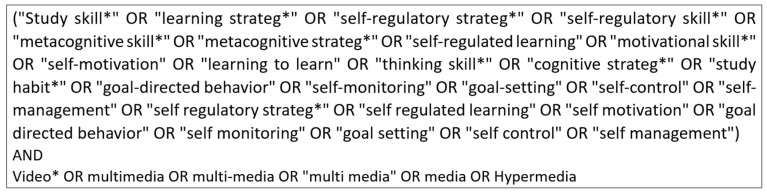 Figure 1
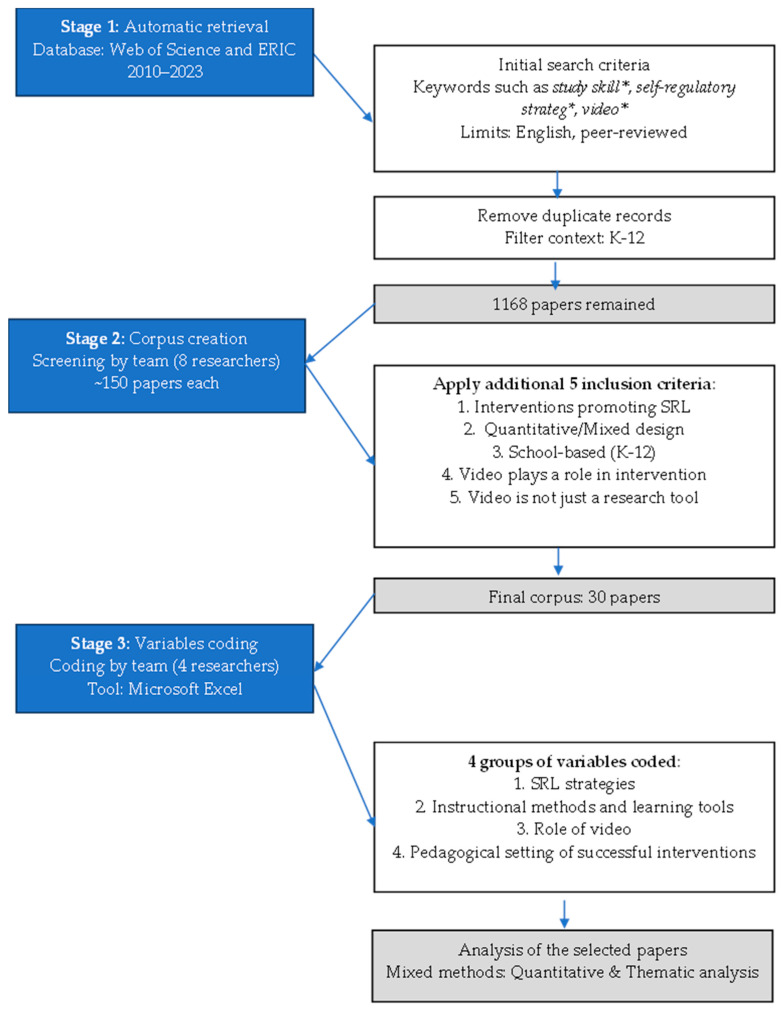 Figure 2
- —Chief Scientist Office of the Israeli Ministry of Education
Peer Reviews
No public reviews on file for this paper yet. If you reviewed it on a platform where reviews are public (OpenReview, ICLR, NeurIPS, ICML), you can paste yours below so the community can read it here.
Videos
No videos yet. Explain this paper in a talk, walkthrough, or lecture? Add one.
Taxonomy
TopicsInnovative Teaching and Learning Methods · Educational and Psychological Assessments · Neuroscience, Education and Cognitive Function
1. Introduction
Self-regulated learning (SRL) involves a learner’s ability to control their learning process using metacognitive strategies (Zimmerman, 2000; Schunk & Zimmerman, 2023). It combines cognitive, metacognitive, and motivational strategies, enabling learners to effectively manage their learning, monitor progress, and maintain motivation (Zimmerman & Moylan, 2009). In our increasingly technological world, SRL is considered a fundamental skill for learners (Nilson & Zimmerman, 2023; Tsai et al., 2013).
Recent research has explored SRL from various angles. Theoretical studies have proposed different frameworks with similar foundations (Panadero, 2017), while empirical studies have investigated diverse strategies and sub-methods (Dignath et al., 2008). A common thread in these studies is the belief that SRL strategies can and should be taught (Callan et al., 2022; Pintrich, 1999).
A significant area of research focuses on intervention programs to promote SRL. These programs, which have gained momentum over the past two decades, aim to enhance learners’ SRL strategies either explicitly or implicitly. Explicit approaches involve direct instruction, modeling, or guided practice of SRL strategies. In contrast, implicit approaches embed opportunities for SRL development within learning activities or environments, such as cooperative learning, the flipped classroom, or project-based learning. These programs may be conducted by classroom teachers or researchers and are crucial in demonstrating that SRL can be effectively promoted through instruction and training. Research on these intervention programs examines their impact on various aspects of learning, including academic achievement, SRL strategy use, and motivation (Cousins et al., 2022; De Boer et al., 2018; Donker et al., 2014). These studies provide valuable insights into the effectiveness of different approaches to fostering SRL strategies, contributing to our understanding of how best to prepare learners for success in the modern educational landscape. Previous reviews and meta-analyses in the field offer a broad and nuanced understanding of intervention programs aimed at promoting SRL and their overall effectiveness. Nonetheless, a gap remains, as there has been no comprehensive, systematic investigation into how SRL is actually fostered within these interventions.
Furthermore, technology has introduced video-based learning as an educational tool, offering learners autonomy and flexibility (Shih & Huang, 2020; Van Laer & Elen, 2017). This method has gained popularity, especially since the COVID-19 pandemic (Delen et al., 2014) and the emergence of generative artificial intelligence (GenAI) (Zheng, 2025), becoming central to global education (Watters, 2023). Video-based learning environments are particularly relevant for promoting SRL as they combine high cognitive demands with learner-controlled pacing. As video unfolds dynamically over time, learners must actively monitor their understanding, decide when to pause or replay content, and regulate cognitive load, thereby engaging core SRL processes such as planning, monitoring, and regulation (Azevedo et al., 2015). Thus, video does not merely deliver content; it also implicitly functions as a context in which self-regulatory competence becomes both necessary and observable. Video can also be used to teach strategies explicitly drawing on its traits such as multimodal and short instruction (Sablić et al., 2021; Navarrete et al., 2025). Despite its importance and the need to foster SRL (He et al., 2016; Shih & Huang, 2020), research on integrating video to promote SRL strategies remains limited. Therefore, this study aims to present a systematic literature review of SRL intervention programs, focusing on how SRL strategies are trained and the role of video in these programs.
2. Current Literature Reviews and Meta-Analyses of SRL Intervention Programs
Existing systematic reviews and meta-analyses have sought to identify effective components, strategies, durations, and activities of SRL interventions. Examining these reviews revealed interesting insight regarding SRL interventions as follows: Synchronous intervention programs generally show success (Donker et al., 2014; Ergen & Kanadli, 2017), though opinions differ on the most effective strategies. Dignath and Büttner (2008) found that learners’ age influences outcomes: combined motivation and metacognition interventions were effective for primary students, whereas metacognition-based approaches were more effective for middle school students. Metacognitive knowledge instruction enhances intervention success (Ortube et al., 2024). Dignath et al. (2023) found that interventions that combined learning and behavior monitoring and encouraged metacognitive thinking were most effective.
A meta-analysis (Donker et al., 2014) shows that subject matter influences the effectiveness of SRL interventions. Some studies indicate that math interventions are most effective (Dignath & Büttner, 2008; Ergen & Kanadli, 2017), while others highlight the benefits of STEM subjects (Vilkova, 2022). Dignath and Büttner (2008) found teacher-led interventions more effective than researcher-led interventions, but De Boer et al. (2018) found the opposite, yielding conflicting findings in this area. Simón-Grábalos et al. (2025) reported that extracurricular interventions conducted by tutors or academic advisors faced challenges related to student motivation and participation. Finally, an umbrella review of systematic reviews and meta-analyses (Prasse et al., 2024) highlights the importance of adopting comprehensive approaches to the design and implementation of SRL supports. Specifically, these approaches integrate both explicit and implicit SRL supports across the entire SRL cycle.
The Role of Video in SRL Intervention Programs
Technology can promote SRL (Azevedo et al., 2004), with video learning improving academic achievement (C. L. Lai & Hwang, 2016; Moos & Bonde, 2016), enhancing motivation, and engagement (Galatsopoulou et al., 2022). Video learning offers autonomy (He et al., 2016; Shih & Huang, 2020), allowing learners to control pace, revisit content, and choose learning time and location (Jansen et al., 2018). However, this independence necessitates strong self-regulation for success (Shih & Huang, 2020). Some existing literature reviews and meta-analyses have addressed the use of technology in SRL interventions, suggesting that video-integrated interventions are among the most effective technological tools (Vilkova, 2022), but their application varies widely (Delen et al., 2014; Van Alten et al., 2020a). Mejeh and Grieder (2025) suggested that a notable characteristic of effective interventions was the use of video analysis to enhance understanding of error analysis among vocational students.
Despite video’s significance in technology-aided learning (Watters, 2023), systematic reviews rarely focus on SRL interventions incorporating video. Addressing this gap, this study conducts a systematic literature review of K-12 SRL interventions, focusing on the instructional methods, learning tools, and pedagogical settings that characterized the interventions, as well as the role of video in these interventions.
3. The Study
Previous reviews and meta-analyses in the field provide a broad, in-depth understanding of intervention programs designed to promote SRL and their effectiveness. However, a gap remains in the existing body of knowledge, one that this systematic review seeks to address. Based on the existing reviews and meta-analyses presented above, to the best of our knowledge, there has not yet been a comprehensive, systematic examination of how SRL can be fostered. That is, a review of the implementation processes of interventions and the specific instructional tools employed, including training methods and scaffolds, is missing. In addition, existing literature reviews and meta-analyses on SRL interventions have not systematically examined the role of video in the studies they include.
Accordingly, this systematic review aims to address gaps identified in previous reviews and meta-analyses by conducting an in-depth examination of interventions that promote SRL through the integration of video in the K-12 system. The review seeks to understand what is being promoted, how it is promoted, the role of video, and what characterizes effective interventions. Therefore, this proposed review seeks to address the following questions:
- Q1Which SRL strategies do the interventions aim to promote?
- Q2Which instructional methods and learning tools do the interventions implement to promote SRL?
- Q3What are the roles of video within the SRL interventions?
- Q4What are the pedagogical settings that lead to a successful SRL intervention program?
4. Methodology
To address the research questions and ensure a rigorous systematic review process, we drew on two complementary methodological frameworks: the PRISMA standards (Page et al., 2021) and the review procedures outlined by Dignath and Büttner (2008), both of which were adapted to the context of the present study. Guided by these frameworks, the review proceeded in three main stages: (1) automatic retrieval of papers published from 2010 to 2023 across major databases (search date: March 2024); (2) researcher-based screening and construction of the relevant corpus; and (3) systematic coding of the variables in all eligible papers. The full research team, eight researchers, including doctoral and master’s students, participated in the first two stages, while four researchers conducted the coding stage. Notably, a formal methodological quality assessment was beyond the scope of the present review. The stages are detailed as follows:
4.1. Stage 1—Automatic Retrieval of Recent Papers (Published from 2010–2023) Based on Initial Criteria
In this stage, we conducted searches using Web of Science and ERIC, two well-established databases with strong coverage of peer-reviewed research in education, learning sciences, and educational psychology. ERIC was selected for its focus on K-12 and educational research, whereas Web of Science provided broader interdisciplinary coverage, consistent with prior systematic reviews in the field. The search was based on keywords similar to those used by Dignath and Büttner (2008), such as study skill*, learning strateg*, and self-regulatory strateg*. In addition, video-related keywords were included, such as video*, multimedia, and multi-media*. Following is the string used to retrieve the papers (Figure 1):
The search was limited to English-language papers published in peer-reviewed journals or conference proceedings. More specifically, the search syntax was adapted to the indexing structures of each database. In ERIC, searches were conducted in the title, abstract, and descriptor fields, with filters applied for publication type (journal articles, speeches/meeting papers, and collection works-proceedings) and English language. In Web of Science, the search was conducted using the Topic field (including title, abstract, and keywords), with equivalent English language and document-type filters (proceeding paper and review article). The outputs from both databases produced a list of papers along with their metadata. We then identified and removed duplicate records, leaving us with 5890 papers. Finally, we retained only papers relevant to school contexts (K-12), following Dignath and Büttner (2008), by searching for the following keywords: school, secondary, elementary, primary, junior-high, junior high, adolescent, and children in the abstract and keyword fields. At the end of this stage, 1168 papers remained.
4.2. Stage 2—Construction of the Papers Corpus by the Research Team Based on Five Additional Criteria
To be included, a paper had to meet the following additional selection criteria: (1) The paper reports an intervention aimed at promoting SRL (at least one SRL strategy). (2) The paper’s study employs a quantitative (inferential or descriptive) or mixed-methods design. (3) The paper reports a school-based intervention (K-12). (4) The video plays some role in the intervention or the study reported in the paper. (5) The paper’s study was not using the video as a research tool (e.g., documenting the intervention on video). Each team member received approximately 150 papers to screen according to these criteria. A principal researcher was in charge of handling regular discussions with each team member including guiding each member on the selection criteria to employ while reading the abstract and full text and resolving discrepancies. The primary reason for exclusion at this stage was that many studies focused on higher education or other non–K-12 contexts. An additional primary exclusion reason was that many papers reported on correlative studies which did not involve an SRL intervention. These decisions were based on full-text examinations rather than abstract screening alone. Finally, 30 papers meeting the criteria were found. The list of papers included in the current literature review appears in Appendix A.
4.3. Stage 3—Variable Coding
To address the four research questions guiding the systematic review, four groups of variables were coded in Microsoft Excel for each paper in the corpus: (a) variables related to the SRL strategies that the interventions aimed to promote; (b) variables related to the instructional methods and learning tools that the interventions implemented to promote SRL; (c) variables related to the role of the video employed; (d) the pedagogical settings that lead to a successful intervention program. The principal researcher coordinated the coding process by holding regular discussions with team members, clarifying the four groups of variables, and resolving any discrepancies. The current literature review employs a mixed-method approach. Some of the research questions require a quantitative analysis of the data. Beyond that, there are sections where the answers to the research questions are open-ended.
The PRISMA review protocol (checklist) (Supplementary Material) and the flow chart (Figure 2 below) were preregistered on the Open Science Framework (OSF) and are available at: https://doi.org/10.17605/OSF.IO/57MX6 (accessed on 9 December 2025).
5. Findings
A total of 30 papers met all eligibility criteria and were included in this review (see Appendix A). The selection process, which narrowed down the initial 1168 results through researcher-based screening, is summarized in the PRISMA flow diagram in Figure 2.
5.1. Q1 Which SRL Strategies Do the Interventions Aim to Promote?
The strategies that the interventions aimed to promote are listed in Appendix B. Most interventions aimed to promote cognitive strategies (e.g., problem-solving and note-taking) or metacognitive strategies (e.g., planning, goal setting, and reflection). In some cases, the interventions focused on a single strategy (e.g., papers 5 and 8), while others addressed several strategies (e.g., papers 3, 15, and 16), or even multiple strategies applied at different stages of the SRL process (e.g., papers 6 and 20). Breaking it down: 22 unique papers (73.33%) covered cognitive strategies, 19 (63.33%) meta-cognitive, 10 (33.33%) motivation, 7 (23.3%) resource management strategies.
Overall, the strategies targeted across the reviewed video interventions reflect core components identified in prominent SRL models, including cognitive processing, metacognitive regulation, motivational control, and management of learning resources. However, the distribution of strategies across these components was uneven, with a stronger emphasis on cognitive and metacognitive elements than on motivational and resource-management aspects. This finding suggests a potential gap between theoretical models of SRL and their practical implementation in video-based instructional design.
5.2. Q2 Which Instructional Methods and Learning Tools Do the Interventions Implement to Promote SRL?
The findings describe the instructional methods and learning tools that the interventions implemented to promote SRL, including their type (explicit/implicit) and their relation to the discipline. Table 1 presents a description of the instructional methods and learning tools used in the explicit and implicit interventions across the reviewed papers. The table outlines explicit instructional methods and learning tools, such as frontal strategy explanation and guidance using modelling, and implicit instructional methods such as inquiry learning, group work, gamification, and flipped learning environments. The table highlights the diversity of instructional methods and learning tools used to support SRL, in both explicit and implicit video SRL interventions.
21 papers used explicit instruction (70%), and 19 used implicit instruction (63.33%). 7 interventions (23%) taught strategies explicitly but also implicitly through other activities. 4 of these used explicit frontal instruction combined with implicit group work.
Table 2 organizes the papers by SRL strategy type (rows) and activity (columns), distinguishing between explicit and implicit instruction (the paper numbers are written in the cells). As can be seen in Table 2, there are 3 papers with two ways of teaching: two explicit SRL guided video interventions with prompts (paper 22), two implicit gaming and a learning environment (paper 21), two implicit flipped classroom and group work (paper 5). Looking at explicit instruction by strategy type, all explicit papers covered cognitive, meta-cognitive, or both; none covered motivation, and only two (6.7%) promoted resource management strategies. Implicit interventions covered all spectrum of strategies.
Regarding the relationship between the intervention and the discipline taught, some interventions are generic, while others are discipline-specific. In some cases, parts of the same intervention are generic, while others are discipline-specific. For example, in paper 2, the researchers combined discipline-specific problem-solving strategies in biology with generic strategies for task selection and evaluation.
In this context, three main points were revealed:
- Cognitive strategies were found in this review to appear both as specific and as generic. For example, papers 1, 2, 9, and 10 address cognitive strategies with a discipline-specific orientation, such as problem-solving in mathematics and biology, language-learning and reading comprehension strategies, and the promotion of abstract thinking skills in physics. In contrast, papers such as 6, 8, and 11 address generic cognitive strategies. Examples include promoting general critical thinking and problem-solving skills (e.g., classification, analysis, inference, consideration of multiple perspectives); fostering generic dimensions of critical thinking such as (1) identifying assumptions, (2) inductive reasoning, (3) deductive reasoning, (4) interpretation, and (5) argument evaluation; teaching generic reading strategies (annotations) ranging from basic comprehension of text and factual information to higher-level commenting on the text and inviting discussion; spaced practice, note preparation; and developing general problem-solving and persistence skills, for instance, “try solving it another way,” or “take a break and try again from a different starting point.”
- Metacognitive strategies are often associated with a generic orientation. For example, paper 6 deals with strategies such as planning (the preparatory phase), time management, structuring the learning environment, help-seeking, comprehension monitoring (the performance phase), and reflection.
- Many researchers refer to feedback in a generic orientation. However, feedback can also appear in a discipline-specific orientation. For example, in paper 7, the focus was on developing the ability to work with feedback in physical education, specifically concerning the correct technique for the Shot put.
5.3. Q3 What Are the Roles of Video Within the SRL Interventions?
The analysis revealed that video use can be divided into three main categories: videos that promote SRL, videos that contain disciplinary information, and videos that combine disciplinary information with SRL instruction through an additional layer of activity provided to the learner during viewing. These three main categories are further divided into different types of activities, as shown in Table 3. For each activity type, the table reports the proportion of papers that employed the approach and provides concise definitions that illustrate how the video functioned within the intervention. This structure highlights the diversity of video uses, ranging from explicit SRL instruction and video modelling to disciplinary content delivery, learner-generated video products that trigger the usage of SRL strategies, and multimodal environments that embed SRL scaffolding within subject-matter learning.
5.4. Q4 What Are the Pedagogical Settings That Lead to a Successful SRL Intervention Program?
The qualitative thematic analysis of the literature review, discussion, and conclusion sections of the selected papers revealed several pedagogical settings that can be described using the acronym TASK (Teacher-guided learning, Active learning, Social learning, Knowledge learning). These settings characterized successful video-integrated SRL interventions and illuminated the factors contributing to the effectiveness of the interventions. Successful video-integrated SRL interventions were assessed in the reviewed papers in various ways, for example, the use of SRL strategies, affective-emotional outcomes (e.g., motivation, satisfaction, confidence, self-efficacy), and cognitive outcomes such as performance and achievement.
Teacher-guided learning—teacher presence was identified as an important factor in six papers (20%). In general, the papers claim that teachers have an essential role in promoting students’ SRL, including in technology-enhanced environments (e.g., 15, 18). Some papers deal with students’ point of view, suggesting that students are seeking teachers’ help to promote their SRL (e.g., 14). Other papers deal with teachers’ beliefs. For example, paper 20 highlighted that teachers’ belief in the flipped classroom approach is crucial for student success, due to their ability to motivate learners and support their use of the model.
Active learning—inquiry-based learning and group work were frequently used to facilitate learner activeness and autonomy. Thirteen papers (43.3%) indicated that learners’ active engagement contributed to the success of the intervention. In paper 18, the group that did not participate in synchronous remote lessons but instead engaged through a video game demonstrated the greatest improvement in SRL across all experimental and control groups. This difference was attributed to the high level of learner activeness required by the game-based intervention. Similarly, paper 11 reported that higher levels of student participation were associated with better learning outcomes.
Several studies have highlighted learner autonomy as a central mechanism underlying active learning. Paper 17, which employed a virtual reality environment, emphasized that learners actively drove their own learning processes. In paper 19, increased autonomy was observed in an intervention that promoted reflective thinking through a personal learning management system. Likewise, paper 7 reported gains in learner autonomy following the SRL intervention. These findings point to a reciprocal relationship in which autonomy supports the development of SRL, while SRL, in turn, enables more effective autonomous learning. Consistent with this pattern, paper 20 explained how the flipped classroom model fosters SRL by structuring learning in ways that require learners to take responsibility for their learning and regulate their learning pace.
Social learning—emerged as a component of success in ten papers (33.3%). Peer-based activities, such as writing annotations and viewing each other’s notes, as well as sharing learning objectives and strategies (e.g., 12), were found to improve both achievement and SRL. The social component also served as a source of motivation, thereby further enhancing learning (e.g., 15, 18).
Knowledge-based learning—four papers (13.3%) identified prior knowledge as a key factor in intervention success. For example, prior knowledge was examined as an independent variable influencing student engagement and, by extension, achievement (8). Learners in a self-paced programming environment were provided with access to a “toolbox” button that allowed them to review prerequisite knowledge, based on the assumption that learners can appropriately apply SRL strategies only when they possess the necessary prior knowledge (14).
6. Discussion
In light of the lack of a comprehensive and systematic examination of how SRL can be fostered and the role of video in existing reviews and meta-analyses, this systematic review addresses this gap. It conducts an in-depth examination of interventions that promote SRL through the integration of video in the K-12 system. To do so, we examine what is being promoted, how it is promoted, the role of the video, and the successful pedagogical settings. The findings related to the research questions are discussed below.
6.1. SRL Strategies the Interventions Aim to Promote (Q1)
Many of the video interventions in this review sought to promote a combination of strategies across the SRL cycle, offering a comprehensive view of the learning process. This aligns with previous reviews recommending that by teaching the three SRL stages, complementary components will improve the effectiveness of the intervention programs (Dignath & Büttner, 2008; C. L. Lai & Hwang, 2023) and that diverse cognitive, meta-cognitive, and motivational strategy training is the most effective intervention (Dignath et al., 2008). This contrasts with Van Alten et al.’s (2020a) review, which found that multiple-strategy instruction overwhelmed learners.
More specifically, although previous reviews suggested a focus on problem-solving and elaboration (Dignath et al., 2008), the video interventions addressing cognitive strategies did not adequately incorporate these strategies. This may be explained by the fact that problem-solving is a relatively long and complex process (Cohen & Cohen, 2024), making short video-based instruction less suitable for supporting it, and by the possibility that elaboration is an internal cognitive process that is difficult to facilitate through video. In the area of metacognitive strategies, our findings show that video-based interventions can support planning strategies, as recommended by previous reviews (Dignath et al., 2008).
Most importantly, the findings show that the distribution of strategies was uneven, with a stronger emphasis on cognitive and metacognitive strategies than on motivational and resource-management strategies. This “Cognitive Bias” in SRL interventions is documented in several key meta-analyses and theoretical reviews (e.g., Dignath & Büttner, 2008). The long-term nature of motivational changes (Panadero, 2017) may explain the limited emphasis on motivational strategies. Resource management strategies have been less addressed in the literature, perhaps because traditional classroom settings often involve the teacher externally regulating resources. This approach should be reconsidered in video-based learning environments due to students’ ability to autonomously and actively engage in the learning process (Broadbent & Poon, 2015).
6.2. Instructional Methods and Learning Tools Implemented in the Interventions to Promote SRL (Q2)
Previous reviews and meta-analyses (e.g., De Boer et al., 2018; Donker et al., 2014; Simón-Grábalos et al., 2025) have not examined explicit versus implicit instruction in SRL. This review revealed a relatively balanced coverage of explicit and implicit instruction in SRL interventions, with some programs combining both approaches. Thus, some SRL video interventions included in this review adhered to Carter et al.’s (2020) recommendation to combine explicit and implicit methods to reduce cognitive load.
Examining how different instruction types addressed various strategy types in the video SRL interventions also revealed interesting findings. Notably, most video interventions do not explicitly promote motivational and resource management strategies. However, practical implicit approaches such as gamification, group work, and the flipped classroom are used to enhance motivational and resource management strategies. Therefore, a discrepancy exists between the literature and interventions, as the former emphasizes the importance of these strategies (Boekaerts, 2011) and highlights self-efficacy, task value, and intrinsic motivation (Carter et al., 2020). This discrepancy suggests a need to bridge the theory–practice gap. This raises questions about the feasibility of explicit motivational and resource management interventions and whether implicit methods are more suitable for instilling them. Thus, this study highlights the need for further research into explicit motivational and resource management SRL interventions.
Regarding the relation between the intervention and the discipline taught, this review found that video SRL interventions employed both generic and discipline-specific strategies, in some cases combining both types within the same intervention. Interestingly, cognitive strategies, which are often associated with a discipline-specific orientation (Dignath & Büttner, 2008; Dignath et al., 2008; Sijmkens et al., 2023), were found in this review to encompass both discipline-specific (e.g., language-learning reading comprehension) and generic (e.g., classification) strategies. Metacognitive strategies were often associated with generic orientation. Given that interventions combining various SRL strategies within subject-specific instruction have been found to yield significantly higher achievement (Cousins et al., 2022), video-based SRL interventions can be adapted for subject-specific instruction. This can be achieved by incorporating both discipline-specific strategies and generic strategies tailored to the tasks at hand.
6.3. Roles of Video Within the SRL Interventions (Q3)
There are multiple pedagogical avenues for integrating video into teaching and learning. The most prominent and widely documented use is the employment of video as a medium for delivering disciplinary content (Girón-García & Fortanet-Gómez, 2023; He et al., 2016), a pattern that was also reflected in the present review. The use of video to foster SRL has likewise been noted in previous research (Jansen et al., 2020), and this function also emerged in the interventions examined here. A further, though less common, approach involves having learners produce videos themselves, an activity that requires them to actively apply the SRL strategies taught. This mode of use was relatively rare in the current review, consistent with a recent systematic review of SRL-supportive technologies (Yang et al., 2023).
Although video conferencing is a central component of contemporary learning environments (Maulana, 2023), its use specifically for teaching SRL strategies was less prevalent in the studies included in this review. Another notable category identified involves videos that integrate disciplinary content with SRL instruction. The findings from this review indicate that such integration can be achieved through several pedagogical mechanisms, with prompts (K. T. Wong et al., 2019) representing the most common approach. At the same time, the increasing adoption of augmented and virtual reality technologies has given rise to new video-based models that combine gamification elements, domain-specific content, and explicit SRL instruction.
6.4. Pedagogical Settings That Lead to Successful SRL Intervention Programs (Q4)
The thematic analysis of the narratives of the included studies suggests that SRL interventions described as successful (based on reported strategy use as well as cognitive and affective outcomes) are often associated with teacher-guided, active, social, and knowledge-based (TASK) learning. Teacher presence is particularly important, as video-based learning is typically an individual, solitary activity, and young learners require human guidance to manage the cognitive demands associated with SRL (Carter et al., 2020). An active learning approach can further mitigate the limitations of passive video viewing; grounded in constructivist and social learning theories (Paas, 2014; Amineh & Asl, 2015), such approaches enhance intrinsic motivation by providing learners with greater autonomy (Chiu, 2022). Social learning can reduce cognitive load that may arise from the multimodal nature of videos, as peers attending to different information channels can complement one another’s processing. Knowledge-based learning can address the inherent limitations of short instructional videos, which often omit important background information (Sablić et al., 2021; Navarrete et al., 2025), by incorporating mechanisms that direct learners to additional learning resources.
6.5. Conclusions
This systematic review offers a comprehensive, integrative analysis of video-based SRL interventions in K-12 education, addressing a gap in existing reviews and meta-analyses that have rarely examined how SRL is fostered and the role of video within intervention programs. The findings suggest that video-based SRL interventions associated with positive outcomes frequently include pedagogical settings that align with teacher-guided, active, social, and knowledge-based (TASK) learning. These settings appear to mitigate limitations inherent to video learning, such as cognitive load, passivity, and reduced interaction, thereby illuminating why some interventions succeed while others remain less impactful.
The review also contributes to SRL scholarship by demonstrating that video-based interventions tend to promote multiple SRL strategies across the SRL cycle, often combining cognitive and metacognitive strategies. In contrast, motivational and resource-management strategies are less frequently addressed explicitly. Furthermore, the findings enhance our understanding of the diverse roles of video, ranging from disciplinary instruction to SRL scaffolding and mixed approaches. Together, these insights broaden the conceptual and practical landscape of SRL intervention design, underscoring the potential of video to support SRL.
Despite the contributions of this systematic review, several limitations should be acknowledged. First, the review focuses on K-12 student populations. Expanding future research to include other populations could yield a more comprehensive understanding of how video-based SRL interventions operate across different educational contexts. Further, although multiple K-12-related keywords were used to screen abstracts and keywords, and all retained articles were subsequently reviewed manually to verify their educational context, it is possible that some relevant K-12 studies were not identified due to variability in how educational levels are reported across publications. Moreover, although the paper screening and variable coding were guided by a clearly defined scheme and involved iterative discussions among the research team, no quantitative consistency measure was calculated. As a result, the reported counts and classifications should be interpreted with appropriate caution. Second, as video technologies continue to evolve (e.g., GenAI-driven adaptive video), future reviews should revisit the field to capture emerging forms of video-based SRL. Finally, the current review calls for further examination of the processes underlying successful SRL video integration, including systematic quantitative reviews of learner cognition during video viewing and the interaction between SRL strategies and video design features.
This review advances the field by offering the first systematic synthesis that simultaneously examines what SRL strategies are promoted, how they are taught, how video functions within interventions, and which pedagogical settings characterize successful programs. By introducing the TASK framework (Teacher-guided, Active, Social, and Knowledge-based learning) and highlighting emerging patterns across the literature, the review provides a conceptual lens to guide researchers and practitioners in designing SRL interventions. Furthermore, the review highlights areas where theory-practice gaps persist, particularly in motivational and resource-management instruction, thereby pointing to concrete directions for innovation in SRL pedagogy.
The reference list from the paper itself. Each links out to its DOI / PubMed record.
- 1Alhalafawy W. S. Zaki M. Z. T. How has gamification within digital platforms affected self-regulated learning skills during the COVID-19 pandemic? Mixed-methods research International Journal of Emerging Technologies in Learning 202217612315110.3991/ijet.v 17i 06.28885 · doi ↗
- 2Alserhan S. Alqahtani T. M. Yahaya N. Al-Rahmi W. M. Abuhassna H. Personal learning environments: Modeling students’ self-regulation enhancement through a learning management system platform IEEE Access 2023115464548210.1109/ACCESS.2023.3236504 · doi ↗
- 3Amineh R. J. Asl H. D. Review of constructivism and social constructivism Journal of Social Sciences 201511916
- 4Azevedo R. Johnson A. Burkett C. Does training of cognitive and metacognitive regulatory processes enhance learning and deployment of processes with hypermedia?Annual Meeting of the Cognitive Science Society Pasadena, CA, USA July 22–252015 Vol. 37
- 5Azevedo R. Moos D. C. Johnson A. M. Chauncey A. D. Using cognitive tools to scaffold self-regulated learning in hypermedia environments Educational Psychologist 2004394257267
- 6Boekaerts M. Zimmerman B. J. Schunk D. H. Emotions, emotion regulation, and self-regulation of learning Handbook of self-regulation of learning and performance Routledge 2011408425
- 7Broadbent J. Poon W. L. Self-regulated learning strategies & academic achievement in online higher education learning environments: A systematic review The Internet and Higher Education 20152711310.1016/j.iheduc.2015.04.007 · doi ↗
- 8Callan G. Longhurst D. Shim S. Ariotti A. Identifying and predicting teachers’ use of practices that support SRL Psychology in the Schools 202259112327234410.1002/pits.22712 · doi ↗