Treatment Strategies and Complications in Reverse-Oblique Trochanteric Femur Fractures and Evaluation of a New Classification System
Robert Breuer, Rainer Fiala, Theresa Dorner, Barbara Strasser-Kirchweger, Harald Kurt Widhalm, Mehdi Mousavi, Nikolaus Wilhelm Lang

TL;DR
This study examines treatment outcomes for reverse-oblique femur fractures and evaluates a new classification system to improve surgical decision-making and reduce complications.
Contribution
The paper introduces and validates a new classification system for reverse-oblique femoral fractures with good reliability.
Findings
The overall complication rate was 19%, with over 60% requiring revision surgery.
Parker’s ratio was the only radiological parameter with prognostic value.
Short implants can be safely used in cases without severe dislocation if working length is sufficient.
Abstract
Background: Reverse-oblique femoral fractures are regarded as highly unstable and are still associated with high complication and failure rates. A new classification system is said to facilitate risk assessment and decision-making. Methods: Over ten years, 7804 patients with per/subtrochanteric fractures were screened in this retrospective analysis. A total of 552 patients with a reverse-oblique fracture pattern were included. The fractures were classified according to the new classification system. The choice of implants, complication rates, revision surgery, and time of surgery were recorded. Radiological outcome parameters and dislocation were measured. Results: For the classification, a good intra-rater reliability (r = 0.77) and inter-rater reliability (k = 0.64) were calculated. The complication rate was overall 19% (n = 105). More than 60% of complications needed revision…
Genes, proteins, chemicals, diseases, species, mutations and cell lines named across the full text — each resolved to its canonical identifier and authoritative record.
Click any figure to enlarge with its caption.
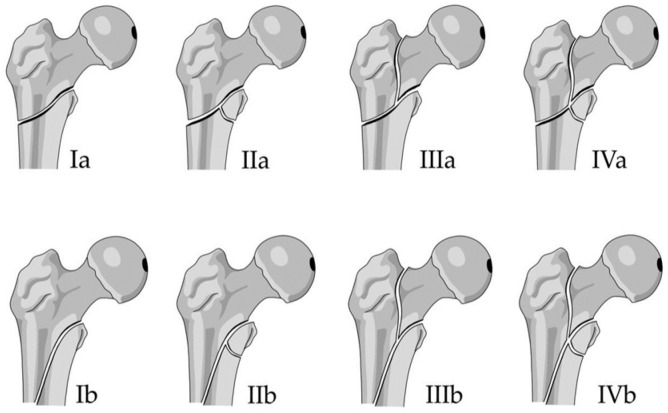 Figure 1
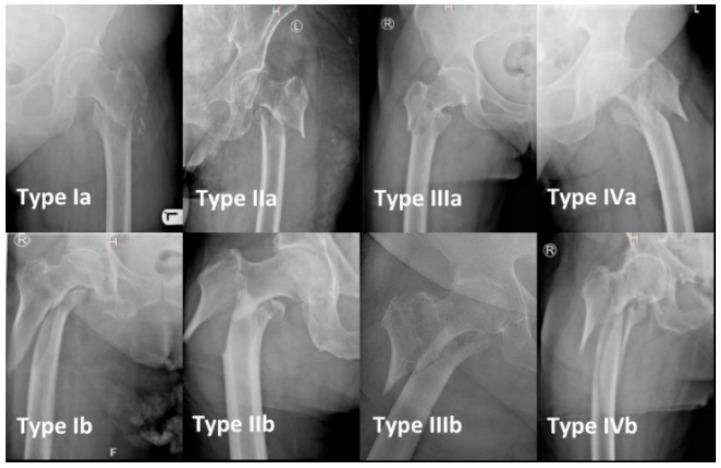 Figure 2
 Figure 3
 Figure 4
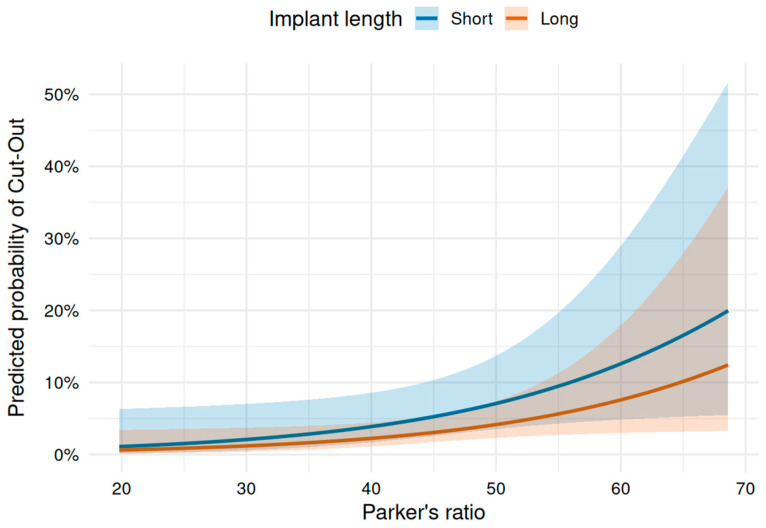 Figure 5
 Figure 6
 Figure 7
Peer Reviews
No public reviews on file for this paper yet. If you reviewed it on a platform where reviews are public (OpenReview, ICLR, NeurIPS, ICML), you can paste yours below so the community can read it here.
Videos
No videos yet. Explain this paper in a talk, walkthrough, or lecture? Add one.
Taxonomy
TopicsHip and Femur Fractures · Bone health and osteoporosis research · Bone fractures and treatments