Alterations in the Crystallization Pattern of Tear Fluid Induced by Increases in the Body Mass Index
Cosmin Victor Ganea, Corina Georgiana Bogdanici, Nicoleta Anton, Calina Anda Sandu, Ioana Madalina Bilha, Anisia Iuliana Alexa, Vlad Constantin Donica, Irina Andreea Pavel, Roxana Elena Ciuntu, Camelia Margareta Bogdanici

TL;DR
This study found that higher body mass index is linked to changes in tear fluid crystallization patterns, which could help diagnose dry eye syndrome in overweight individuals.
Contribution
The study introduces the potential use of tear crystallization patterns as a diagnostic indicator for dry eye syndrome in individuals with higher BMI.
Findings
Higher BMI is associated with fewer fern-like branches in tear crystallization patterns.
Masmali grade 2 patients have significantly higher BMI compared to grade 0 patients.
Tear crystallization patterns vary significantly with increasing Masmali classification severity.
Abstract
(1) Purpose: The study investigated the correlation between variations in body mass index (BMI) and tear crystallization class according to the Masmali classification. Moreover, it examined the potential diagnostic value of a patterning test within the population affected by obesity. (2) Methods: A total of 61 patients were investigated, with ages ranging from 25 to 72 years (median age [interquartile range] = 39.0 [26] years). BMI values ranged from 19.1 to 47.5 kg/m2, with a median BMI (interquartile range) of 29.3 (12.1) kg/m2. (3) Results: The Kruskal–Wallis test was used to assess differences in BMI across the Masmali classes and revealed statistically significant disparities between at least two groups (p = 0.024). The rank η2 value of 0.094 shows a small-to-moderate effect size, suggesting that approximately 9% of the variance in rank distributions is explained by the Masmali…
Genes, proteins, chemicals, diseases, species, mutations and cell lines named across the full text — each resolved to its canonical identifier and authoritative record.
Click any figure to enlarge with its caption.
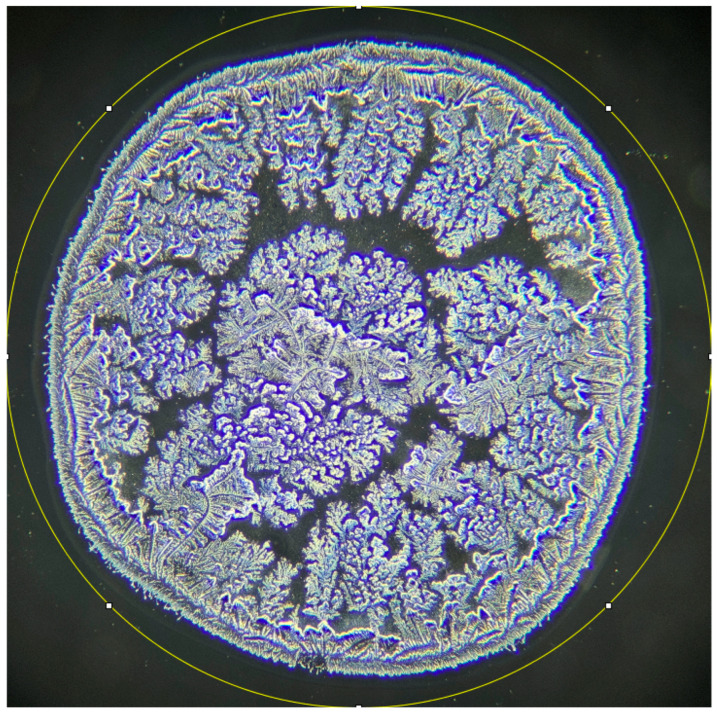 Figure 1
 Figure 2
 Figure 3
 Figure 4
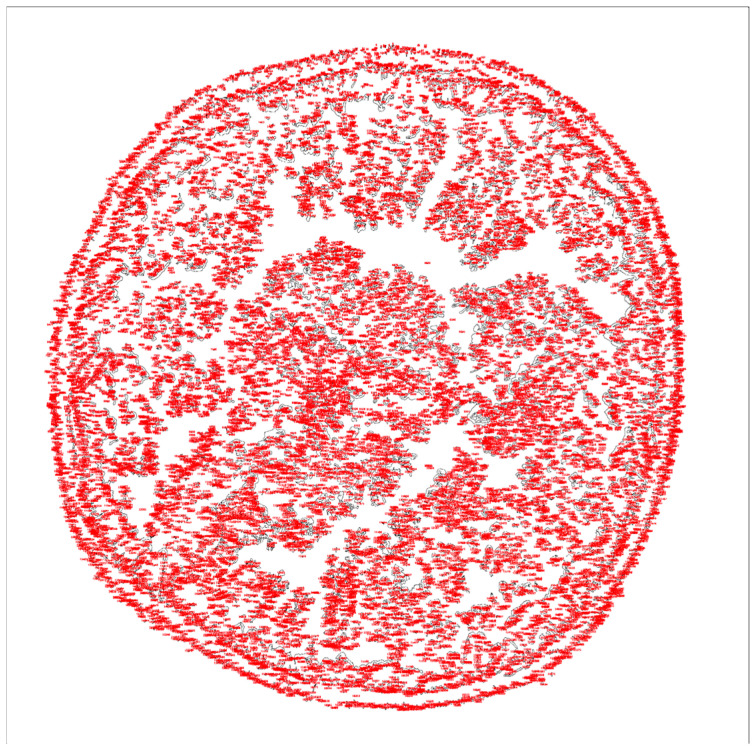 Figure 5
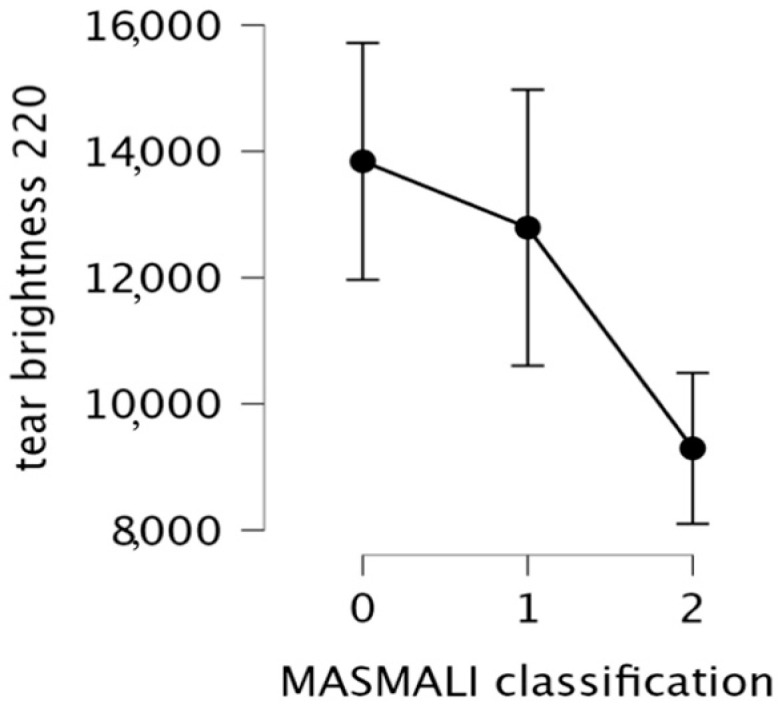 Figure 6
Peer Reviews
No public reviews on file for this paper yet. If you reviewed it on a platform where reviews are public (OpenReview, ICLR, NeurIPS, ICML), you can paste yours below so the community can read it here.
Videos
No videos yet. Explain this paper in a talk, walkthrough, or lecture? Add one.
Taxonomy
TopicsOcular Surface and Contact Lens · Salivary Gland Disorders and Functions · Skin Protection and Aging