The Neutrophil–Lymphocyte Ratio Is Associated with Cardiac Magnetic Resonance Imaging-Derived Myocardial Fibrosis
Michael Poledniczek, Christina Kronberger, Lena Marie Schmid, Katharina Mascherbauer, Carolina Donà, Matthias Koschutnik, Laura Lunzer, Christian Nitsche, Dietrich Beitzke, Christian Loewe, Christian Hengstenberg, Andreas Anselm Kammerlander

TL;DR
This study finds that a blood test measuring neutrophil-lymphocyte ratio is linked to signs of heart tissue scarring seen on MRI scans.
Contribution
The novel contribution is showing that a simple blood test (NLR) correlates with myocardial fibrosis detected via cardiac MRI.
Findings
Higher NLR tertiles correlated with lower ejection fraction and increased right ventricular volume.
NLR was significantly associated with prolonged myocardial T1 times and increased extracellular volume (ECV).
CRP showed similar associations with T1 and ECV as NLR, but both explained only a modest portion of variation.
Abstract
Background: Sub-clinical inflammation is considered a key mechanism in cardiovascular disease and myocardial remodeling. We therefore evaluated whether the neutrophil–lymphocyte ratio (NLR), a simple inflammatory marker derived from a routine full blood count, is associated with myocardial fibrosis. Methods: Consecutive patients from a cardiac magnetic resonance imaging (CMR) registry were included and stratified by the NLR tertile. The association of the NLR and the levels of C-reactive protein (CRP) with CMR-derived myocardial T1 time and the extracellular volume fraction (ECV) were assessed using linear regression analysis and compared using Z-scores. In addition, an association with outcome was tested utilizing the log-rank test. Results: 1152 patients (72.4 years, 53.1% male) constituted the final cohort. The median NLR was 3.11 [interquartile range (IQR): 2.145–4.67]. Tertiles…
Genes, proteins, chemicals, diseases, species, mutations and cell lines named across the full text — each resolved to its canonical identifier and authoritative record.
Click any figure to enlarge with its caption.
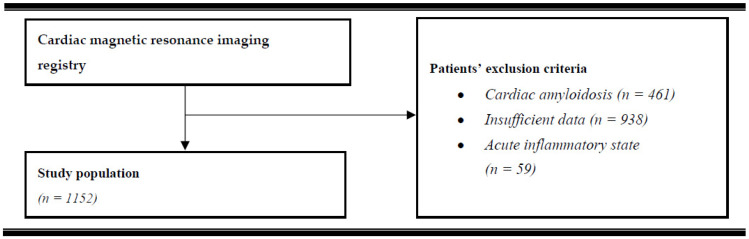 Figure 1
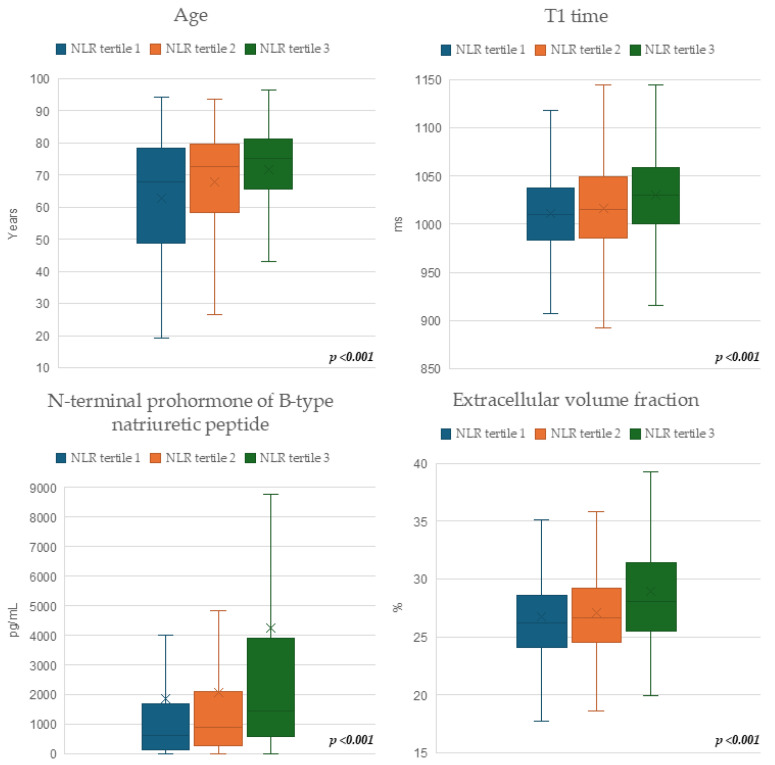 Figure 2
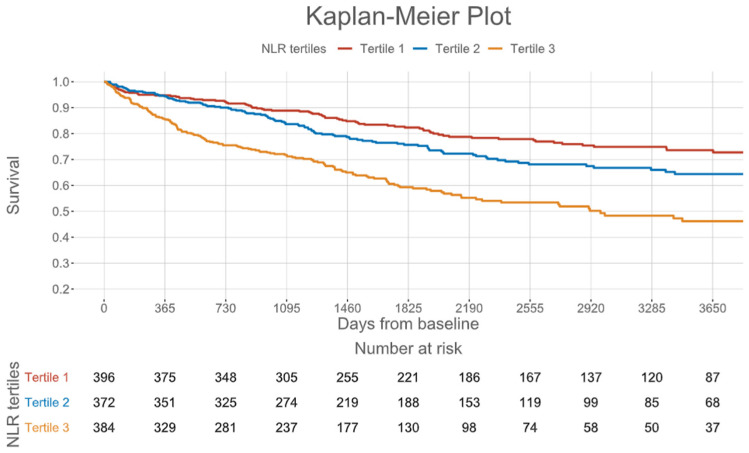 Figure 3
Peer Reviews
No public reviews on file for this paper yet. If you reviewed it on a platform where reviews are public (OpenReview, ICLR, NeurIPS, ICML), you can paste yours below so the community can read it here.
Videos
No videos yet. Explain this paper in a talk, walkthrough, or lecture? Add one.
Taxonomy
TopicsInflammatory Biomarkers in Disease Prognosis · Cardiovascular Disease and Adiposity · Cardiac Fibrosis and Remodeling