Electrocardiographic Alterations in Obstructive Sleep Apnea Syndrome: Mechanisms and Clinical Relevance
Andrea Segreti, Michele Pelullo, Virginia Ligorio, Aurora Ferro, Riccardo Cricco, Martina Ciancio, Simone Pasquale Crispino, Francesco Grigioni

TL;DR
This paper reviews how obstructive sleep apnea affects heart rhythms and how ECG changes can help detect and manage the condition.
Contribution
The paper synthesizes current knowledge on ECG manifestations of OSA and highlights emerging AI and wearable technologies for detection.
Findings
OSA is linked to ECG abnormalities like arrhythmias and repolarization changes.
Daytime ECG markers may indicate subclinical cardiac remodeling and autonomic imbalance.
AI and wearable ECG monitoring are emerging tools for OSA detection and risk assessment.
Abstract
Obstructive Sleep Apnea (OSA) is a highly prevalent yet frequently underdiagnosed disorder strongly associated with cardiovascular morbidity and mortality. It is characterized by recurrent episodes of intermittent hypoxia, intrathoracic pressure swings, and sleep fragmentation that trigger sympathetic hyperactivation, oxidative stress, systemic inflammation, and progressive structural cardiac remodeling. These mechanisms translate into a wide range of electrocardiographic (ECG) abnormalities, including both nocturnal brady- and tachyarrhythmias, as well as daytime conduction and repolarization changes. This narrative review synthesizes current knowledge on ECG manifestations of OSA, encompassing atrial and ventricular ECG characteristics and the burden of supraventricular and ventricular arrhythmias. Emerging evidence suggests that several daytime ECG markers may represent accessible,…
Genes, proteins, chemicals, diseases, species, mutations and cell lines named across the full text — each resolved to its canonical identifier and authoritative record.
Click any figure to enlarge with its caption.
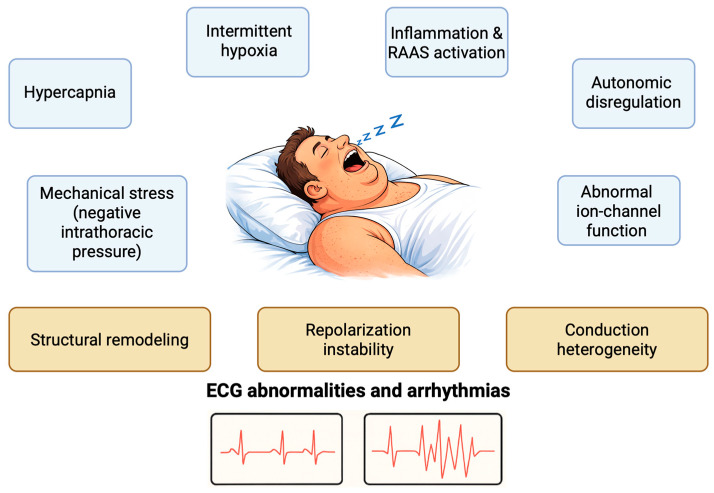 Figure 1
Peer Reviews
No public reviews on file for this paper yet. If you reviewed it on a platform where reviews are public (OpenReview, ICLR, NeurIPS, ICML), you can paste yours below so the community can read it here.
Videos
No videos yet. Explain this paper in a talk, walkthrough, or lecture? Add one.
Taxonomy
TopicsObstructive Sleep Apnea Research · Neuroscience of respiration and sleep · Chronic Obstructive Pulmonary Disease (COPD) Research