Isotopic Niche of Three Sympatric Mustelids
Linas Balčiauskas, Andrius Garbaras, Rasa Vaitkevičiūtė Koklevičienė, Inga Garbarienė, Laima Balčiauskienė

TL;DR
This study uses isotopic analysis to compare the diets of three mustelid species in Europe, finding differences in their niches and the impact of habitat on their trophic positions.
Contribution
The first modern stable isotope analysis of hair in European mustelids to assess dietary niches and trophic relationships.
Findings
Pine martens occupied the broadest isotopic niche, while stone martens and polecats had narrower, overlapping niches.
Settlement-dwelling mustelids had higher δ15N values, indicating higher trophic positions in human-modified environments.
Sex- and age-related dietary differences were weak or absent, likely due to small sample sizes.
Abstract
Although sympatric carnivores typically exhibit dietary differentiation to reduce interspecific competition, contemporary isotopic comparisons of European mustelids remain scarce. In this study, we present the first modern stable isotope analysis of hair to evaluate the dietary niches and trophic relationships of pine martens (Martes martes), stone martens (Martes foina), and European polecats (Mustela putorius) in Lithuania and Latvia. The stable carbon and nitrogen isotope values differed among the species. M. martes showed lower δ15N values and more depleted δ13C signatures than the two more synanthropic species. Isotopic niche analyses revealed that M. martes occupied the broadest niche, while M. foina and M. putorius exhibited narrower niches with substantial overlap. Habitat influenced trophic position: individuals from settlements showed higher δ15N values than those from forests…
Genes, proteins, chemicals, diseases, species, mutations and cell lines named across the full text — each resolved to its canonical identifier and authoritative record.
Click any figure to enlarge with its caption.
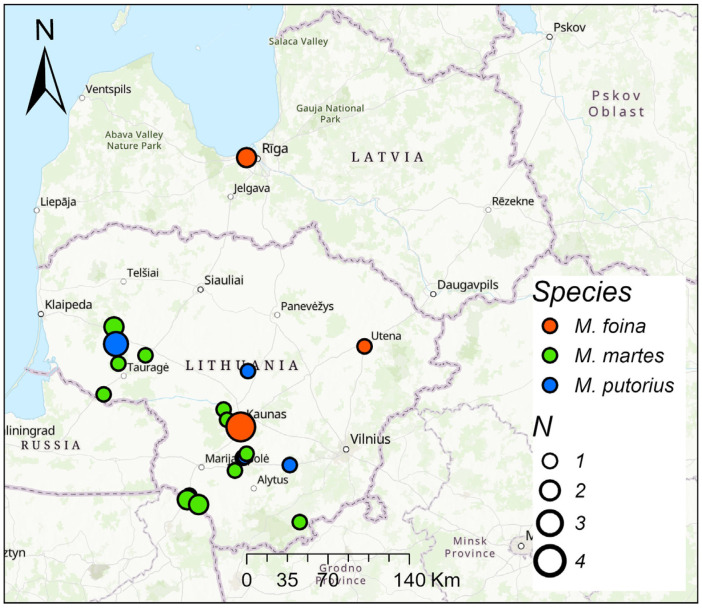 Figure 1
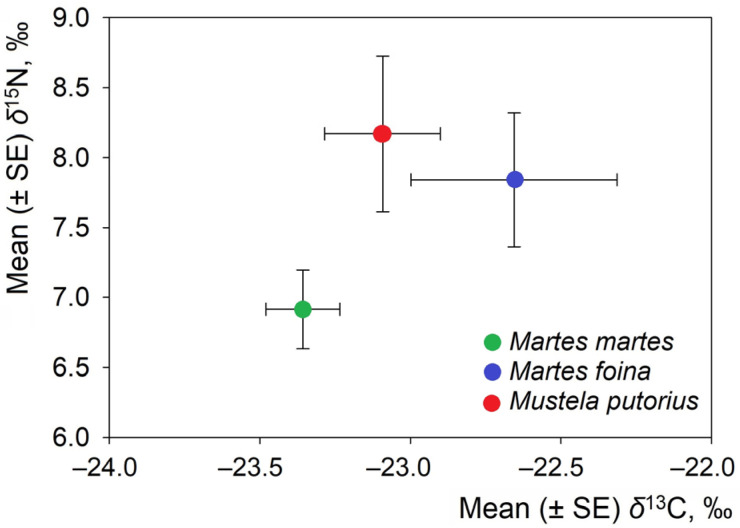 Figure 2
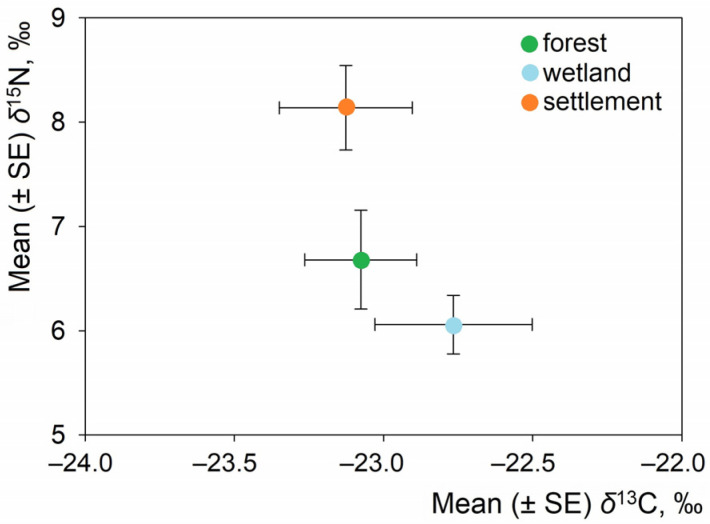 Figure 3
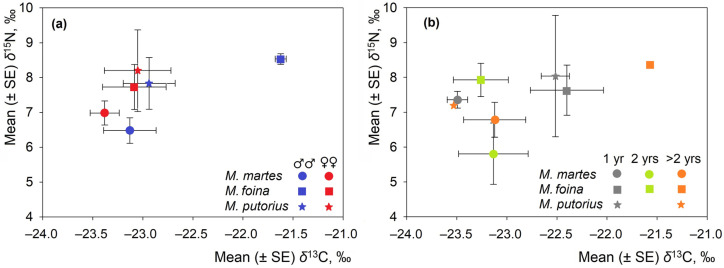 Figure 4
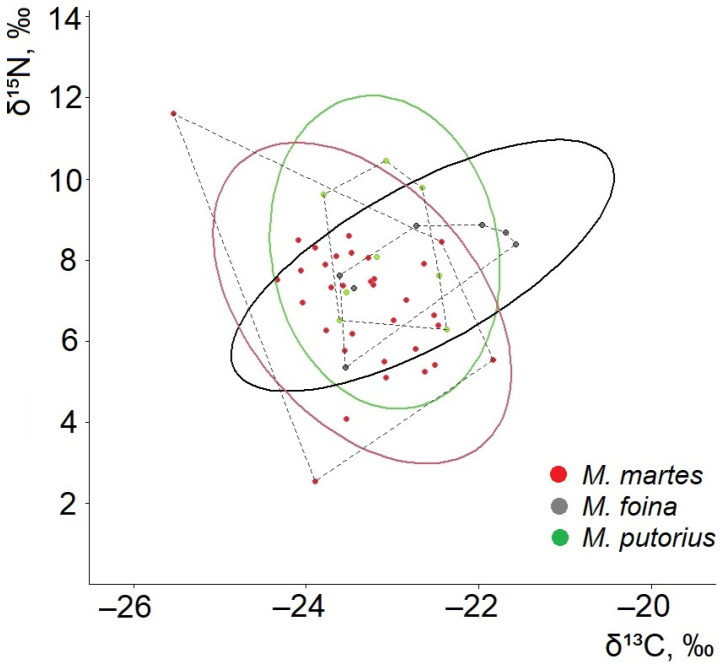 Figure 5
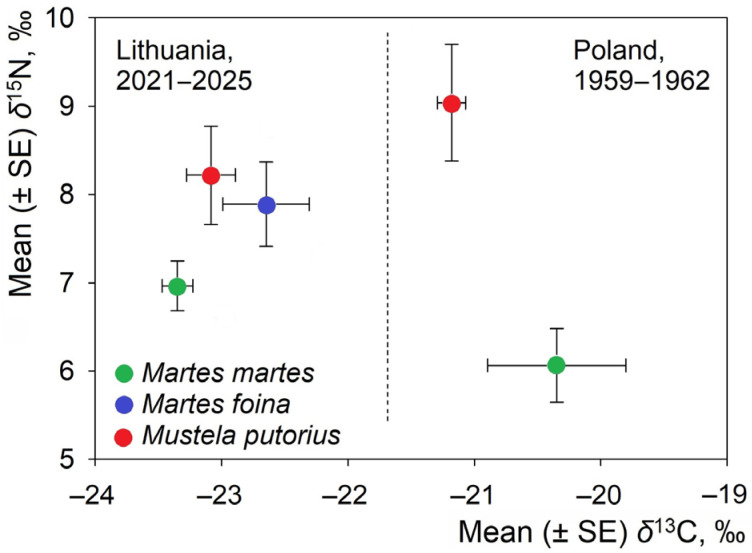 Figure 6
Peer Reviews
No public reviews on file for this paper yet. If you reviewed it on a platform where reviews are public (OpenReview, ICLR, NeurIPS, ICML), you can paste yours below so the community can read it here.
Videos
No videos yet. Explain this paper in a talk, walkthrough, or lecture? Add one.
Taxonomy
TopicsIsotope Analysis in Ecology · Evolution and Paleontology Studies · Wildlife Ecology and Conservation