Histological Tissue Response to Calcium Silicate-Based Cements Assessed in Human Tooth Culture Models: A Systematic Review
Alberto Cabrera-Fernández, Hebertt Gonzaga dos Santos Chaves, Aránzazu Díaz-Cuenca, Juan J. Segura-Egea, Jenifer Martín-González, João Peça, Diana B. Sequeira, João Miguel Marques dos Santos

TL;DR
This review evaluates how human tooth cultures respond to calcium silicate-based cements used in dental treatments, finding that some types consistently promote healing and mineralization.
Contribution
The study systematically reviews histological responses to calcium silicate-based cements in human tooth culture models, comparing hydraulic and resin-modified types.
Findings
Hydraulic calcium silicate cements like Biodentine and ProRoot MTA consistently induce biocompatible pulp responses and mineralization.
Resin-modified cements like TheraCal LC show variable and less consistent histological outcomes compared to hydraulic cements.
Immunohistochemistry supports odontoblast-like differentiation in response to hydraulic cements.
Abstract
Ex vivo human tooth culture models preserve the native dentine–pulp complex and offer a translational platform to study pulp-capping biomaterials. This systematic review aimed to synthesize the evidence on histological pulp tissue responses to calcium silicate-based cement (CSCs) used for direct pulp capping in human tooth culture models. The review followed PRISMA 2020 guidance. Eligible studies were ex vivo whole human tooth culture models with direct pulp exposure treated with commercial or experimental CSCs and reporting histological outcomes. Risk of bias was assessed using the QUIN tool. Thirteen studies were included. Most used immature human third molars (from 15- to 19-year-old patients) and culture periods up to 28 days, with a minority extending observation to 45–90 days. Across hydraulic CSCs, Biodentine was the most frequently evaluated material, followed by ProRoot MTA and…
Genes, proteins, chemicals, diseases, species, mutations and cell lines named across the full text — each resolved to its canonical identifier and authoritative record.
Click any figure to enlarge with its caption.
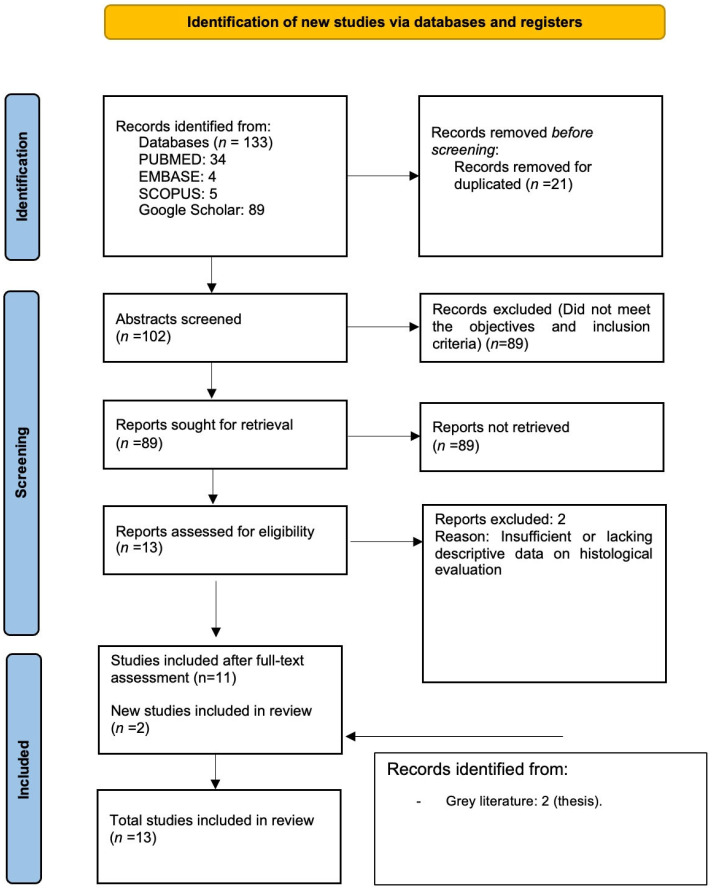 Figure 1
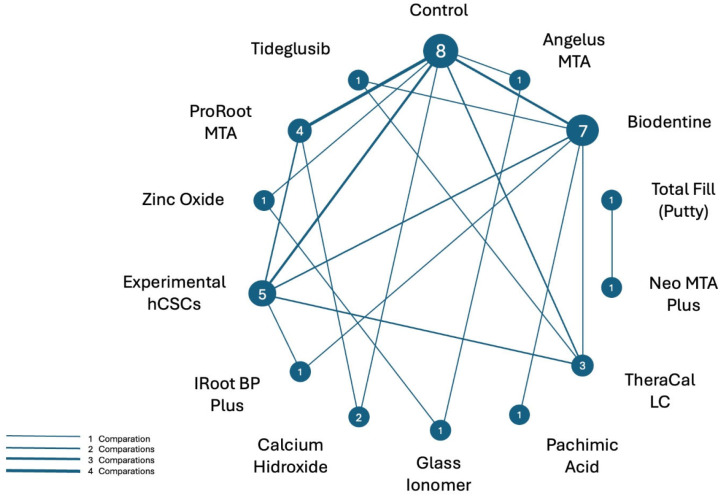 Figure 2
Peer Reviews
No public reviews on file for this paper yet. If you reviewed it on a platform where reviews are public (OpenReview, ICLR, NeurIPS, ICML), you can paste yours below so the community can read it here.
Videos
No videos yet. Explain this paper in a talk, walkthrough, or lecture? Add one.
Taxonomy
TopicsEndodontics and Root Canal Treatments · Dental materials and restorations · Bone Tissue Engineering Materials