Can Artificial Intelligence Optimize the Early Diagnosis of Invasive Candidiasis? A Systematic Review and Meta-Analysis
Hugo Almeida, Beatriz Rodríguez-Alonso, Montserrat Alonso-Sardón, Inmaculada Izquierdo, Ángela Romero-Alegría, Virginia Velasco-Tirado, Josué Pendones Ulerio, Javier Pardo Lledías, Moncef Belhassen-García

TL;DR
This paper reviews AI models for early detection of invasive candidiasis, finding moderate accuracy and highlighting the need for further validation.
Contribution
A systematic review and meta-analysis of AI-based models for early diagnosis of invasive candidiasis in high-risk patients.
Findings
Pooled sensitivity and specificity for candidemia prediction were 81.3% and 81.6%, respectively.
Most models had high negative predictive values but modest positive predictive values due to low event prevalence.
Risk of bias was moderate to high, and evidence certainty was low due to study limitations.
Abstract
The early diagnosis of invasive candidiasis remains challenging in immunocompromised and other high-risk patients, prompting interest in artificial intelligence models for assisting clinical decision-making. We conducted a PROSPERO-registered systematic review and meta-analysis of artificial intelligence-based predictive models for the early identification of invasive Candida infections. We searched multiple databases for studies reporting model performance in hospitalized immuno-compromised patients. Data on study characteristics, model details, validation strategy, and diagnostic accuracy were extracted. A bivariate random-effects meta-analysis was performed for candidemia prediction models with compatible data. Eight studies met inclusion criteria. Models were typically developed using retrospective hospital data with heterogeneous populations and predictors. Five candidemia studies…
Genes, proteins, chemicals, diseases, species, mutations and cell lines named across the full text — each resolved to its canonical identifier and authoritative record.
Click any figure to enlarge with its caption.
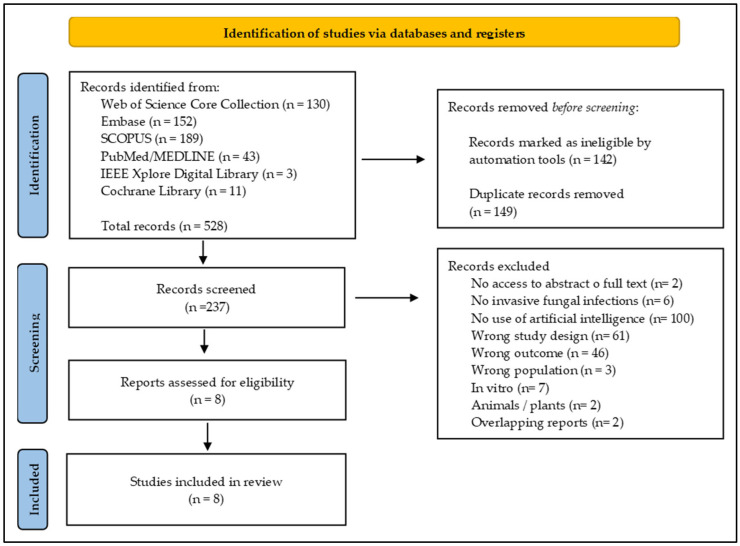 Figure 1
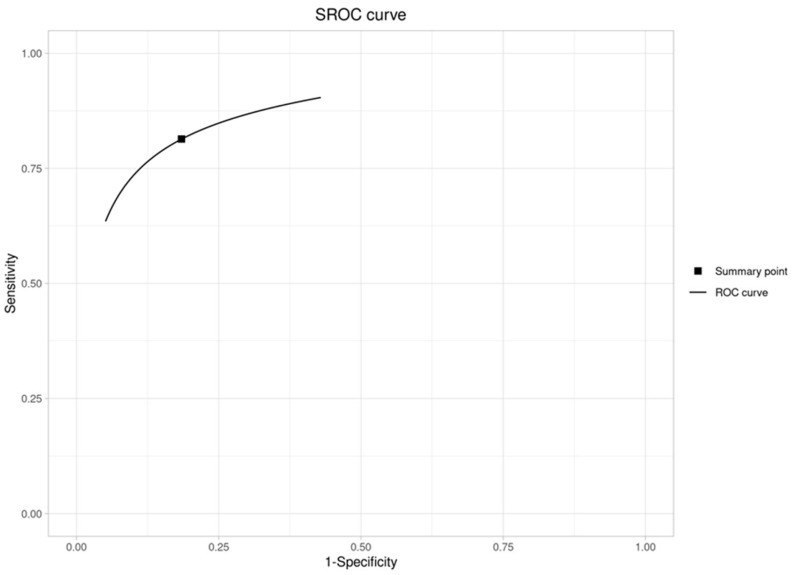 Figure 2
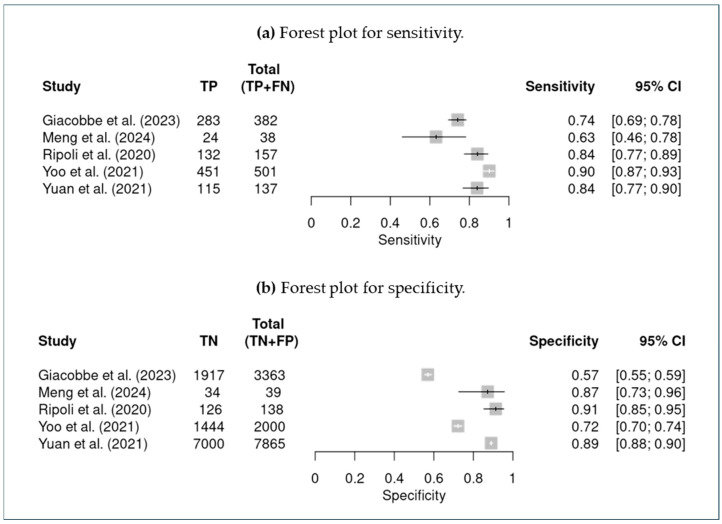 Figure 3
Peer Reviews
No public reviews on file for this paper yet. If you reviewed it on a platform where reviews are public (OpenReview, ICLR, NeurIPS, ICML), you can paste yours below so the community can read it here.
Videos
No videos yet. Explain this paper in a talk, walkthrough, or lecture? Add one.
Taxonomy
TopicsAntifungal resistance and susceptibility · Immune responses and vaccinations · Immunodeficiency and Autoimmune Disorders