Medial Malleolar Fracture Fixation with Stainless Steel, Titanium, Magnesium, and PLGA Screws: A Finite Element Analysis
Mehmet Melih Asoglu, Volkan Kızılkaya, Ali Levent, Huseyin Kursat Celik, Ozkan Kose, Allan E. W. Rennie

TL;DR
This study compares how different screw materials affect the healing of ankle fractures, finding that stainless steel and titanium provide the best stability.
Contribution
The novel contribution is a finite element analysis comparing stainless steel, titanium, magnesium, and PLGA screws for medial malleolar fracture fixation.
Findings
Stainless steel and titanium screws showed the least interfragmentary micromotion and highest stability.
PLGA screws resulted in significantly higher micromotion and interface stresses compared to metallic options.
Magnesium screws offered intermediate performance between titanium and PLGA in terms of mechanical stability.
Abstract
Background: Implant material may influence interfragmentary mechanics in medial malleolar (MM) fracture fixation. This study aimed to compare stainless steel, titanium, magnesium, and PLGA screws under identical conditions using finite element analysis (FEA). Methods: A CT-based ankle model with a unilateral oblique MM fracture (θ = 60° to the medial tibial plafond) was fixed with two parallel M4 × 35 mm screws placed perpendicular to the fracture plane (inter-axial distance 13 mm). Contacts were defined as nonlinear frictional, and each screw was assigned a pretension force of 2.5 N. Static single-leg stance was simulated with physiologic tibia/fibula load sharing. Four scenarios differed only by screw material. Primary outputs were interfragmentary micromotion (maximum sliding and gap). Secondary measures included fracture interface contact/frictional stresses, screw/bone von Mises…
Genes, proteins, chemicals, diseases, species, mutations and cell lines named across the full text — each resolved to its canonical identifier and authoritative record.
Click any figure to enlarge with its caption.
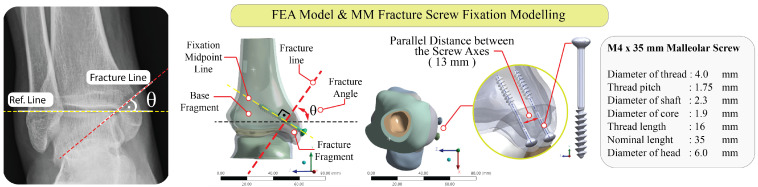 Figure 1
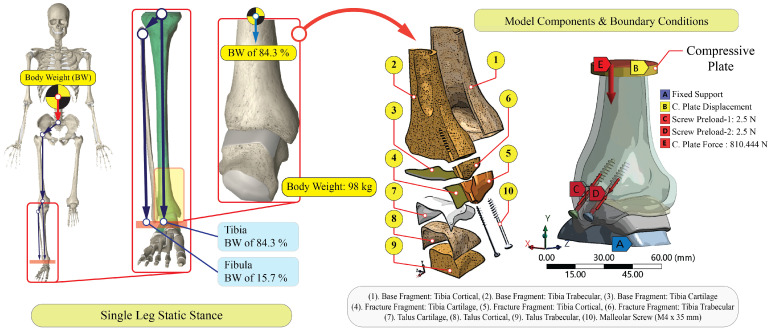 Figure 2
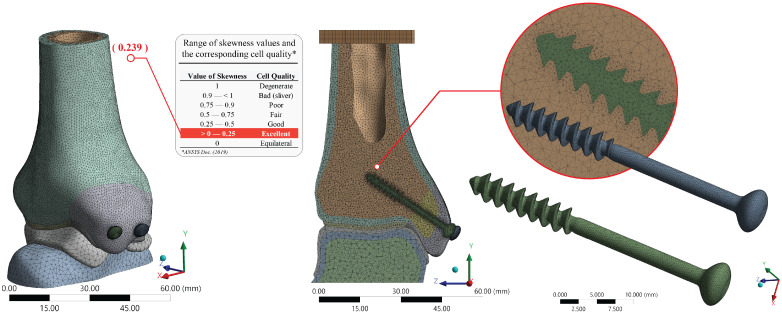 Figure 3
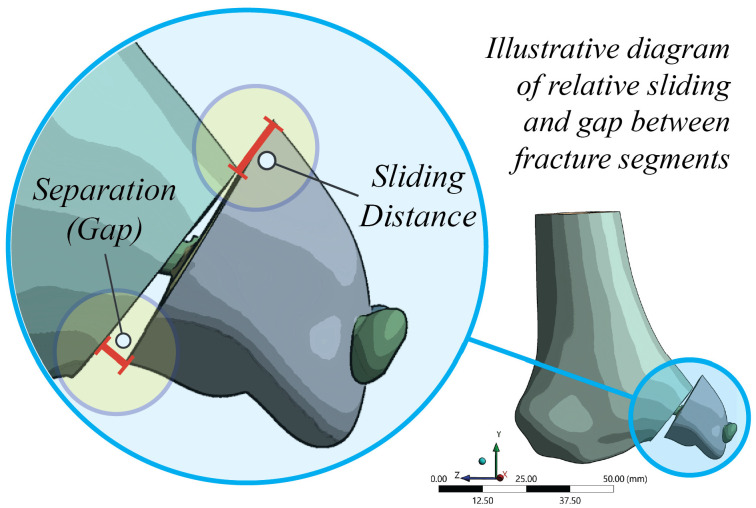 Figure 4
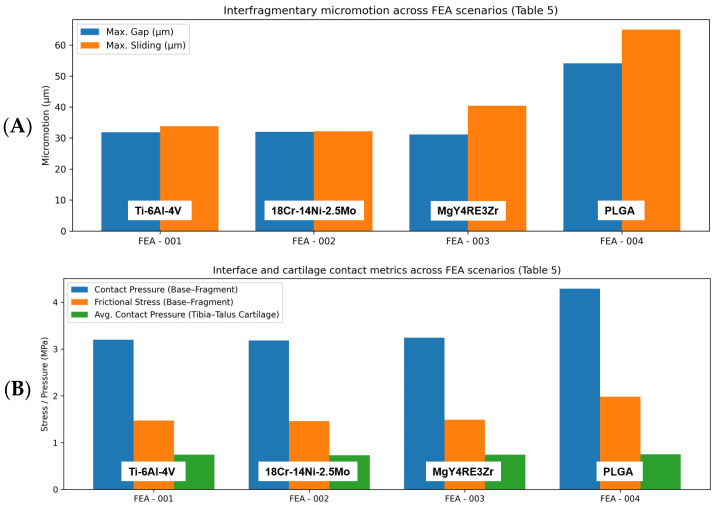 Figure 5
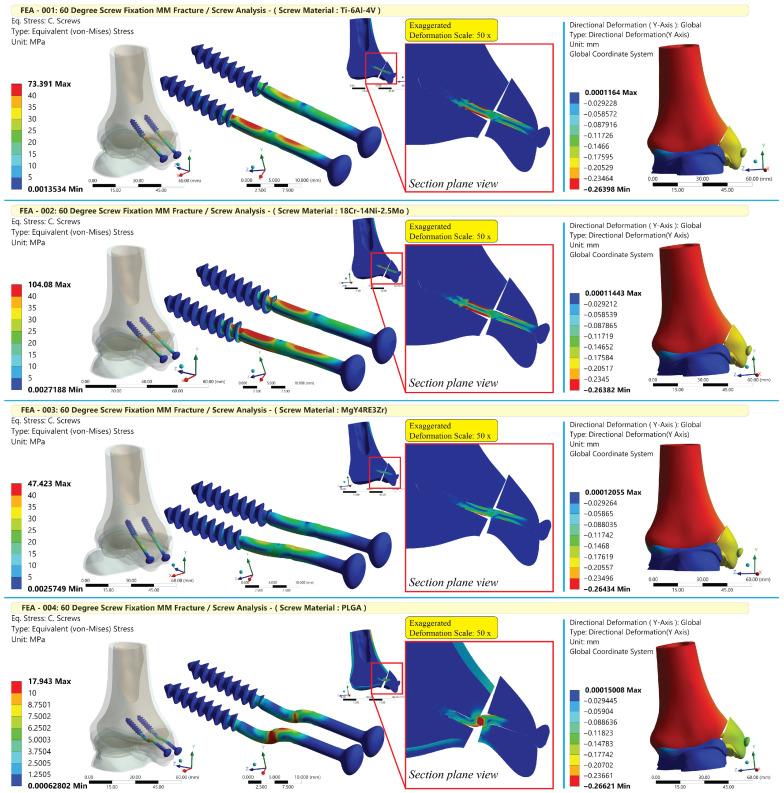 Figure 6
Peer Reviews
No public reviews on file for this paper yet. If you reviewed it on a platform where reviews are public (OpenReview, ICLR, NeurIPS, ICML), you can paste yours below so the community can read it here.
Videos
No videos yet. Explain this paper in a talk, walkthrough, or lecture? Add one.
Taxonomy
TopicsFoot and Ankle Surgery · Bone fractures and treatments · Knee injuries and reconstruction techniques