Diagnostic Value of Fractional Shortening and E-Point Septal Separation in Predicting Left Ventricular Longitudinal Strain in Dyspneic Emergency Patients
Mustafa Ucar, Muhammed Ikbal Sasmaz, Doguhan Bitlisli, Akkan Avci

TL;DR
This study shows that simple ultrasound measurements can reliably estimate heart function in emergency patients with shortness of breath.
Contribution
The study demonstrates the diagnostic value of EPSS and FS as rapid, reliable alternatives to advanced echocardiography in emergency settings.
Findings
EPSS showed strong correlations with EF and GLS, with excellent diagnostic accuracy (AUC = 0.922 for EF; 0.949 for GLS).
FS also showed good accuracy (AUC = 0.874 for EF; 0.865 for GLS) with moderate agreement with TTE.
Optimal cut-off values were EPSS ≥ 7.0 mm and FS ≤ 25% for predicting reduced heart function.
Abstract
Background and Objectives: Dyspnea is a common chief complaint in the emergency department. While global longitudinal strain and biplane ejection fraction are reliable markers of left ventricular systolic function, their assessment requires advanced echocardiographic tools and expertise. Simple point-of-care ultrasound parameters, such as E-point septal separation and fractional shortening may serve as practical alternatives for rapid bedside evaluation. Materials and Methods: EPSS and FS were measured by emergency physicians using POCUS, while reference EF and GLS were obtained by cardiologists via transthoracic echocardiography. Correlation analyses, receiver operating characteristic curves, and agreement statistics were used to evaluate the diagnostic accuracy of EPSS and FS for predicting reduced EF (<50%) and GLS (<16%). Results: Reduced EF was present in 54.0% and reduced GLS in…
Genes, proteins, chemicals, diseases, species, mutations and cell lines named across the full text — each resolved to its canonical identifier and authoritative record.
Click any figure to enlarge with its caption.
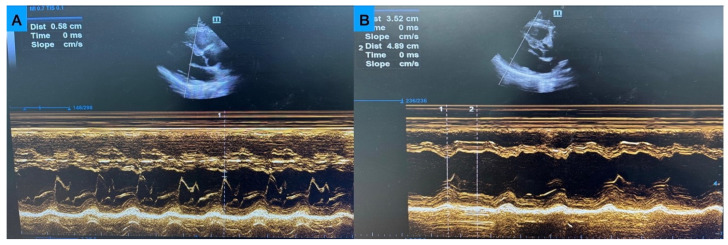 Figure 1
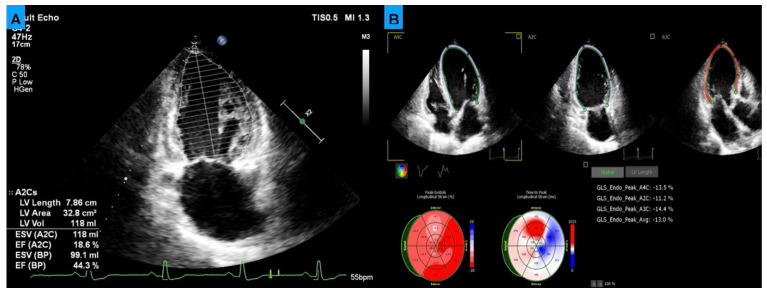 Figure 2
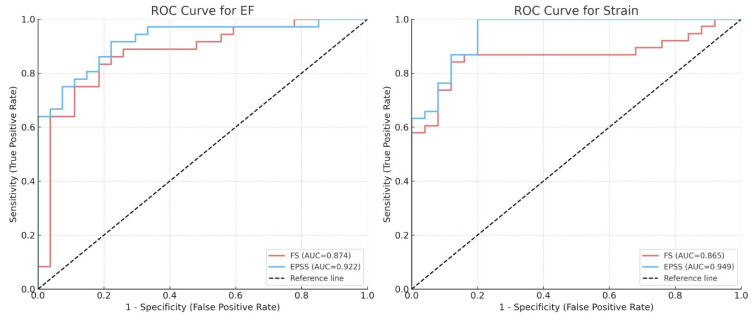 Figure 3
Peer Reviews
No public reviews on file for this paper yet. If you reviewed it on a platform where reviews are public (OpenReview, ICLR, NeurIPS, ICML), you can paste yours below so the community can read it here.
Videos
No videos yet. Explain this paper in a talk, walkthrough, or lecture? Add one.
Taxonomy
TopicsUltrasound in Clinical Applications · Cardiovascular Function and Risk Factors · Hemodynamic Monitoring and Therapy