Hemodynamic Challenges of Lower Extremity Lymphovenous Anastomosis: A Critical Reappraisal
Daihun Kang

TL;DR
This paper reviews the challenges of using lymphovenous anastomosis for treating leg lymphedema, especially during upright postures when venous pressure is high.
Contribution
The paper critically reevaluates the hemodynamic assumptions behind lower extremity lymphovenous anastomosis during daily upright activities.
Findings
Ankle-level venous pressure rises significantly in upright postures, potentially reversing the pressure gradient needed for drainage.
Anastomotic patency declines over time, with some studies reporting 64% occlusion at two years.
Clinical improvement may persist despite declining patency, possibly due to conservative therapy or selection bias.
Abstract
Lymphovenous anastomosis (LVA) has become an established microsurgical treatment for lymphedema, yet the hemodynamic basis for its efficacy in the lower extremity has not been rigorously examined. Most assessments of anastomotic function are performed in the supine position, where lymphatic pressure exceeds venous pressure, creating a favorable gradient for drainage. However, adults spend 16–18 h daily in upright postures, during which ankle-level venous pressure rises to 80–100 mmHg while lymphatic pressure increases only modestly. This pressure reversal raises questions about whether lower extremity LVA can function during routine daily activities. Several protective mechanisms have been proposed, including careful recipient venule selection, competent venous valves, and calf muscle pump assistance, yet these safeguards are inherently intermittent rather than continuous. Clinical data…
Genes, proteins, chemicals, diseases, species, mutations and cell lines named across the full text — each resolved to its canonical identifier and authoritative record.
Click any figure to enlarge with its caption.
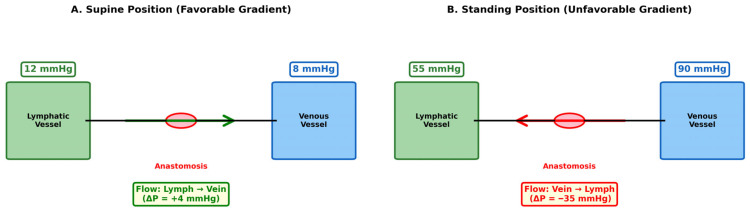 Figure 1
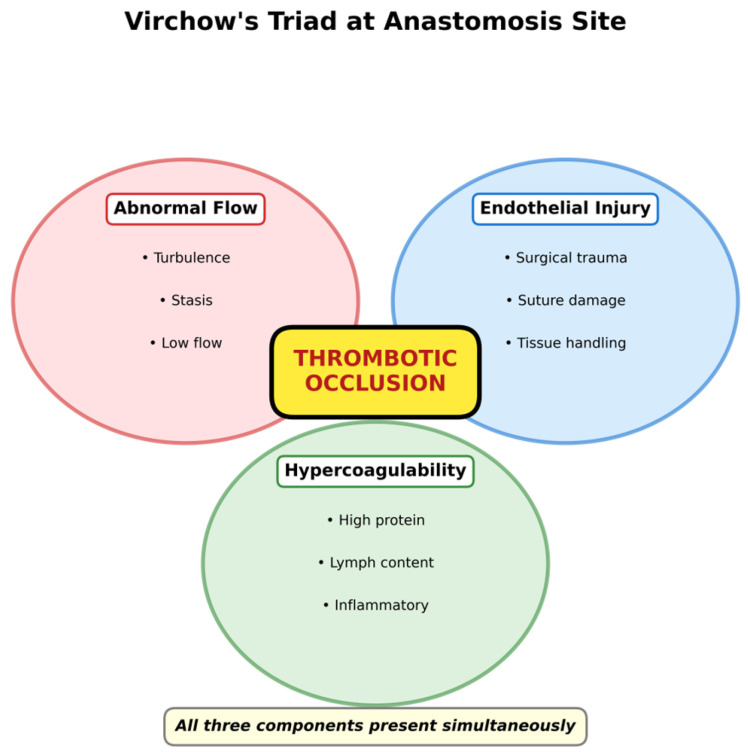 Figure 2
Peer Reviews
No public reviews on file for this paper yet. If you reviewed it on a platform where reviews are public (OpenReview, ICLR, NeurIPS, ICML), you can paste yours below so the community can read it here.
Videos
No videos yet. Explain this paper in a talk, walkthrough, or lecture? Add one.
Taxonomy
TopicsLymphatic System and Diseases · Diagnosis and Treatment of Venous Diseases · Lymphatic Disorders and Treatments